

Wednesday, July 29, 2026
Science
No Result
View All Result
  • Login
  • HOME
  • SCIENCE NEWS
  • CONTACT US
  • HOME
  • SCIENCE NEWS
  • CONTACT US
No Result
View All Result
Scienmag
No Result
View All Result
Home Science News Medicine

Oligomeric alpha-Synuclein in Neural Extracellular Vesicles Signals Parkinson Non-Motor Symptoms

July 29, 2026
in Medicine
Reading Time: 2 mins read
0
Oligomeric alpha-Synuclein in Neural Extracellular Vesicles Signals Parkinson Non-Motor Symptoms

Oligomeric alpha-Synuclein in Neural Extracellular Vesicles Signals Parkinson Non-Motor Symptoms

65
SHARES
587
VIEWS
Share on FacebookShare on Twitter
ADVERTISEMENT

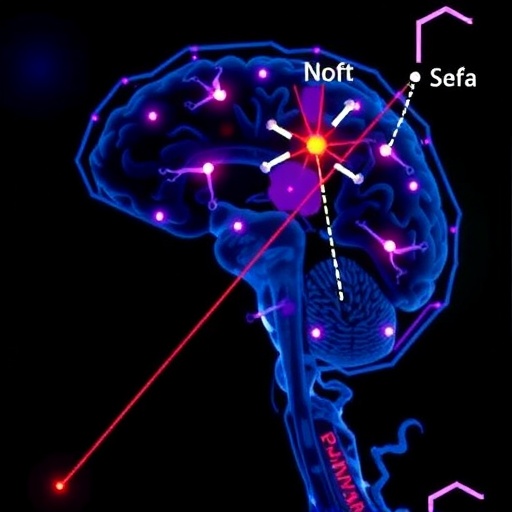
A team of researchers reports that oligomeric alpha-synuclein carried inside neural-derived extracellular vesicles (NDEVs) may forecast specific non-motor burdens in Parkinson’s disease, opening a potential path toward blood-based biological markers for symptoms that often precede motor decline. The work appears in npj Parkinsons Disease and targets a major clinical gap: reliable measures of non-motor progression.

Extracellular vesicles are lipid-bound messengers released by cells, and when they originate from neurons they can sample molecular events occurring within the brain. By focusing on NDEVs, the investigators aim to enrich for signals most plausibly linked to neurodegenerative pathology rather than peripheral background noise.

The study centers on “oligomeric” alpha-synuclein, a misfolded aggregation state considered particularly toxic and mechanistically relevant to synucleinopathies. Unlike total protein measurements, oligomer-specific detection seeks to capture the species most associated with disease-driving biology.

Using NDEV isolation from patient-derived samples, the authors applied biochemical approaches to quantify oligomeric alpha-synuclein levels. They then tested whether these levels correlate with non-motor symptom domains, including cognitive and neuropsychiatric features, where early intervention could be especially valuable.

Results indicate that NDEV-associated oligomeric alpha-synuclein tracks with clinically meaningful non-motor symptom profiles. In other words, higher oligomer burden within vesicles aligns with worse non-motor status, suggesting the measure could function as a biomarker rather than a general marker of neuroinflammation.

Mechanistically, this relationship supports the idea that vesicles may transport pathogenic synuclein species between cells, extending dysfunction beyond the initial neuronal populations. If validated, oligomer detection in NDEVs could therefore serve both as a diagnostic readout and a window into disease processes.

Because non-motor symptoms are heterogeneous and often underrepresented in trials, biomarkers tied to them could refine patient stratification. That improvement may help clinicians distinguish faster progressors and better match emerging therapies to those most at risk.

The study’s authors emphasize the need for replication in larger cohorts and for standardized vesicle handling and assay pipelines. They also note that longitudinal sampling will be crucial to determine whether oligomeric NDEV alpha-synuclein predicts future symptom worsening, not just current severity.

Overall, the findings position oligomeric alpha-synuclein in neural-derived extracellular vesicles as a promising candidate for “viral science news”–worthy biomarker development in Parkinson’s disease, with the potential to translate molecular pathology into practical non-motor monitoring.

Subject of Research: Parkinson’s disease; non-motor symptoms; oligomeric alpha-synuclein in neural-derived extracellular vesicles.

Article Title: Oligomeric Alpha-Synuclein from neural-derived extracellular vesicles as possible biomarkers of non-motor symptoms in Parkinson’s disease.

Article References: Mario, M., Cristina, A., Anna, S. et al. npj Parkinsons Dis. (2026). https://doi.org/10.1038/s41531-026-01474-w

Image Credits: AI Generated

DOI: 10.1038/s41531-026-01474-w

Tags: biochemical analysis of alpha-synucleinblood-based Parkinson’s biomarkersearly non-motor symptom detectionextracellular vesicles in neurodegenerationlipid-bound vesicle signalingneurodegenerative biomarker developmentneurodegenerative disease progression markersneuron-derived extracellular vesiclesnon-motor symptom predictionoligomeric alpha-synuclein detectionParkinson's disease biomarkerssynucleinopathy diagnostics
Share26Tweet16
Previous Post

Economic Security, Health, and Religion Shape Life Satisfaction Among Older Urban Iranians

Next Post

Transcriptomic Profiling Reveals Differences Between Human Brown and White Fat Depots

Related Posts

3D Visualization Reveals Nanoplastic Distribution in Neonatal Mouse Brains
Medicine

3D Visualization Reveals Nanoplastic Distribution in Neonatal Mouse Brains

July 29, 2026
Transcriptomic Profiling Reveals Differences Between Human Brown and White Fat Depots
Medicine

Transcriptomic Profiling Reveals Differences Between Human Brown and White Fat Depots

July 29, 2026
Economic Security, Health, and Religion Shape Life Satisfaction Among Older Urban Iranians
Medicine

Economic Security, Health, and Religion Shape Life Satisfaction Among Older Urban Iranians

July 29, 2026
Single-Cell Profiling of NK/T-Cell Lymphoma Uncovers Stratified Immune States
Medicine

Single-Cell Profiling of NK/T-Cell Lymphoma Uncovers Stratified Immune States

July 29, 2026
EEG Modeling Predicts Conversion and Reveals Diverse Outcomes in Isolated REM Sleep Disorder
Medicine

EEG Modeling Predicts Conversion and Reveals Diverse Outcomes in Isolated REM Sleep Disorder

July 29, 2026
Oral Semaglutide Trial Suggests Fewer Heavy Drinking Days in Alcohol Use
Medicine

Oral Semaglutide Trial Suggests Fewer Heavy Drinking Days in Alcohol Use

July 29, 2026
Next Post
Transcriptomic Profiling Reveals Differences Between Human Brown and White Fat Depots

Transcriptomic Profiling Reveals Differences Between Human Brown and White Fat Depots

  • Mothers who receive childcare support from maternal grandparents show more

    Mothers who receive childcare support from maternal grandparents show more parental warmth, finds NTU Singapore study

    27656 shares
    Share 11059 Tweet 6912
  • University of Seville Breaks 120-Year-Old Mystery, Revises a Key Einstein Concept

    1061 shares
    Share 424 Tweet 265
  • Bee body mass, pathogens and local climate influence heat tolerance

    682 shares
    Share 273 Tweet 171
  • Researchers record first-ever images and data of a shark experiencing a boat strike

    546 shares
    Share 218 Tweet 137
  • Groundbreaking Clinical Trial Reveals Lubiprostone Enhances Kidney Function

    531 shares
    Share 212 Tweet 133
Science

Embark on a thrilling journey of discovery with Scienmag.com—your ultimate source for cutting-edge breakthroughs. Immerse yourself in a world where curiosity knows no limits and tomorrow’s possibilities become today’s reality!

RECENT NEWS

  • 3D Visualization Reveals Nanoplastic Distribution in Neonatal Mouse Brains
  • Brain criticality variability explains why ADHD symptoms differ across individuals
  • Pine Island Glacier Shows Dynamic Response to Two Decades of Ice Shelf Regrounding
  • Transcriptomic Profiling Reveals Differences Between Human Brown and White Fat Depots

Categories

  • Agriculture
  • Anthropology
  • Archaeology
  • Athmospheric
  • Biology
  • Biotechnology
  • Blog
  • Bussines
  • Cancer
  • Chemistry
  • Climate
  • Earth Science
  • Editorial Policy
  • Marine
  • Mathematics
  • Medicine
  • Pediatry
  • Policy
  • Psychology & Psychiatry
  • Science Education
  • Social Science
  • Space
  • Technology and Engineering

Subscribe to Blog via Email

Enter your email address to subscribe to this blog and receive notifications of new posts by email.

Join 5,147 other subscribers

© 2025 Scienmag - Science Magazine

Welcome Back!

Login to your account below

Forgotten Password?

Retrieve your password

Please enter your username or email address to reset your password.

Log In
No Result
View All Result
  • HOME
  • SCIENCE NEWS
  • CONTACT US

© 2025 Scienmag - Science Magazine

Discover more from Science

Subscribe now to keep reading and get access to the full archive.

Continue reading
