

Tuesday, July 28, 2026
Science
No Result
View All Result
  • Login
  • HOME
  • SCIENCE NEWS
  • CONTACT US
  • HOME
  • SCIENCE NEWS
  • CONTACT US
No Result
View All Result
Scienmag
No Result
View All Result
Home Science News Earth Science

Tracing Mantle Plume Influence on Ni-Cu-PGE Sulfide Ore Formation

July 28, 2026
in Earth Science
Reading Time: 2 mins read
0
Tracing Mantle Plume Influence on Ni-Cu-PGE Sulfide Ore Formation

Tracing Mantle Plume Influence on Ni-Cu-PGE Sulfide Ore Formation

65
SHARES
587
VIEWS
Share on FacebookShare on Twitter
ADVERTISEMENT

A new study published in Communications Earth & Environment links the fingerprints of mantle plumes to the birth of magmatic nickel-copper–(platinum-group element) sulfide deposits, a class of ore bodies that can concentrate valuable metals in the deep Earth and then deliver them to crustal rocks. The work advances a long-standing debate about whether plume-driven mantle upwelling merely fuels magmatism—or actively governs when and how sulfur-rich melts become economically enriched.

Lead author Aibai and colleagues focus on the geochemical chain of processes that connects deep mantle dynamics to ore formation. Mantle plumes, rising buoyantly from depth, can generate unusually hot and compositionally distinctive magmas. Those magmas may pond, evolve, and ultimately produce sulfur-saturated conditions, enabling metals like Ni and Cu to partition into sulfide liquids.

A central idea in the paper is that plume contributions can reshape melt chemistry in ways that matter for ore. As magmas differentiate and cool, the availability of sulfur relative to metals becomes a control knob. When sulfur solubility is exceeded, sulfide liquids segregate—then scavenge compatible elements, including PGE components, before being trapped as immiscible sulfide droplets within igneous host rocks.

The study also emphasizes timing and transport. Plume-related magmatism can create repeated pulses of melt, increasing the odds that sulfide saturation is reached during the window when ascending magmas are still able to interact with the right thermal and chemical environment. This interplay helps explain why some igneous provinces are prolific and others remain relatively barren, even if they host broadly similar volcanism.

Although the paper does not rely on a single field site, its synthesis ties mantle-source signals to ore-forming pathways. In doing so, it frames sulfide deposit formation as an integrated system: source composition and heat from depth, magma evolution in the crust, and the moment of sulfur oversaturation that triggers segregation and metal scavenging.

Critically, the researchers connect plume influence to the observed behavior of Ni-Cu-(PGE) sulfide systems, where metal grades can depend on both the fractionation history of the magma and the efficiency of sulfide melt formation. In simplified terms, plume-driven conditions may improve both how much sulfide is produced and how effectively it captures metals.

For industry, the result is not a direct “where to drill” prescription, but a guide for interpreting ore potential from mantle-to-magma geochemical constraints. By sharpening how deep Earth processes map onto ore-forming chemistry, the study could refine exploration models for major sulfide districts.

If plume-driven magmatism indeed boosts the likelihood of reaching sulfur saturation during the right evolutionary stages, then ore genesis may be more predictable in plume-associated provinces. The authors’ approach highlights that looking only at surface volcanism may miss the deeper controls that determine whether magmas ever generate the sulfide liquids that concentrate Ni, Cu, and PGE.

Subject of Research: Mantle plumes and formation of magmatic Ni-Cu-(PGE) sulfide deposits

Article Title: Linking mantle plume contributions to magmatic Ni-Cu-(PGE) sulfide deposit formation.

Article References: Aibai, A., Yin, RS., Brzozowski, M.J. et al. Linking mantle plume contributions to magmatic Ni-Cu-(PGE) sulfide deposit formation. Communications Earth & Environment (2026). https://doi.org/10.1038/s43247-026-03821-4

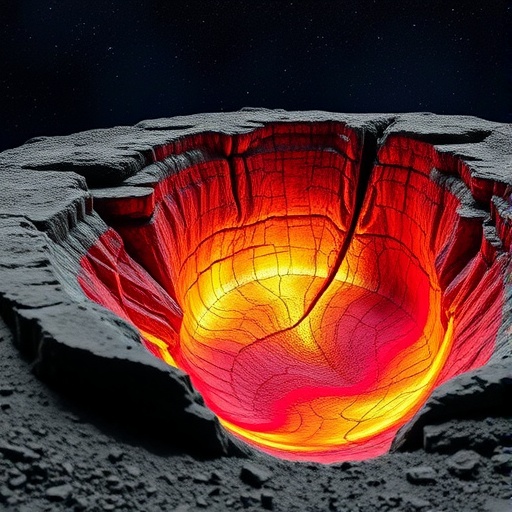
Image Credits: AI Generated

DOI: 10.1038/s43247-026-03821-4

Keywords: mantle plumes; nickel-copper sulfides; PGE; ore genesis; magma evolution; sulfur saturation; geochemistry; magmatic differentiation

Tags: crust-mantle magmatic interactionsdeep Earth mantle dynamicsgeochemical fingerprinting of mantle plumesmagmatic sulfide ore formationmantle plume geochemistrymantle plume influence on ore genesismantle upwelling and mineralizationnickel-copper-PGE sulfide depositsore deposit timing and transport processesplume-driven magmatism and mineral enrichmentsulfide liquid segregation in magmassulfur saturation in magmas
Share26Tweet16
Previous Post

Chemical distance model may predict which trace elements plants absorb

Next Post

Long COVID and ME/CFS Alter Skeletal Muscle Properties Differently Than Bed Rest

Related Posts

Toward a theory for stable Earth albedo and 21st-century hemispheric symmetry
Earth Science

Toward a theory for stable Earth albedo and 21st-century hemispheric symmetry

July 28, 2026
Upwind Land Effects Drive Soil Moisture Variability Across South America
Earth Science

Upwind Land Effects Drive Soil Moisture Variability Across South America

July 28, 2026
Canada’s 2023 wildfire smoke cut solar generation by 2.8%, costing $2B
Earth Science

Canada’s 2023 wildfire smoke cut solar generation by 2.8%, costing $2B

July 28, 2026
Urbanization Alters Development Patterns, Boosting Anopheles stephensi Habitat Suitability
Earth Science

Urbanization Alters Development Patterns, Boosting Anopheles stephensi Habitat Suitability

July 28, 2026
Ground Radar Detects Natural Electron Bernstein Waves in Earth’s Ionosphere
Earth Science

Ground Radar Detects Natural Electron Bernstein Waves in Earth’s Ionosphere

July 28, 2026
Iron-Loaded Biochar Boosts Electron Shuttling for Ammonium Nitrate Reduction in Rice Soils
Earth Science

Iron-Loaded Biochar Boosts Electron Shuttling for Ammonium Nitrate Reduction in Rice Soils

July 28, 2026
Next Post
Long COVID and ME/CFS Alter Skeletal Muscle Properties Differently Than Bed Rest

Long COVID and ME/CFS Alter Skeletal Muscle Properties Differently Than Bed Rest

  • Mothers who receive childcare support from maternal grandparents show more

    Mothers who receive childcare support from maternal grandparents show more parental warmth, finds NTU Singapore study

    27656 shares
    Share 11059 Tweet 6912
  • University of Seville Breaks 120-Year-Old Mystery, Revises a Key Einstein Concept

    1061 shares
    Share 424 Tweet 265
  • Bee body mass, pathogens and local climate influence heat tolerance

    682 shares
    Share 273 Tweet 171
  • Researchers record first-ever images and data of a shark experiencing a boat strike

    546 shares
    Share 218 Tweet 137
  • Groundbreaking Clinical Trial Reveals Lubiprostone Enhances Kidney Function

    531 shares
    Share 212 Tweet 133
Science

Embark on a thrilling journey of discovery with Scienmag.com—your ultimate source for cutting-edge breakthroughs. Immerse yourself in a world where curiosity knows no limits and tomorrow’s possibilities become today’s reality!

RECENT NEWS

  • Houston Methodist Researchers Create Biodegradable Implant for Targeted Cancer Immunotherapy
  • How Molecular Cooperation Between Polymers and Primitive Membranes Enabled Life
  • Family Medicine Residency Directors Say Programs Do Not Assess Self-Directed Learning Directly
  • Chitosan Hydrogel Stabilizes Red Blood Cell Membranes for Environmental Sensors

Categories

  • Agriculture
  • Anthropology
  • Archaeology
  • Athmospheric
  • Biology
  • Biotechnology
  • Blog
  • Bussines
  • Cancer
  • Chemistry
  • Climate
  • Earth Science
  • Editorial Policy
  • Marine
  • Mathematics
  • Medicine
  • Pediatry
  • Policy
  • Psychology & Psychiatry
  • Science Education
  • Social Science
  • Space
  • Technology and Engineering

Subscribe to Blog via Email

Enter your email address to subscribe to this blog and receive notifications of new posts by email.

Join 5,146 other subscribers

© 2025 Scienmag - Science Magazine

Welcome Back!

Login to your account below

Forgotten Password?

Retrieve your password

Please enter your username or email address to reset your password.

Log In
No Result
View All Result
  • HOME
  • SCIENCE NEWS
  • CONTACT US

© 2025 Scienmag - Science Magazine

Discover more from Science

Subscribe now to keep reading and get access to the full archive.

Continue reading
