


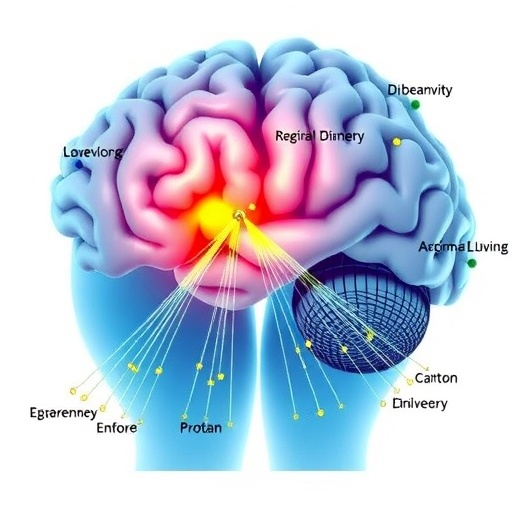
Functional brain networks constantly reshuffle as the brain shifts between cognitive and motor demands. In Parkinson’s disease, however, this dynamic reconfiguration can be disrupted—potentially helping explain why symptoms emerge and fluctuate. A new study published in npj Parkinson’s Disease now links these network dynamics to dopamine-related changes, offering a fresh systems-level view of how the illness affects brain communication.
Using resting-state functional MRI, researchers analyzed how brain regions synchronize over time in participants with Parkinson’s disease. Instead of treating brain connectivity as a static map, they focused on the temporal “grammar” of network switching—how strongly different communities of brain areas form, dissolve, and reform. This approach targets the brain’s capacity to rapidly reconfigure its functional architecture.
The team observed dopamine-related alterations that shifted the patterns of network reconfiguration. In Parkinson’s disease, the transitions between network states appeared less flexible, suggesting that the brain may struggle to explore alternative configurations that would normally support adaptive behavior. Such rigidity can mean that neural resources become locked into inefficient coordination modes.
Crucially, the findings indicate that dopamine—central to the disorder’s biology—may influence not only local signaling but also large-scale coordination. By tying dopamine-related changes to whole-network dynamics, the study bridges molecular and circuit-level explanations, a connection that has often been inferred indirectly.
The results highlight that functional brain networks exhibit distinct dynamic signatures in Parkinson’s disease compared with healthy controls. These signatures included differences in the timing and stability of network states, which may reflect disrupted communication among cortico-striatal and other distributed systems. Because these pathways underpin movement and learning, altered reconfiguration could contribute to motor impairment.
From a clinical perspective, the work suggests that dynamic connectivity measures could serve as biomarkers. If network-state behavior reliably tracks disease mechanisms and dopamine effects, it could improve monitoring beyond conventional static connectivity metrics.
More broadly, the study supports a model in which Parkinson’s disease perturbs the brain’s capacity for rapid reconfiguration. Rather than a single damaged pathway, the illness may represent a network-level problem in which the timing and transitions of brain coordination become maladaptive.
As therapies continue to evolve, quantifying how dopamine shapes network dynamics may help identify which patients benefit most from dopamine-targeted strategies. Future studies may combine longitudinal imaging with clinical outcomes to test whether dynamic reconfiguration metrics track symptom progression.
Finally, the research positions brain dynamics as a key intermediate phenotype—connecting dopamine biology to emergent behavior through time-varying network organization. In doing so, it opens the door to more mechanistic and potentially personalized interpretations of Parkinson’s disease brain changes.
Cite Scienmag News
Cassandra Pierce. (July 27, 2026). Dopamine-Linked Brain Network Reconfiguration Dynamics Altered in Parkinson’s Disease. Scienmag. https://scienmag.com/dopamine-linked-brain-network-reconfiguration-dynamics-altered-in-parkinsons-disease/
Cassandra Pierce. "Dopamine-Linked Brain Network Reconfiguration Dynamics Altered in Parkinson’s Disease." Scienmag, 27 July 2026, https://scienmag.com/dopamine-linked-brain-network-reconfiguration-dynamics-altered-in-parkinsons-disease/. Accessed 4 September 2026.
Cassandra Pierce. "Dopamine-Linked Brain Network Reconfiguration Dynamics Altered in Parkinson’s Disease." Scienmag. July 27, 2026. https://scienmag.com/dopamine-linked-brain-network-reconfiguration-dynamics-altered-in-parkinsons-disease/


