


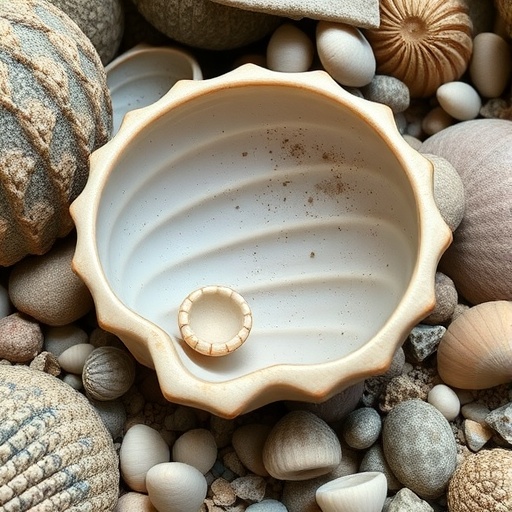
An international team led by scientists at the University of Tartu reports a striking ecological pivot in Earth’s deep past: about 470 million years ago, the interiors of empty mollusc shells began to function as living space for other organisms. This shift created a new “microhabitat within a habitat,” helping seed marine community structures that resemble those seen today.
In modern oceans, empty shells seldom remain vacant. Bryozoans, annelids, and other invertebrates commonly colonize them quickly. Yet fossil evidence indicates that during the Cambrian Period—more than 500 million years ago—shell interiors stayed largely uninhabited even though organisms able to live inside sheltered cavities were already present.
The researchers, including Olev Vinn, Oive Tinn, Liisa Lang, and Mare Isakar, compared fossils from multiple regions worldwide. Their analysis suggests that the first occupants appeared in the Middle Ordovician, roughly 460 million years ago. Early colonizers favored larger cephalopod shells (nautiloids), before expanding into the interiors of smaller snail and clam shells.
By the Late Ordovician (around 450 million years ago), many shells were densely overgrown. Attached suspension feeders—such as bryozoans, brachiopods, sponges, graptolites, and cornulids—formed tube-like structures, effectively turning former “dead architecture” into functional plumbing for filtering food from seawater.
Why did this innovation spread in the Ordovician? The study links it to a major rise in biodiversity, particularly the rapid proliferation of sessile organisms that colonize hard surfaces. The shell interior offered both physical shelter and fresh attachment space.
Crucially, shell geometry shaped water flow. Nautiloid chambers were spacious, allowing better circulation of oxygen and nutrients while also removing metabolic waste. As a result, these shells preserved the most diverse and abundant fossil assemblages.
In contrast, coiled snail shells with narrow openings exchanged water less effectively. The researchers report that organisms in these environments were generally smaller, and some taxa requiring stronger currents were absent.
The earliest documented shell interior communities were found in the Baltica region, hinting that the innovation may have begun there. However, the authors caution this could partly reflect uneven fossil study intensity across regions.
By the end of the Ordovician, similar communities occurred across Laurentia (present-day North America), southern China, and Gondwana, supporting the authors’ view of shell colonization as a global ecological event rather than a local anomaly.
Cite Scienmag News
Violet Maxwell. (July 27, 2026). Empty seashells evolved into new habitats 470 million years ago. Scienmag. https://scienmag.com/empty-seashells-evolved-into-new-habitats-470-million-years-ago/
Violet Maxwell. "Empty seashells evolved into new habitats 470 million years ago." Scienmag, 27 July 2026, https://scienmag.com/empty-seashells-evolved-into-new-habitats-470-million-years-ago/. Accessed 4 September 2026.
Violet Maxwell. "Empty seashells evolved into new habitats 470 million years ago." Scienmag. July 27, 2026. https://scienmag.com/empty-seashells-evolved-into-new-habitats-470-million-years-ago/


