

Monday, July 27, 2026
Science
No Result
View All Result
  • Login
  • HOME
  • SCIENCE NEWS
  • CONTACT US
  • HOME
  • SCIENCE NEWS
  • CONTACT US
No Result
View All Result
Scienmag
No Result
View All Result
Home Science News Medicine

New Insights Into Ionizing Radiation Exposure and Parkinson’s Disease Risk

July 27, 2026
in Medicine
Reading Time: 2 mins read
0
New Insights Into Ionizing Radiation Exposure and Parkinson’s Disease Risk

New Insights Into Ionizing Radiation Exposure and Parkinson’s Disease Risk

65
SHARES
587
VIEWS
Share on FacebookShare on Twitter
ADVERTISEMENT

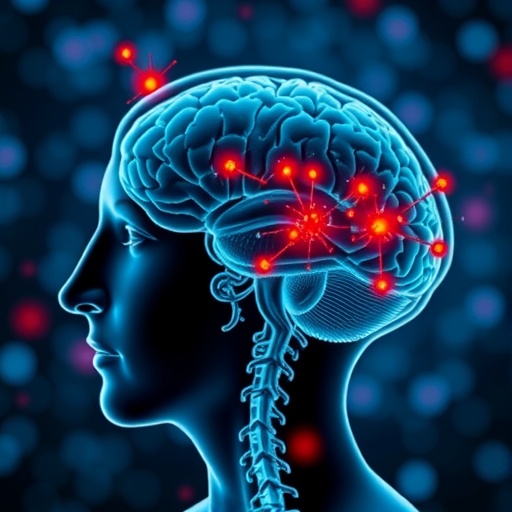
A new perspective article in npj Parkinson’s Disease (2026) explores how exposure to ionizing radiation could intersect with the biological processes implicated in Parkinson’s disease. While the mechanisms connecting these topics are complex, the authors synthesize current evidence on how radiation may influence the nervous system over time—particularly through pathways involving oxidative stress, inflammatory signaling, and cellular stress responses.

Ionizing radiation is known to generate reactive oxygen species, which can damage DNA, lipids, and proteins. In neurons and supporting glial cells, such molecular disruption may tip long-lived cellular systems toward chronic dysfunction. The paper highlights that the brain’s limited regenerative capacity could make even subtle, accumulated harm more consequential than in other tissues.

The article also discusses radiation’s ability to alter mitochondrial performance. Mitochondria are central to energy production and regulation of cell death, and their impairment can amplify oxidative stress. This feedback loop—mitochondrial strain driving further reactive oxygen species—may be relevant to Parkinsonian vulnerability, where dopaminergic neurons are particularly sensitive to metabolic and oxidative insults.

Beyond damage, ionizing radiation may reshape intercellular communication. The authors point to inflammation-related pathways as a potential bridge between radiation exposure and neurodegeneration. Microglia and other immune-like responses in the brain can shift toward a sustained activated state after injury, potentially increasing toxic signaling environments that harm nearby neurons.

A further emphasis is on DNA damage signaling and repair. Radiation can trigger double-strand breaks and activate stress pathways, including those governing apoptosis and senescence. If repair is imperfect, persistent genomic instability may accumulate, and long-term changes in cell fate regulation could follow.

The authors stress that risk is not uniform and depends on dose, timing, and individual factors such as genetics and baseline oxidative capacity. They also note that much of the field relies on indirect measures—cellular models, epidemiologic signals, and mechanistic inferences—making careful interpretation essential.

Crucially, the paper frames its conclusions as perspectives rather than definitive causation. Still, by mapping plausible mechanisms from radiation biology to neurodegenerative features, it provides a conceptual toolkit for future experimental work.

With viral science momentum, the study’s central message is clear: if ionizing radiation can modulate oxidative stress, mitochondrial function, inflammation, and DNA repair, then these same levers may also influence Parkinson’s disease trajectories—especially where exposures overlap with long-term neural resilience.

Subject of Research: Ionizing radiation and Parkinson’s disease; potential mechanistic links (oxidative stress, mitochondrial dysfunction, inflammation, DNA damage/repair).

Article Title: Perspectives on ionizing radiation and Parkinson’s disease

Article References: Miller, K.B., Ali, N., Beavers, M. et al. npj Parkinsons Dis. (2026). https://doi.org/10.1038/s41531-026-01486-6

Image Credits: AI Generated

Tags: brain tissue sensitivity to ionizing radiationcellular stress responses in Parkinson’s diseaseimpact of ionizing radiation on glial cellsionizing radiationlong-term effects of radiation on nervous systemmitochondrial dysfunction in neurodegenerationneurodegenerative pathways linked to radiation exposureoxidative stress and neuronal damageParkinson’s disease risk factorsradiation and dopaminergic neuron vulnerabilityradiation-induced neuroinflammationreactive oxygen species in brain health
Share26Tweet16
Previous Post

Deformation-Stabilized Flexible Receive Coil Enables High-Fidelity Static and Dynamic MRI

Next Post

Unequal Geographic Access to Emergency Obstetric and Newborn Care in Accra

Related Posts

Benchmarking Vision and Pathology Foundation Models for Computational Pathology
Medicine

Benchmarking Vision and Pathology Foundation Models for Computational Pathology

July 27, 2026
OTUB1 Suppresses Autophagy-Dependent Ferroptosis in Liver Cancer by Stabilizing p62
Medicine

OTUB1 Suppresses Autophagy-Dependent Ferroptosis in Liver Cancer by Stabilizing p62

July 27, 2026
Lessons from history guide the future of AI in medical decision-making
Medicine

Lessons from history guide the future of AI in medical decision-making

July 27, 2026
Stuffed Toys Release PFAS into Saliva, Raising Oral Exposure Concerns
Medicine

Stuffed Toys Release PFAS into Saliva, Raising Oral Exposure Concerns

July 27, 2026
Study uncovers ultrafast gene evolution driving chicken feather color diversity
Medicine

Study uncovers ultrafast gene evolution driving chicken feather color diversity

July 27, 2026
CCHFV Polymerase Enables RNA Synthesis and Shows Substrate Analog Inhibition
Medicine

CCHFV Polymerase Enables RNA Synthesis and Shows Substrate Analog Inhibition

July 27, 2026
Next Post
Unequal Geographic Access to Emergency Obstetric and Newborn Care in Accra

Unequal Geographic Access to Emergency Obstetric and Newborn Care in Accra

  • Mothers who receive childcare support from maternal grandparents show more

    Mothers who receive childcare support from maternal grandparents show more parental warmth, finds NTU Singapore study

    27656 shares
    Share 11059 Tweet 6912
  • University of Seville Breaks 120-Year-Old Mystery, Revises a Key Einstein Concept

    1061 shares
    Share 424 Tweet 265
  • Bee body mass, pathogens and local climate influence heat tolerance

    682 shares
    Share 273 Tweet 171
  • Researchers record first-ever images and data of a shark experiencing a boat strike

    546 shares
    Share 218 Tweet 137
  • Groundbreaking Clinical Trial Reveals Lubiprostone Enhances Kidney Function

    531 shares
    Share 212 Tweet 133
Science

Embark on a thrilling journey of discovery with Scienmag.com—your ultimate source for cutting-edge breakthroughs. Immerse yourself in a world where curiosity knows no limits and tomorrow’s possibilities become today’s reality!

RECENT NEWS

  • Reframing Late-Life Depression: Shifting Focus From Brain Damage to Plasticity
  • All-Trans Retinoic Acid Suppresses Severe Fever With Thrombocytopenia Virus Inflammation in Mice
  • Sliding Metasurface Achieves Wide-Angle Beam Steering with Sharp Frequency Filtering
  • Quasi Two-Stage Heat Pump Enables Efficient Dual-Temperature Heating and Hot Water

Categories

  • Agriculture
  • Anthropology
  • Archaeology
  • Athmospheric
  • Biology
  • Biotechnology
  • Blog
  • Bussines
  • Cancer
  • Chemistry
  • Climate
  • Earth Science
  • Editorial Policy
  • Marine
  • Mathematics
  • Medicine
  • Pediatry
  • Policy
  • Psychology & Psychiatry
  • Science Education
  • Social Science
  • Space
  • Technology and Engineering

Subscribe to Blog via Email

Enter your email address to subscribe to this blog and receive notifications of new posts by email.

Join 5,146 other subscribers

© 2025 Scienmag - Science Magazine

Welcome Back!

Login to your account below

Forgotten Password?

Retrieve your password

Please enter your username or email address to reset your password.

Log In
No Result
View All Result
  • HOME
  • SCIENCE NEWS
  • CONTACT US

© 2025 Scienmag - Science Magazine

Discover more from Science

Subscribe now to keep reading and get access to the full archive.

Continue reading
