

Monday, July 27, 2026
Science
No Result
View All Result
  • Login
  • HOME
  • SCIENCE NEWS
  • CONTACT US
  • HOME
  • SCIENCE NEWS
  • CONTACT US
No Result
View All Result
Scienmag
No Result
View All Result
Home Science News Agriculture

Fine-flavor native cacao matches commercial yields, study shows

July 27, 2026
in Agriculture
Reading Time: 2 mins read
0
Fine-flavor native cacao matches commercial yields, study shows

Fine-flavor native cacao matches commercial yields, study shows

65
SHARES
587
VIEWS
Share on FacebookShare on Twitter
ADVERTISEMENT

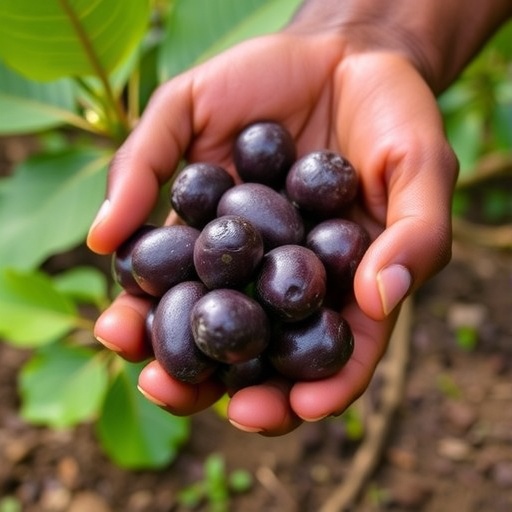
A new multi-year field study from Peru’s Piura region challenges a long-held assumption in cocoa agriculture: native fine-flavor cacao may be just as productive as commercial clones when farmers use the right genetic material and management practices. Conducted on 12 smallholder farms over three years, the research examined Blanco de Piura—a locally adapted, prized cacao genetic group known for exceptional aroma and pale/white beans.

Researchers found that Blanco de Piura can deliver average yields in the range of 1,200–1,500 kg of dry beans per hectare. Importantly, these results were not simply genetic “potential” but depended on how trees were managed across the farm—particularly canopy renewal, pruning frequency, and crop handling intensity.

The study compared different clones and plantation arrangements under real smallholder conditions, including grafting-based renewal of mature trees using selected native plant material. This approach boosted production by 59% within just three years, outperforming the slower yield gains typically associated with establishing entirely new plantations.

Management intensity emerged as the dominant lever. Farms pruning twice per year and managing crops more frequently achieved yields 118% higher than farms with lower management levels. The implication is straightforward for growers and extension programs: genetics plus disciplined agronomy can unlock productivity gains without abandoning local varieties.

The work also provides technically relevant insights for planting design. The authors report that certain Blanco de Piura genotypes can self-pollinate, simplifying orchard establishment and supporting more reliable field production than previously assumed.

Planting strategies mattered differently under varying levels of agronomic effort. On less intensively managed farms, polyclonal designs acted as a practical “insurance,” buffering productivity when pruning was limited. In contrast, single-clone or single-genotype designs reached their highest productive potential when paired with intensive management.

For the broader market, the findings carry high stakes. While fine-flavor cacao represents about 12% of the global market, most of it is produced in Latin America, where buyers pay premiums for sensory quality. Blanco de Piura’s sensory reputation can now be paired with evidence of scalable productivity, enabling competitiveness without sacrificing genetic diversity.

The research was supported by genetic selection efforts started in 2007 by Cooperativa Agraria Norandino and APPCACAO, with funding from Germany’s BMZ via GIZ. The study was published in Agronomy for Sustainable Development (published 20-Jul-2026) and reports findings consistent with a strategy that strengthens farmer incomes while protecting Peru’s cacao heritage.

Subject of Research: Fine-flavor cacao productivity in native Blanco de Piura under smallholder management
Article Title: Selected native genotypes, plantation design, and management intensity boost fine flavor cacao productivity
News Publication Date: 21-Jul-2026
Web References: https://doi.org/10.1007/s13593-026-01127-5
References: 10.1007/s13593-026-01127-5
Image Credits: Alliance of Bioversity International and CIAT

Keywords: Blanco de Piura, fine-flavor cacao, smallholder farms, grafting, canopy renewal, pruning intensity, planting design, polyclonal, self-pollination, Peru cocoa diversity

Tags: Blanco de Piura cacao studycacao canopy renewal techniquesenhancing smallholder cacao farm productivityfine-flavor cacao yieldsgrafting native cacao treesimpact of crop handling on cacao yieldsNative cacao farmingnative cacao genetic potentialnative vs commercial cacao clonesoptimizing cacao pruning frequencysmallholder cacao management practicessustainable cacao production in Peru
Share26Tweet16
Previous Post

Australian Cave Finds Evidence of 25,000-Year Grass Burning for Rituals

Next Post

Study uncovers ultrafast gene evolution driving chicken feather color diversity

Related Posts

Unwritten social rules, not government oversight, sustain forests for the future
Agriculture

Unwritten social rules, not government oversight, sustain forests for the future

July 27, 2026
Modeling Study Finds Ancient Language Diversity Was Far Greater Than Today’s
Agriculture

Modeling Study Finds Ancient Language Diversity Was Far Greater Than Today’s

July 26, 2026
Maize likely central to ancient Maya diets, study of bones and teeth suggests
Agriculture

Maize likely central to ancient Maya diets, study of bones and teeth suggests

July 26, 2026
Adaptive Grid-Scale Irrigation System Enhances Rice Yields Amid Climate Swings
Agriculture

Adaptive Grid-Scale Irrigation System Enhances Rice Yields Amid Climate Swings

July 26, 2026
Digital Sensors Identify Flavor Fingerprints in Minnan Oolong Tea
Agriculture

Digital Sensors Identify Flavor Fingerprints in Minnan Oolong Tea

July 26, 2026
Biochar from rice straw may cut heavy metal contamination risks in rice
Agriculture

Biochar from rice straw may cut heavy metal contamination risks in rice

July 17, 2026
Next Post
Study uncovers ultrafast gene evolution driving chicken feather color diversity

Study uncovers ultrafast gene evolution driving chicken feather color diversity

  • Mothers who receive childcare support from maternal grandparents show more

    Mothers who receive childcare support from maternal grandparents show more parental warmth, finds NTU Singapore study

    27656 shares
    Share 11059 Tweet 6912
  • University of Seville Breaks 120-Year-Old Mystery, Revises a Key Einstein Concept

    1061 shares
    Share 424 Tweet 265
  • Bee body mass, pathogens and local climate influence heat tolerance

    682 shares
    Share 273 Tweet 171
  • Researchers record first-ever images and data of a shark experiencing a boat strike

    546 shares
    Share 218 Tweet 137
  • Groundbreaking Clinical Trial Reveals Lubiprostone Enhances Kidney Function

    531 shares
    Share 212 Tweet 133
Science

Embark on a thrilling journey of discovery with Scienmag.com—your ultimate source for cutting-edge breakthroughs. Immerse yourself in a world where curiosity knows no limits and tomorrow’s possibilities become today’s reality!

RECENT NEWS

  • Methane-Driven Nitrous Oxide Cuts Offer Cost-Effective Industrial Climate Relief
  • Benchmarking Vision and Pathology Foundation Models for Computational Pathology
  • Energy use from food consumption can reveal poverty in rural Chinese homes
  • Mental Disorder-Related Deaths Among U.S. Adolescents Rise, 1999–2023

Categories

  • Agriculture
  • Anthropology
  • Archaeology
  • Athmospheric
  • Biology
  • Biotechnology
  • Blog
  • Bussines
  • Cancer
  • Chemistry
  • Climate
  • Earth Science
  • Editorial Policy
  • Marine
  • Mathematics
  • Medicine
  • Pediatry
  • Policy
  • Psychology & Psychiatry
  • Science Education
  • Social Science
  • Space
  • Technology and Engineering

Subscribe to Blog via Email

Enter your email address to subscribe to this blog and receive notifications of new posts by email.

Join 5,146 other subscribers

© 2025 Scienmag - Science Magazine

Welcome Back!

Login to your account below

Forgotten Password?

Retrieve your password

Please enter your username or email address to reset your password.

Log In
No Result
View All Result
  • HOME
  • SCIENCE NEWS
  • CONTACT US

© 2025 Scienmag - Science Magazine

Discover more from Science

Subscribe now to keep reading and get access to the full archive.

Continue reading
