

Sunday, July 26, 2026
Science
No Result
View All Result
  • Login
  • HOME
  • SCIENCE NEWS
  • CONTACT US
  • HOME
  • SCIENCE NEWS
  • CONTACT US
No Result
View All Result
Scienmag
No Result
View All Result
Home Science News Archaeology

Ceramic Vessels Show Social Inequality Was Baked into 19th-Century Brazil

July 26, 2026
in Archaeology
Reading Time: 2 mins read
0
Ceramic Vessels Show Social Inequality Was Baked into 19th-Century Brazil
65
SHARES
587
VIEWS
Share on FacebookShare on Twitter
ADVERTISEMENT

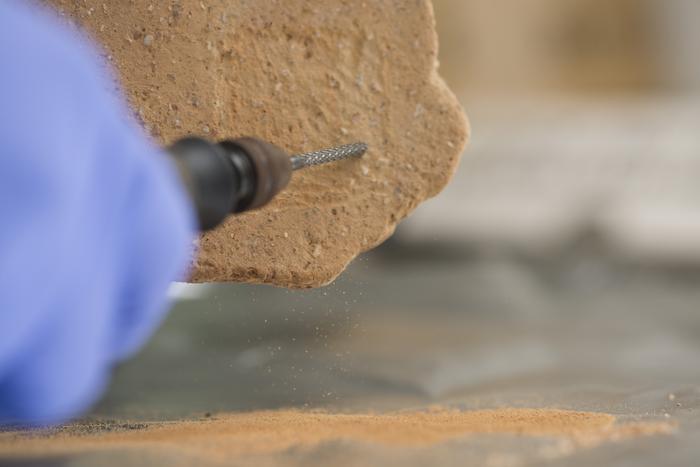
A new biomolecular archaeology study is using food residues trapped inside ceramic vessels to show that everyday diets in southern Brazil were far from uniform. By looking at how lipids and proteins survive for over a century in broken pottery, researchers can infer what different communities cooked, stored, and consumed.

The team analyzed more than 180 ceramic fragments from Babitonga Bay, spanning the late nineteenth to early twentieth centuries. Instead of relying on written records or cooking traditions, the study reconstructs diet directly from molecular traces embedded in ceramic matrix and vessel residues.

The workflow combined lipid profiling and protein residue detection. Lipids act as chemical fingerprints of broad food categories (such as marine fats or plant oils), while protein biomarkers help narrow those categories further. Together, the two lines of evidence reduce ambiguity that typically occurs when only one residue type is measured.

Results reveal sharp culinary boundaries aligned with social and cultural identities. Hand-modelled ceramics—associated with Indigenous, Afro-descendant, and Luso-Brazilian communities—contain stronger signals of marine resources, including fish and shellfish, alongside maize-derived components.

In contrast, wheel-thrown ceramics linked to early German immigrant groups show a greater contribution from terrestrial crops and animal products. Proteins and lipid signatures indicate meat and, in some cases, dairy-related processing, reflecting a different agricultural and livestock-centered food system.

Going beyond categories, the molecular analysis identified specific foods. Biomarkers compatible with processing of maize, rice, manioc, beans, and fruits and vegetables were detected. The fish signatures include members of the Sciaenidae family.

Chicken egg residues also emerged in the assemblage, demonstrating the capacity of ceramic residue chemistry to detect mixed household meals. Animal fats appear alongside plant-derived compounds, suggesting that cooking practices blended sources rather than using a single ingredient set.

Crucially, the pattern is interpreted not only as taste or tradition, but also as unequal access to food. The study argues that coastal resource use offered a comparatively accessible subsistence route for communities with fewer economic buffers, while livestock and certain crops mapped more closely onto property and market participation.

Published in Royal Society Open Science, the findings frame culinary diversity as a measurable outcome of social inequality and cultural interaction—captured in molecules that outlast the vessels that once held them.

Subject of Research: Not applicable
Article Title: Culinary diversity in early modern Brazil revealed by residue analysis of ceramic artefacts
News Publication Date: 15-Jul-2026
Web References: http://dx.doi.org/10.1098/rsos.260385
References: 10.1098/rsos.260385
Image Credits: ICTA-UAB

Keywords: biomolecular archaeology; ceramic residue analysis; lipid biomarkers; protein residue; historical archaeology; food reconstruction; social inequality; southern Brazil; marine vs terrestrial diet; molecular archaeology

Tags: archaeological food evidencebiomolecular archaeologyCeramic vessel residue analysiscultural identity and cuisinedietary reconstruction from potteryfood residue analysis in Brazilhistorical dietary patterns in South Americaindigenous and immigrant food practiceslipid and protein residue detectionmarine and terrestrial food sourcesmolecular food fingerprintingsocial inequality in 19th-century Brazil
Share26Tweet16
Previous Post

Local rules reshape global emissions: unintended carbon costs of livestock-free zones

Next Post

Maize likely central to ancient Maya diets, study of bones and teeth suggests

Related Posts

Study Quantifies Damage to Historic Sites Across Syria
Archaeology

Study Quantifies Damage to Historic Sites Across Syria

July 26, 2026
Silkworm Farming in Southern Central Asia Preceded the Silk Road
Archaeology

Silkworm Farming in Southern Central Asia Preceded the Silk Road

July 26, 2026
Ancient Egyptian princesses from 4,000 years ago were skilled archers,
Archaeology

Ancient Egyptian princesses from 4,000 years ago were skilled archers, study finds

July 17, 2026
Precolonial Brazilian Cerrado Villages Grew Maize-Based Polyculture for Centuries
Archaeology

Precolonial Brazilian Cerrado Villages Grew Maize-Based Polyculture for Centuries

July 15, 2026
Hasmonean and Qumran calendars combine to solve a Dead Sea
Archaeology

Hasmonean and Qumran calendars combine to solve a Dead Sea Scrolls mystery

July 14, 2026
Medieval Graves Rarely Shared by Close Relatives
Archaeology

Medieval Graves Rarely Shared by Close Relatives

July 10, 2026
Next Post
Maize likely central to ancient Maya diets, study of bones and teeth suggests

Maize likely central to ancient Maya diets, study of bones and teeth suggests

  • Mothers who receive childcare support from maternal grandparents show more

    Mothers who receive childcare support from maternal grandparents show more parental warmth, finds NTU Singapore study

    27656 shares
    Share 11059 Tweet 6912
  • University of Seville Breaks 120-Year-Old Mystery, Revises a Key Einstein Concept

    1061 shares
    Share 424 Tweet 265
  • Bee body mass, pathogens and local climate influence heat tolerance

    682 shares
    Share 273 Tweet 171
  • Researchers record first-ever images and data of a shark experiencing a boat strike

    546 shares
    Share 218 Tweet 137
  • Groundbreaking Clinical Trial Reveals Lubiprostone Enhances Kidney Function

    531 shares
    Share 212 Tweet 133
Science

Embark on a thrilling journey of discovery with Scienmag.com—your ultimate source for cutting-edge breakthroughs. Immerse yourself in a world where curiosity knows no limits and tomorrow’s possibilities become today’s reality!

RECENT NEWS

  • Sacred Sites Shelter Native Plant Diversity in an Urban Tropical Landscape
  • Recognition Justice in Adaptation Planning: Lessons from 25 U.S. Cities
  • Benserazide brain penetration inversely linked to levodopa response in Parkinson’s
  • Closed-Loop Theranostic Hydrogel-Electronics Patch for Chronic Wound Care

Categories

  • Agriculture
  • Anthropology
  • Archaeology
  • Athmospheric
  • Biology
  • Biotechnology
  • Blog
  • Bussines
  • Cancer
  • Chemistry
  • Climate
  • Earth Science
  • Editorial Policy
  • Marine
  • Mathematics
  • Medicine
  • Pediatry
  • Policy
  • Psychology & Psychiatry
  • Science Education
  • Social Science
  • Space
  • Technology and Engineering

Subscribe to Blog via Email

Enter your email address to subscribe to this blog and receive notifications of new posts by email.

Join 5,146 other subscribers

© 2025 Scienmag - Science Magazine

Welcome Back!

Login to your account below

Forgotten Password?

Retrieve your password

Please enter your username or email address to reset your password.

Log In
No Result
View All Result
  • HOME
  • SCIENCE NEWS
  • CONTACT US

© 2025 Scienmag - Science Magazine

Discover more from Science

Subscribe now to keep reading and get access to the full archive.

Continue reading
