


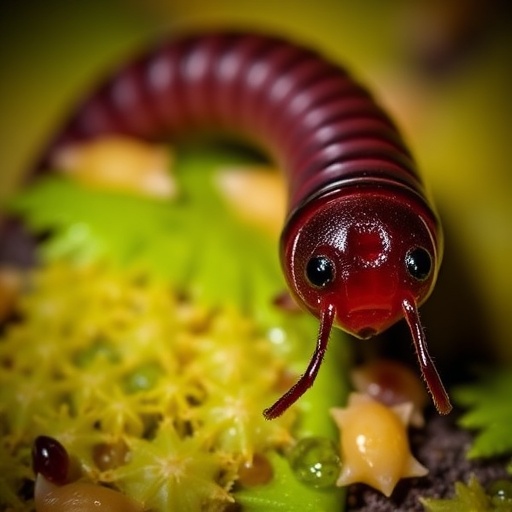
Foul odors can be a cue to something much worse. CSU professor Jessica Metcalf is helping build smarter defenses against the New World screwworm, a blowfly whose larvae feed on living tissue and can cause severe disease in warm-blooded animals. Although the pest was eradicated from the United States more than half a century ago, it recently reappeared in Texas, raising urgent questions about how to detect and interrupt its spread.
Metcalf’s project, funded by the U.S. Department of Agriculture, targets the chemical signals that guide screwworms to their preferred sites: open wounds. When bacteria proliferate in damaged tissue, they release volatile compounds—small molecules that readily vaporize and travel through the air. To animals, the smell often signals infection. To the insect, those same cues indicate a successful location to lay eggs.
Her team is comparing screwworm-attracting “wound volatiles” against odors that lure a related species, the secondary screwworm. Current monitoring relies heavily on bait that mimics the chemistry of rotting meat, which unintentionally recruits the secondary screwworm. That bycatch can overwhelm traps and mask the harder-to-detect New World screwworm.
To separate the two species’ preferences, Metcalf’s group combines chemical profiling with bacterial identification. The goal is to determine which volatile organic compounds (VOCs) are specifically tuned to New World screwworm biology—especially those linked to live tissue rather than dead flesh. Because blowflies also carry and transfer bacteria, the insect–microbe relationship may further sharpen host-seeking behavior.
Another practical benefit is lure optimization for surveillance. Better, species-specific baits can improve monitoring sensitivity, helping detect early incursions before infestations grow widespread. Metcalf’s work also suggests a complementary strategy: potentially redirect or reduce attraction by manipulating the microbial odor landscape around at-risk animals.
The research is supported by partnerships that connect laboratory testing with real-world sampling. Stakeholders swab wounds in the field and receive diagnostic results, while CSU researchers compare wound microbiology and chemical signatures to samples from decomposing tissues. Genomic and chemical analyses are performed through the Colorado State Microbiome (CoSMic) Network, enabling fine-scale resolution of microbial communities.
Control efforts also have a crucial international dimension. The dominant method uses the Sterile Insect Technique, releasing irradiated sterile males produced in facilities such as Panama. Metcalf’s data will help assess whether sterilization alters the flies’ bacterial-associated attraction, which could influence program effectiveness.
By modernizing surveillance tools and deepening understanding of how microbes shape blowfly behavior, Metcalf’s team aims to make outbreak response faster, more accurate, and ultimately more preventive. In a problem where scent can mean survival for an insect and danger for animals, decoding the stink may be the fastest path to better protection.
Cite Scienmag News
Drew Townsend. (July 26, 2026). Study Targets Flesh-Eating Screwworm by Researching Foul Odor Detection. Scienmag. https://scienmag.com/study-targets-flesh-eating-screwworm-by-researching-foul-odor-detection/
Drew Townsend. "Study Targets Flesh-Eating Screwworm by Researching Foul Odor Detection." Scienmag, 26 July 2026, https://scienmag.com/study-targets-flesh-eating-screwworm-by-researching-foul-odor-detection/. Accessed 3 September 2026.
Drew Townsend. "Study Targets Flesh-Eating Screwworm by Researching Foul Odor Detection." Scienmag. July 26, 2026. https://scienmag.com/study-targets-flesh-eating-screwworm-by-researching-foul-odor-detection/


