


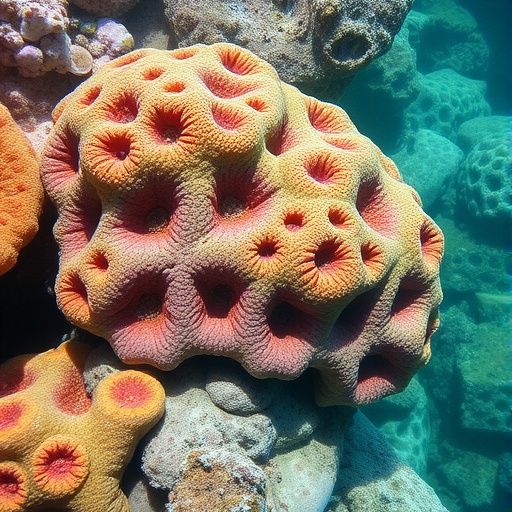
A new study reports that crustose coralline algae (CCA)—a group of reef-building red algae—can act as a natural shield for shallow coral ecosystems by slowing down seawater dissolution. Published in Communications Earth & Environment, the findings highlight how small-scale reef organisms may play an outsized role as climate-driven chemistry destabilizes marine habitats.
Researchers focused on the process of carbonate dissolution, a key pathway by which more acidic or chemically altered seawater reduces the integrity of reef structures. When dissolution outpaces reef growth, the physical framework that protects reef life can weaken, fragment, and disappear.
Using controlled comparisons across reef-relevant conditions, the team examined how the presence of CCA changes local seawater chemistry at the rock–water interface. Their results show that CCA can buffer conditions that would otherwise promote carbonate breakdown, effectively moderating the rate at which dissolution proceeds.
Mechanistically, the buffering effect is tied to how CCA interacts with the carbonate system. By influencing pH and carbonate ion availability right where mineral surfaces meet seawater, CCA creates microenvironments that resist chemical erosion. This means dissolution pressure can be reduced at the exact boundary where structural minerals are most vulnerable.
The paper emphasizes that these effects are not merely theoretical: CCA’s layered, mineralized surfaces can alter local conditions in ways that persist long enough to matter for reef persistence. In shallow environments—where light, flow, and biotic activity vary—such micro-scale chemistry could aggregate into meaningful ecosystem-level outcomes.
The authors also discuss how reef decline under ocean acidification may depend not only on corals themselves but on the community composition of reef-associated species like CCA. In other words, the future of reefs may hinge on who dominates the substrate.
Importantly, the buffering is described as a dynamic balance rather than a permanent reversal. CCA can slow dissolution, but if environmental stress is strong enough, overall reef recovery may still be limited by broader limitations on growth and calcification.
Taken together, the study frames CCA as a potentially critical component of reef resilience. If shallow reefs can retain or restore CCA cover, they may gain an additional layer of protection against carbonate chemistry that currently threatens reef persistence worldwide.
Cite Scienmag News
Violet Maxwell. (July 18, 2026). Crustose Coralline Algae Shield Shallow Reefs from Dissolution. Scienmag. https://scienmag.com/crustose-coralline-algae-shield-shallow-reefs-from-dissolution/
Violet Maxwell. "Crustose Coralline Algae Shield Shallow Reefs from Dissolution." Scienmag, 18 July 2026, https://scienmag.com/crustose-coralline-algae-shield-shallow-reefs-from-dissolution/. Accessed 3 September 2026.
Violet Maxwell. "Crustose Coralline Algae Shield Shallow Reefs from Dissolution." Scienmag. July 18, 2026. https://scienmag.com/crustose-coralline-algae-shield-shallow-reefs-from-dissolution/


