


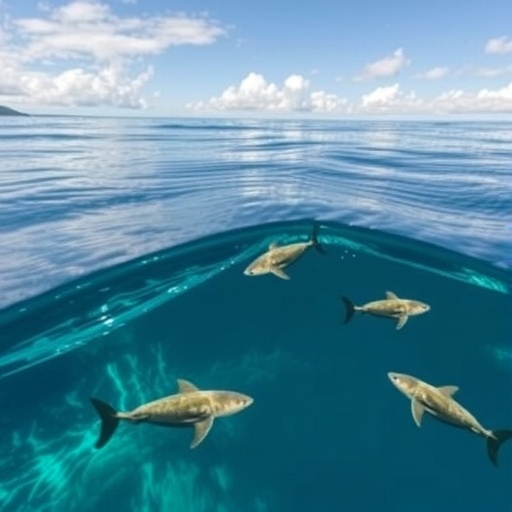
A new study in Nature Climate Change warns that the global push for renewable energy could unintentionally disrupt marine life unless conservation costs are explicitly built into the planning process. Researchers argue that siting offshore wind and other blue-energy projects using conventional methods can lead to predictable ecological trade-offs—especially in areas where sensitive species overlap with high-yield energy resources.
The team, led by Ganley and colleagues, frames the problem as a decision challenge: how to balance biodiversity protection with the need for cost-effective clean power. Using a quantitative optimization approach, the researchers identify where conservation protections would do the most ecological good while limiting increases in project costs. Rather than treating environmental mitigation as an afterthought, the framework incorporates habitat sensitivity and conservation priorities alongside energy economics.
Technically, the method links marine species conservation targets to spatial planning outputs by evaluating how different development patterns change expected ecological outcomes. This allows planners to explore multiple scenarios—some focused on maximizing energy output, others aimed at minimizing ecological harm—and then to select strategies that meet both objectives with less waste than traditional planning.
A central finding is that “win-win” locations exist but require deliberate selection. In some regions, the cheapest energy can coincide with relatively lower conservation risk; in others, pursuing purely cost-driven development would force disproportionately costly biodiversity losses. The model quantifies these imbalances, showing that explicitly accounting for conservation can shift deployment toward areas where ecological benefits per unit cost are higher.
The study also highlights how conservation effectiveness depends on scale and connectivity. Protecting isolated hotspots may not fully prevent broader impacts if species move across larger seascapes. By considering spatial patterns rather than single-point exclusions, the framework better reflects how marine ecosystems function.
For policymakers and industry, the implications are practical: permitting and environmental assessments could become more transparent when they rely on optimization-based plans tied to conservation metrics. This could reduce delays and improve public trust by demonstrating that biodiversity goals are not sacrificed for expediency.
Ultimately, the paper’s message is clear: renewable energy expansion and marine conservation can be aligned, but only if planning tools treat ecological constraints as core design inputs, not optional add-ons.
If adopted more widely, such frameworks could help turn marine spatial planning into a measurable climate solution—one that cuts emissions while preserving the living ocean that supports fisheries, ecosystems, and coastal resilience.
Cite Scienmag News
Faith Mcneil. (July 17, 2026). Protecting marine species while developing cost-effective renewable energy. Scienmag. https://scienmag.com/protecting-marine-species-while-developing-cost-effective-renewable-energy/
Faith Mcneil. "Protecting marine species while developing cost-effective renewable energy." Scienmag, 17 July 2026, https://scienmag.com/protecting-marine-species-while-developing-cost-effective-renewable-energy/. Accessed 4 September 2026.
Faith Mcneil. "Protecting marine species while developing cost-effective renewable energy." Scienmag. July 17, 2026. https://scienmag.com/protecting-marine-species-while-developing-cost-effective-renewable-energy/


