

Thursday, July 16, 2026
Science
No Result
View All Result
  • Login
  • HOME
  • SCIENCE NEWS
  • CONTACT US
  • HOME
  • SCIENCE NEWS
  • CONTACT US
No Result
View All Result
Scienmag
No Result
View All Result
Home Science News Medicine

AI-Guided CRISPR and quantum nanobiology reverse cancer cell behavior

July 16, 2026
in Medicine
Reading Time: 2 mins read
0
AI-Guided CRISPR and quantum nanobiology reverse cancer cell behavior

AI-Guided CRISPR and quantum nanobiology reverse cancer cell behavior

65
SHARES
587
VIEWS
Share on FacebookShare on Twitter
ADVERTISEMENT

Cancer therapy is increasingly limited by two stubborn realities: tumors change their phenotype as they evolve, and they rarely share a single genetic blueprint. That plasticity makes “one-and-done” treatments less effective, while the genetic heterogeneity of malignant cells complicates attempts to precisely reprogram their behavior. Against this backdrop, a new proposal aims to upgrade CRISPR-based medicines beyond suppression—toward steering cancer cells back toward more normal functional states.

The study focuses on why CRISPR gene editing remains difficult in real tumors. Even with careful guide design, off-target effects can occur, specificity can degrade in complex cellular environments, and divergent tumor subpopulations can respond in incompatible ways. The authors argue that these limitations demand a more systems-level approach, combining multiple emerging technologies rather than relying on CRISPR alone.

Their concept unites quantum biology, artificial intelligence, and nanomaterial delivery. Quantum machine learning (QML) models are proposed to simulate microphysical events relevant to gene regulation and DNA repair, including electron tunneling through nucleic-acid damage intermediates and spin-dependent enzyme activity. By incorporating such quantum-informed priors, the AI system could better predict how editing might propagate through molecular pathways rather than only altering a single locus.

Next, AI-driven optimization would be used to select editing targets within oncogenic signaling networks, aiming for coordinated network-level reprogramming. Instead of trying to “turn off” a cancer gene in isolation, the strategy seeks to nudge the broader homeostatic gene-expression circuitry toward states associated with reduced malignancy.

Nanomaterials are central to the delivery plan. Graphene, gold nanoparticles, and lipid-based vectors are discussed as carriers designed to improve biocompatibility and transport CRISPR components into the tumor microenvironment. The goal is to balance efficient uptake with controlled release, so that editing occurs where it matters most—inside heterogeneous tumor niches.

The authors hypothesize that, in experimental cancer models, selected malignant behaviors could be partially reversed by integrating quantum-informed models with AI-guided CRISPR alterations and targeted delivery systems. In this vision, epigenetic reprogramming becomes the mechanistic bridge between molecular editing and phenotypic change.

Still, the work is positioned as a framework rather than a finalized clinical solution. It underscores that substantial preclinical validation will be required to demonstrate reliable specificity, quantify off-target risk, and prove that the predicted network and epigenetic shifts translate into durable functional outcomes in vivo.

If successful, the approach could represent a shift in cancer gene editing—moving from brute-force inhibition toward controlled modulation of malignant cell state, guided by quantum-enhanced computation and enabled by advanced nanocarriers.

Following is what can be filled from the provided content:

Subject of Research: Reversing cancer cell behavior using AI-guided CRISPR and quantum nanobiology for epigenetic reprogramming.

Article Title: Reversing cancer cell behavior using AI-guided CRISPR and quantum nanobiology: a systems-based approach to epigenetic reprogramming.

Article References: Taha, B.A., Addie, A.J., Haider, A.J. et al. Reversing cancer cell behavior using AI-guided CRISPR and quantum nanobiology: a systems-based approach to epigenetic reprogramming. Gene Ther (2026). https://doi.org/10.1038/s41434-026-00632-2

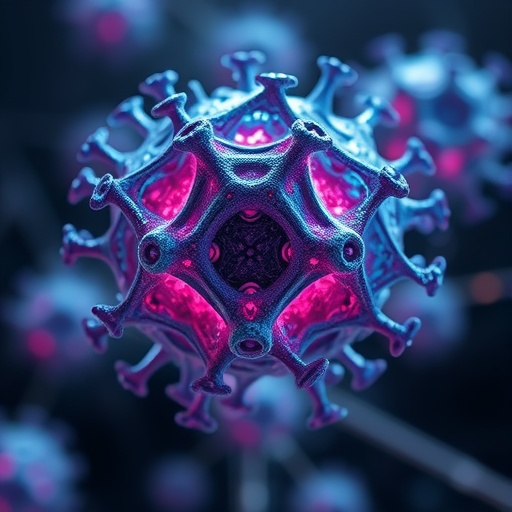
Image Credits: AI Generated

DOI: https://doi.org/10.1038/s41434-026-00632-2

Keywords: CRISPR, quantum machine learning, quantum nanobiology, epigenetic reprogramming, cancer phenotypic plasticity, nanomaterial delivery, DNA repair, AI-guided gene editing

Tags: AI-guided precision medicineCancer cell behavior reprogrammingcell phenotype normalization techniquesCRISPR gene editing limitationsemerging nanobiotechnology applicationsgene regulation and DNA repair modelingnanomaterial delivery systemsoff-target effects in CRISPRquantum biology in cancer therapyquantum machine learning in genomicssystems-level cancer treatment strategiestumor heterogeneity and plasticity
Share26Tweet16
Previous Post

Melbourne Consensus Offers Framework and Expert Guidance on Pancreatic Fat Accumulation

Next Post

Traumatic Experiences Linked to Depression Symptoms in LGBTQ+ People in China

Related Posts

Selectivity Achieved Despite Indiscriminate Photoreduction in New Study
Medicine

Selectivity Achieved Despite Indiscriminate Photoreduction in New Study

July 16, 2026
Medication Complexity and Risk of Rehospitalization in Older Chronic Kidney Disease Patients
Medicine

Medication Complexity and Risk of Rehospitalization in Older Chronic Kidney Disease Patients

July 16, 2026
Association for Molecular Pathology Honors National Cancer Institute Pathologist
Medicine

Association for Molecular Pathology Honors National Cancer Institute Pathologist

July 16, 2026
Scalable Nearly-Pure MOF Membranes Enable Energy-Efficient Gas Separations
Medicine

Scalable Nearly-Pure MOF Membranes Enable Energy-Efficient Gas Separations

July 16, 2026
Modular In Vivo Antibody–ADC Click Reaction Reverses Tumor Drug Resistance
Medicine

Modular In Vivo Antibody–ADC Click Reaction Reverses Tumor Drug Resistance

July 16, 2026
Study Links Early PFAS Exposure to Childhood Intestinal Inflammation at Mount Sinai
Medicine

Study Links Early PFAS Exposure to Childhood Intestinal Inflammation at Mount Sinai

July 16, 2026
Next Post
Traumatic Experiences Linked to Depression Symptoms in LGBTQ+ People in China

Traumatic Experiences Linked to Depression Symptoms in LGBTQ+ People in China

  • Mothers who receive childcare support from maternal grandparents show more

    Mothers who receive childcare support from maternal grandparents show more parental warmth, finds NTU Singapore study

    27656 shares
    Share 11059 Tweet 6912
  • University of Seville Breaks 120-Year-Old Mystery, Revises a Key Einstein Concept

    1061 shares
    Share 424 Tweet 265
  • Bee body mass, pathogens and local climate influence heat tolerance

    682 shares
    Share 273 Tweet 171
  • Researchers record first-ever images and data of a shark experiencing a boat strike

    546 shares
    Share 218 Tweet 137
  • Groundbreaking Clinical Trial Reveals Lubiprostone Enhances Kidney Function

    531 shares
    Share 212 Tweet 133
Science

Embark on a thrilling journey of discovery with Scienmag.com—your ultimate source for cutting-edge breakthroughs. Immerse yourself in a world where curiosity knows no limits and tomorrow’s possibilities become today’s reality!

RECENT NEWS

  • Ester Sztein Wins Prestigious American Geosciences Institute Award from GSA
  • Simulation boosts nursing students’ home-visit training immersion, skills still under study
  • New Library for Feynman Integrals Advances Particle Physics Calculations
  • New model rules mark meaningful step toward digital inheritance laws

Categories

  • Agriculture
  • Anthropology
  • Archaeology
  • Athmospheric
  • Biology
  • Biotechnology
  • Blog
  • Bussines
  • Cancer
  • Chemistry
  • Climate
  • Earth Science
  • Editorial Policy
  • Marine
  • Mathematics
  • Medicine
  • Pediatry
  • Policy
  • Psychology & Psychiatry
  • Science Education
  • Social Science
  • Space
  • Technology and Engineering

Subscribe to Blog via Email

Enter your email address to subscribe to this blog and receive notifications of new posts by email.

Join 5,146 other subscribers

© 2025 Scienmag - Science Magazine

Welcome Back!

Login to your account below

Forgotten Password?

Retrieve your password

Please enter your username or email address to reset your password.

Log In
No Result
View All Result
  • HOME
  • SCIENCE NEWS
  • CONTACT US

© 2025 Scienmag - Science Magazine

Discover more from Science

Subscribe now to keep reading and get access to the full archive.

Continue reading
