

Thursday, September 3, 2026
Science
No Result
View All Result
  • Login
  • HOME
  • SCIENCE NEWS
  • CONTACT US
  • HOME
  • SCIENCE NEWS
  • CONTACT US
No Result
View All Result
Scienmag
No Result
View All Result
Home Science News Agriculture

Gene edit boosts rice safety while preserving high harvest yields

July 16, 2026
in Agriculture
Juliet Wilcox
By Juliet Wilcox Scienmag Editorial Profile - Human Genetics
Reading Time: 2 mins read
0
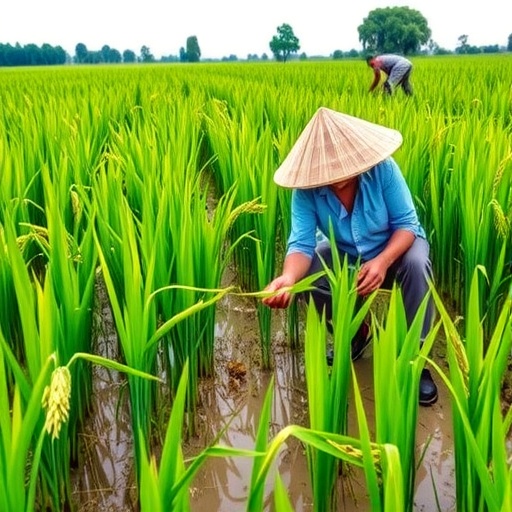
Gene edit boosts rice safety while preserving high harvest yields

Gene edit boosts rice safety while preserving high harvest yields

65
SHARES
587
VIEWS
Share on FacebookShare on Twitter
ADVERTISEMENT

Cadmium (Cd) contamination is a growing threat to food safety, and rice is one of the most vulnerable crops. Because rice plants can accumulate cadmium from contaminated soils more readily than many other staples, Cd can become a major dietary exposure route for large parts of the world’s population. Yet attempts to lower cadmium often create trade-offs—reducing uptake of essential nutrients or weakening plant performance.

A new study from Okayama University, Japan, and collaborating researchers in China reports a precision-editing strategy designed to avoid those trade-offs. The team focused on the rice metal transporter gene OsNramp5, which is known to move metals such as manganese and cadmium, and used base-editing to search for a beneficial point mutation within the gene rather than disabling it.

Using adenine and cytosine base editors, the researchers generated more than 1,600 genome-edited rice lines and screened them for reduced cadmium accumulation. Their saturation mutagenesis approach targeted OsNramp5 to identify variants that kept normal plant physiology while limiting Cd buildup in grain.

The key breakthrough was the I441T substitution: changing isoleucine to threonine at amino acid position 441. This single change reduced cadmium levels in both shoots and brown rice without altering gene expression, protein abundance, or the subcellular localization of the transporter.

Importantly, the mutation did not come at the cost of micronutrients. Field trials on cadmium-contaminated soil showed a 48% decrease in cadmium concentration in brown rice, from 0.14 mg/kg in wild type to 0.07 mg/kg in the edited plants, while iron, manganese, and zinc levels remained essentially unchanged.

The researchers then explored the mechanism behind the selective effect. Although OsNramp5 transports multiple metals, the I441T mutation shifted its selectivity—enhancing zinc transport preference. Increased zinc accumulation in root cells promoted competitive inhibition against cadmium during root-to-shoot movement.

Instead of completely blocking cadmium uptake, the edited transporter selectively limited cadmium translocation, reducing grain contamination while preserving essential mineral delivery. The team supported these conclusions with physiological assessments, gene and protein analyses, yeast transport assays, and agronomic evaluation.

Overall, the work demonstrates how precision genome editing can address a long-standing breeding challenge: lowering toxic metal accumulation without disrupting nutrient homeostasis. The researchers propose that the OsNramp5I441T allele could accelerate development of safer rice varieties for mildly contaminated regions.

Subject of Research: Not applicable
Article Title: Genome-edited rice variety with low-cadmium accumulation in the grain
News Publication Date: 18-Jun-2026
Web References: http://dx.doi.org/10.1073/pnas.2610609123
References:

Article Title: Gene edit boosts rice safety while preserving high harvest yields

Article References: Original research article

Image Credits: AI Generated

DOI: Not provided

Keywords: cadmium, rice, OsNramp5, base editing, genome editing, metal transporters, food safety, micronutrients, zinc competition, plant breeding

Cite Scienmag News

Juliet Wilcox. (July 16, 2026). Gene edit boosts rice safety while preserving high harvest yields. Scienmag. https://scienmag.com/gene-edit-boosts-rice-safety-while-preserving-high-harvest-yields/

Juliet Wilcox. "Gene edit boosts rice safety while preserving high harvest yields." Scienmag, 16 July 2026, https://scienmag.com/gene-edit-boosts-rice-safety-while-preserving-high-harvest-yields/. Accessed 3 September 2026.

Juliet Wilcox. "Gene edit boosts rice safety while preserving high harvest yields." Scienmag. July 16, 2026. https://scienmag.com/gene-edit-boosts-rice-safety-while-preserving-high-harvest-yields/


Tags: Base Editing technologycadmium contamination reductioncrop yield preservationenvironmental and health impact of cadmiumGene editing in ricegenome saturation mutagenesisOsNramp5 metal transporter geneplant nutrient balanceprecision genome editingrice food safety improvementrice genetic modificationtargeted mutation for heavy metal uptake
Share26Tweet16
Previous Post

2024 Migration Pact Reshapes European Union Migration Governance

Next Post

Hasanuddin University Study Shows Bacterial Cellulose for High-Performance Energy Storage

Related Posts

Industrial Waste and Designer Biochar Join Forces to Rescue the World’s Dying Soils
Agriculture

Industrial Waste and Designer Biochar Join Forces to Rescue the World’s Dying Soils

September 3, 2026
Transfer learning enables a generalizable model for counting crop stands
Agriculture

Transfer learning enables a generalizable model for counting crop stands

September 3, 2026
Tropical Maize Germplasm Shows Genetic Variation in Silage Nutritional Quality Across Environments
Agriculture

Tropical Maize Germplasm Shows Genetic Variation in Silage Nutritional Quality Across Environments

August 31, 2026
APSIM and AquaCrop simulations weigh water, nitrogen, and weed effects on yields
Agriculture

APSIM and AquaCrop simulations weigh water, nitrogen, and weed effects on yields

August 31, 2026
Straw and warming reshape soil carbon formation pathways in paddy fields
Agriculture

Straw and warming reshape soil carbon formation pathways in paddy fields

August 30, 2026
Selection mapping uncovers candidate genes for day-neutral flowering in cotton
Agriculture

Selection mapping uncovers candidate genes for day-neutral flowering in cotton

August 30, 2026
Next Post
Hasanuddin University Study Shows Bacterial Cellulose for High-Performance Energy Storage

Hasanuddin University Study Shows Bacterial Cellulose for High-Performance Energy Storage

  • Mothers who receive childcare support from maternal grandparents show more optimized

    Mothers who receive childcare support from maternal grandparents show more parental warmth, finds NTU Singapore study

    27656 shares
    Share 11059 Tweet 6912
  • University of Seville Breaks 120-Year-Old Mystery, Revises a Key Einstein Concept

    1061 shares
    Share 424 Tweet 265
  • Bee body mass, pathogens and local climate influence heat tolerance

    682 shares
    Share 273 Tweet 171
  • Researchers record first-ever images and data of a shark experiencing a boat strike

    546 shares
    Share 218 Tweet 137
  • Groundbreaking Clinical Trial Reveals Lubiprostone Enhances Kidney Function

    531 shares
    Share 212 Tweet 133
Science

Embark on a thrilling journey of discovery with Scienmag.com—your ultimate source for cutting-edge breakthroughs. Immerse yourself in a world where curiosity knows no limits and tomorrow’s possibilities become today’s reality!

RECENT NEWS

  • Ketogenic Diet Shows Promise as Epigenetic Therapy for SETD1B Epilepsy
  • How Plants Fight Back: The Molecular Arms Race Against Aphids
  • Adverse Drug Reactions Common and Often Preventable in Ethiopian Obstetric Patients
  • Expert Insights on Cancer Care Leadership With Professor Timothy Eberlein

Categories

  • Agriculture
  • Anthropology
  • Archaeology
  • Athmospheric
  • Biology
  • Biotechnology
  • Blog
  • Bussines
  • Cancer
  • Chemistry
  • Climate
  • Earth Science
  • Editorial Policy
  • Marine
  • Mathematics
  • Medicine
  • Pediatry
  • Policy
  • Psychology & Psychiatry
  • Science Education
  • Social Science
  • Space
  • Technology and Engineering

Subscribe to Blog via Email

Enter your email address to subscribe to this blog and receive notifications of new posts by email.

Join 5,151 other subscribers

© 2025 Scienmag - Science Magazine

Welcome Back!

Login to your account below

Forgotten Password?

Retrieve your password

Please enter your username or email address to reset your password.

Log In
No Result
View All Result
  • HOME
  • SCIENCE NEWS
  • CONTACT US

© 2025 Scienmag - Science Magazine

Discover more from Science

Subscribe now to keep reading and get access to the full archive.

Continue reading