


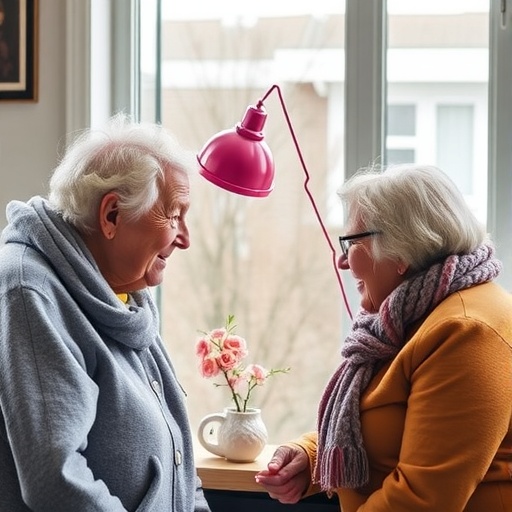
A sweeping new study led by the European Academy of Neurology (EAN) has quantified the staggering economic impact of dementia across high-income European countries, revealing that the majority of associated costs stem from unpaid caregiving rather than formal healthcare services. The research underscores the critical but often invisible role played by family members and informal caregivers in supporting millions affected by dementia.
According to the analysis published in the Journal of Alzheimer’s Disease, approximately 8.8 million individuals were living with dementia in 2019 throughout wealthier European nations, where dementia-related expenditures amount to roughly 1.6% of regional GDP. Notably, unpaid informal care costs soared to €128 billion annually, eclipsing direct healthcare expenses which totaled €93 billion. This highlights the immense societal burden placed outside traditional medical systems.
The study’s lead author, Prof. Richard Dodel from the University of Duisburg-Essen, emphasized that as populations age, dementia prevalence—and the economic strain—are projected to rise sharply. He stressed the disproportionate responsibility borne by unpaid caregivers, who manage complex, long-term care demands with limited recognition or support, often experiencing significant emotional and physical challenges themselves.
To address inconsistent methodologies in prior research, the team employed a standardized framework harmonizing data from 45 European dementia cost studies and prevalence estimates from the Global Burden of Disease 2021 study. Costs were classified into direct medical expenses, informal care, and indirect costs such as lost productivity, with all financial figures adjusted to 2019 purchasing power parity euros for comparability.
Results showed wide variation in per-person costs across countries, with Germany, Italy, the UK, France, and Spain accounting for nearly 68% of the total economic burden—reflecting their population sizes and care needs. On average, the annual societal cost per dementia patient was around €25,200, underscoring the heavy financial toll on families and health systems alike.
The findings advocate for urgent public health interventions, including earlier diagnosis pathways, caregiver support services, investment in dementia care infrastructure, and preventative strategies targeting modifiable risk factors. Prof. Dodel called for enhanced healthcare policies recognizing informal caregiving’s critical contribution and addressing caregivers’ wellbeing.
As groundbreaking treatments emerge for early-stage Alzheimer’s disease, the study highlights a persistent gap in therapies for advanced dementia phases and calls for intensified research into optimizing long-term care and support frameworks. Collectively, these insights offer a vital roadmap for policymakers seeking to mitigate dementia’s escalating societal costs while supporting millions of affected families across Europe.
News Publication Date: 14-Jul-2026
Web References: https://www.ean.org/research/projects/economic-burden-of-neurological-diseases-in-europe
References:
1. Montes-Martinez, M. et al. (2026). The Economic Burden of Dementia in Europe: COIN-Eu Dementia. Journal of Alzheimer’s Disease.
2. Global Burden of Disease Collaborative Network (2024). GBD 2021 Results. IHME.
3. Nichols, E. et al. (2022). Estimation of global dementia prevalence (Lancet Public Health)
Cite Scienmag News
Cassandra Pierce. (July 13, 2026). Dementia Costs Exceed €221 Billion Annually in Wealthy European Nations. Scienmag. https://scienmag.com/dementia-costs-exceed-e221-billion-annually-in-wealthy-european-nations/
Cassandra Pierce. "Dementia Costs Exceed €221 Billion Annually in Wealthy European Nations." Scienmag, 13 July 2026, https://scienmag.com/dementia-costs-exceed-e221-billion-annually-in-wealthy-european-nations/. Accessed 4 September 2026.
Cassandra Pierce. "Dementia Costs Exceed €221 Billion Annually in Wealthy European Nations." Scienmag. July 13, 2026. https://scienmag.com/dementia-costs-exceed-e221-billion-annually-in-wealthy-european-nations/


