

Monday, July 13, 2026
Science
No Result
View All Result
  • Login
  • HOME
  • SCIENCE NEWS
  • CONTACT US
  • HOME
  • SCIENCE NEWS
  • CONTACT US
No Result
View All Result
Scienmag
No Result
View All Result
Home Science News Bussines

Scientists and Citizens More Effective Than Government in Driving Action, Study Shows

July 13, 2026
in Bussines
Reading Time: 2 mins read
0
Scientists and Citizens More Effective Than Government in Driving Action, Study Shows

Scientists and Citizens More Effective Than Government in Driving Action, Study Shows

65
SHARES
587
VIEWS
Share on FacebookShare on Twitter
ADVERTISEMENT

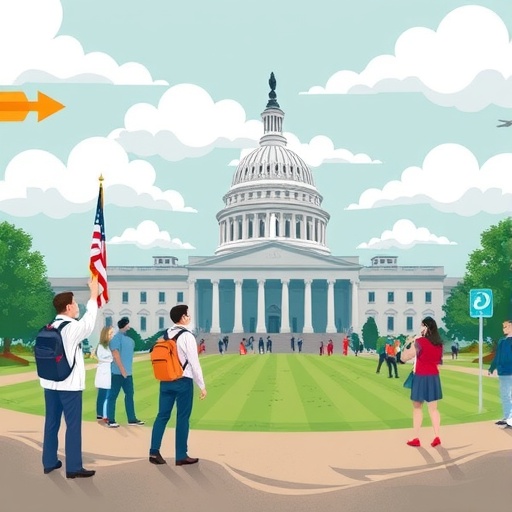
In a comprehensive new study published in the Proceedings of the National Academy of Sciences, researchers from Boston College and Princeton University reveal a critical insight into what motivates Americans to take action on pressing societal challenges. Contrary to conventional assumptions that government agencies and large corporations wield the most influence, findings demonstrate that a combined endorsement from scientists and ordinary citizens is far more effective in catalyzing public engagement and behavior change, even in the face of opposition from powerful institutions.

The research, spanning four distinct studies involving approximately 55,000 participants, demonstrates a consistent pattern: when both scientific experts and everyday people align in support of a solution, the public’s willingness to act increases significantly. This effect was observed across a broad spectrum of issues, including climate change policies, electric vehicle adoption, sustainable food sources, vaccination uptake, AI governance, misinformation management, and data privacy concerns.

The study employed rigorous experimental methods, combining online experiments where participants selected between competing policies or products based on the groups endorsing them, with real-world interventions such as charitable donations to nonprofits and engagement with targeted social media advertisements. This mixed-methods approach bolstered the validity of the findings, pointing to a robust psychological mechanism underpinning public action: trust in the concordance of expert and social consensus overrides resistance or skepticism generated by governmental and industrial dissent.

Lead author Anandita Sabherwal noted that these results challenge prevailing notions that institutional failure necessarily leads to public apathy. Instead, the alignment between scientific authorities and the broader community can serve as a potent mobilizing force. This suggests that grassroots and expert coalitions may be key to overcoming stagnation and inertia in confronting environmental, health, and technological crises.

Senior author Gregg Sparkman emphasized the nuance that, although institutions like governments and corporations hold structural power, their failure to act does not equate to a loss of public agency. The data reveal an empowering narrative where the collective voice—scientific and social—fosters meaningful change even without top-down leadership.

Looking ahead, the research team plans to extend these investigations cross-culturally, examining how varying degrees of institutional trust impact the relative influence of experts and citizens globally. Such comparative studies will further elucidate whether the efficacy of combined scientific and social consensus is universally applicable or context-dependent.

This work advances our understanding of societal dynamics in an era marked by institutional distrust and information overload. It underscores the critical role that transparent, joint signaling from credible experts and engaged citizens plays in galvanizing public action on complex challenges, offering a strategic pathway for advocates and policymakers aiming to mobilize change.

Subject of Research: People
Article Title: Combined signals of scientific and social consensus best mobilize action on societal challenges even if government and industry oppose
News Publication Date: 13-Jul-2026
Keywords: public mobilization, scientific consensus, social consensus, environmental policy, health behavior, technology adoption, institutional trust

Tags: AI governance public opinioncitizen influence on policyclimate change activismeffective public persuasionhealth behavior promotionmisinformation mitigationPublic engagementscience and citizen collaborationscience communicationsocial media influence on public actionsocietal behavior changesustainable development advocacy
Share26Tweet16
Previous Post

New AI Model Aids Water Management Amid Worsening National Drought

Next Post

Pregnancy Could Indicate Future Heart and Metabolic Health Risks

Related Posts

Study Links Rural-Urban Mortality Gap to Stress and Infrastructure Issues
Bussines

Study Links Rural-Urban Mortality Gap to Stress and Infrastructure Issues

July 13, 2026
Dementia Costs Exceed €221 Billion Annually in Wealthy European Nations
Bussines

Dementia Costs Exceed €221 Billion Annually in Wealthy European Nations

July 13, 2026
China Advances Strategies for Managing Earthquake Risks
Bussines

China Advances Strategies for Managing Earthquake Risks

July 13, 2026
Digital therapy offers new support for dementia caregivers
Bussines

Digital therapy offers new support for dementia caregivers

July 12, 2026
Hassen Elected Fellow of American Society for Nondestructive Testing
Bussines

Hassen Elected Fellow of American Society for Nondestructive Testing

July 10, 2026
Insurance Denials for Brand-Name Drugs Surge Between 2018 and 2024
Bussines

Insurance Denials for Brand-Name Drugs Surge Between 2018 and 2024

July 10, 2026
Next Post
Pregnancy Could Indicate Future Heart and Metabolic Health Risks

Pregnancy Could Indicate Future Heart and Metabolic Health Risks

  • Mothers who receive childcare support from maternal grandparents show more

    Mothers who receive childcare support from maternal grandparents show more parental warmth, finds NTU Singapore study

    27656 shares
    Share 11059 Tweet 6912
  • University of Seville Breaks 120-Year-Old Mystery, Revises a Key Einstein Concept

    1061 shares
    Share 424 Tweet 265
  • Bee body mass, pathogens and local climate influence heat tolerance

    682 shares
    Share 273 Tweet 171
  • Researchers record first-ever images and data of a shark experiencing a boat strike

    546 shares
    Share 218 Tweet 137
  • Groundbreaking Clinical Trial Reveals Lubiprostone Enhances Kidney Function

    531 shares
    Share 212 Tweet 133
Science

Embark on a thrilling journey of discovery with Scienmag.com—your ultimate source for cutting-edge breakthroughs. Immerse yourself in a world where curiosity knows no limits and tomorrow’s possibilities become today’s reality!

RECENT NEWS

  • IU Study Links Obesity to Leukemia, Weight-Loss Drugs Could Halt It
  • CCNY Researchers Unveil Breakthrough in Quantum Materials Science
  • Groundbreaking Surgery Completed on Western Lowland Gorilla at San Diego Zoo
  • Study Links Rural-Urban Mortality Gap to Stress and Infrastructure Issues

Categories

  • Agriculture
  • Anthropology
  • Archaeology
  • Athmospheric
  • Biology
  • Biotechnology
  • Blog
  • Bussines
  • Cancer
  • Chemistry
  • Climate
  • Earth Science
  • Editorial Policy
  • Marine
  • Mathematics
  • Medicine
  • Pediatry
  • Policy
  • Psychology & Psychiatry
  • Science Education
  • Social Science
  • Space
  • Technology and Engineering

Subscribe to Blog via Email

Enter your email address to subscribe to this blog and receive notifications of new posts by email.

Join 5,146 other subscribers

© 2025 Scienmag - Science Magazine

Welcome Back!

Login to your account below

Forgotten Password?

Retrieve your password

Please enter your username or email address to reset your password.

Log In
No Result
View All Result
  • HOME
  • SCIENCE NEWS
  • CONTACT US

© 2025 Scienmag - Science Magazine

Discover more from Science

Subscribe now to keep reading and get access to the full archive.

Continue reading
