


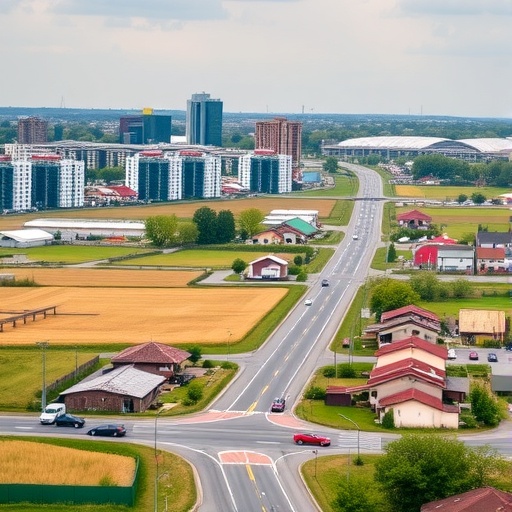
In the late 1990s, a troubling trend emerged in the United States: mortality rates among working-age adults began diverging sharply between rural and urban populations. While rural residents initially experienced roughly 9% higher mortality, this disparity has ballooned over the past two decades. By 2019, individuals living in rural areas were 43% more likely to die from natural causes compared to their urban counterparts. Despite its significance, the underlying causes of this mortality gap have remained elusive—until now.
A recent collaborative study by researchers at the University of Illinois Urbana-Champaign and the USDA Economic Research Service has shed new light on this pressing public health challenge. Utilizing data from the National Health and Nutrition Examination Survey (NHANES), which includes over 66,000 individuals tracked over a 20-year period, the team combined biomarker analyses with detailed place-based information. This integrative approach allowed them to identify key physiological and environmental drivers influencing health in rural versus urban settings.
Central to their findings is the role of chronic stress, quantified through a cardiometabolic index incorporating blood pressure, cholesterol levels, pulse rate, diabetes status, and obesity measures. These biomarkers serve as proxies for allostatic load—the cumulative wear and tear on the body caused by chronic physiological stress. The researchers found that rural residents exhibited significantly higher cardiometabolic risk, indicating greater chronic stress levels compared to urban dwellers.
Nicotine use and dietary patterns emerged as additional significant factors exacerbating rural health disadvantages. Rural populations showed higher rates of smoking and obesity, both contributing to elevated cardiometabolic indices. The study emphasizes that these disparities are not solely due to residing in rural areas but stem from characteristics intrinsic to many rural communities.
Socioeconomic and occupational stressors further compound these health challenges. Farming, inherently demanding and stressful, predominates in many rural regions, while the decline of rural manufacturing since the late 1990s has eroded local economies. Additionally, rural adults often juggle caregiving responsibilities for both children and elderly relatives, heightening their stress exposure.
Importantly, the researchers highlight disparities in access to health-promoting resources: limited availability of full-service grocery stores, gyms, and healthcare facilities in rural counties contributes to poor health outcomes. This place-based disadvantage exacerbates chronic stress and unhealthy behaviors, suggesting that interventions must go beyond individual lifestyle changes to address systemic community deficiencies.
Ultimately, the study’s nuanced findings reveal that the rural-urban mortality gap is driven less by rural residency itself and more by modifiable environmental and behavioral factors characterizing rural life. Policy efforts focusing on improving rural access to nutritious foods, encouraging smoking cessation, combating obesity, and expanding healthcare infrastructure could significantly narrow this health divide.
By unraveling the complex interplay between chronic stress, lifestyle factors, and place-based conditions, this research offers a powerful evidence base to inform efforts aimed at enhancing rural health and workforce productivity. Addressing these disparities not only benefits individual well-being but also supports the economic vitality of rural America.
Cite Scienmag News
Courtney Benton. (July 13, 2026). Study Links Rural-Urban Mortality Gap to Stress and Infrastructure Issues. Scienmag. https://scienmag.com/study-links-rural-urban-mortality-gap-to-stress-and-infrastructure-issues/
Courtney Benton. "Study Links Rural-Urban Mortality Gap to Stress and Infrastructure Issues." Scienmag, 13 July 2026, https://scienmag.com/study-links-rural-urban-mortality-gap-to-stress-and-infrastructure-issues/. Accessed 3 September 2026.
Courtney Benton. "Study Links Rural-Urban Mortality Gap to Stress and Infrastructure Issues." Scienmag. July 13, 2026. https://scienmag.com/study-links-rural-urban-mortality-gap-to-stress-and-infrastructure-issues/


