


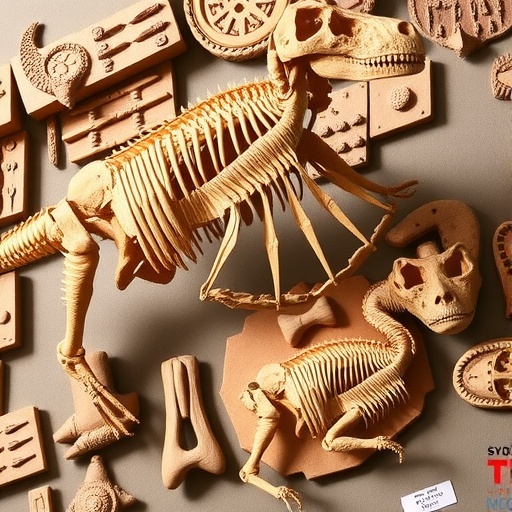
The society of vertebrate paleontology voices concern over “Gus,” an exceptional Tyrannosaurus rex fossil, currently poised for auction—a development that sparks significant public interest but raises critical scientific preservation questions. As a rare and near-complete specimen, “Gus” exemplifies the scientific treasure trove that vertebrate fossils represent beyond their monetary value.
SVP asserts that fossils of such profound scientific importance belong in accredited public institutions like museums and universities. These institutions provide the rigorous documentation, preservation, and continual accessibility essential for ongoing research and public education. Without such stewardship, the scientific potential of these irreplaceable records of Earth’s biological past risks being irreversibly compromised.
Vertebrate fossils preserve unique insights into ancient life, encompassing evolutionary patterns, paleobiology, and paleoecology. Yet, the true value of these specimens often unfolds long after their discovery. Kristina Curry Rogers, SVP Vice President, underscores that the initial fossil find is only a prelude to decades of scientific inquiry enabled by emerging technologies and methodologies.
Cutting-edge research tools such as high-resolution computed tomography (CT) scans reveal intricate internal structures, while geochemical and molecular analyses unlock data on growth processes, disease, and environmental interactions of extinct organisms. These techniques thrive on access to well-preserved fossils housed in public collections, where they can be revisited as scientific questions and technologies evolve.
The role of private collectors, landowners, and commercial excavators in unearthing remarkable fossils is acknowledged and valued. Nonetheless, SVP emphasizes that safeguarding a specimen’s long-term scientific significance requires meticulous record-keeping, professional curation, and public accessibility—standards sometimes unmet in private sales and auctions.
As the market for dinosaur fossils escalates, public institutions face increasing obstacles in acquiring key specimens for research and education. The transfer of critical fossils into private hands, absent provisions for scientific access, threatens to stifle future discoveries and diminish the educational potential of these finds.
SVP calls for collaborative frameworks involving fossil discoverers, auction houses, and potential buyers to prioritize the preservation of scientific heritage. Ensuring that important vertebrate fossils remain accessible in public repositories is paramount for advancing paleontological knowledge and sharing humanity’s ancient biological legacy.
Founded in 1940, the Society of Vertebrate Paleontology remains dedicated to the ethical stewardship and study of fossil vertebrates, fostering scientific progress through research, education, and conservation.
Cite Scienmag News
Violet Maxwell. (July 13, 2026). Vertebrate Paleontologists Call to Protect Fossils Before T. rex Auction. Scienmag. https://scienmag.com/vertebrate-paleontologists-call-to-protect-fossils-before-t-rex-auction/
Violet Maxwell. "Vertebrate Paleontologists Call to Protect Fossils Before T. rex Auction." Scienmag, 13 July 2026, https://scienmag.com/vertebrate-paleontologists-call-to-protect-fossils-before-t-rex-auction/. Accessed 4 September 2026.
Violet Maxwell. "Vertebrate Paleontologists Call to Protect Fossils Before T. rex Auction." Scienmag. July 13, 2026. https://scienmag.com/vertebrate-paleontologists-call-to-protect-fossils-before-t-rex-auction/


