


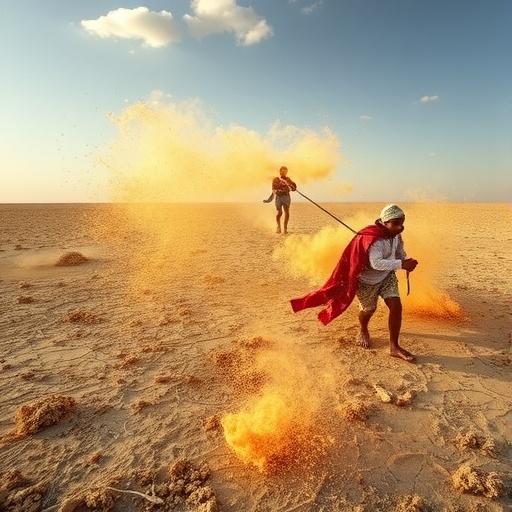
A new study sheds light on the evolving patterns of hydrometeorological drought across North Africa, revealing alarming signs of anthropogenic influence exacerbating these extreme weather events. Researchers led by M. Rahimpour and colleagues meticulously analyzed long-term climate and hydrological data to pinpoint both spatial and temporal variations in drought severity and frequency throughout the region.
This comprehensive investigation combined atmospheric, precipitation, and soil moisture observations with advanced statistical methods to unravel the intricate relationships driving drought dynamics. The research delves beyond mere characterization of drought episodes, uncovering evidence that human activities—such as land use changes and greenhouse gas emissions—are amplifying natural drought cycles. This anthropogenic amplification not only increases the intensity but also prolongs the duration of droughts, compounding challenges for water management.
The North African region is uniquely vulnerable due to its arid and semi-arid climates, where slight shifts in rainfall patterns dramatically impact agriculture, ecosystems, and livelihoods. The study highlights substantial spatiotemporal heterogeneity, with certain subregions experiencing intensified drought conditions while others show fluctuating drought frequencies. These findings complicate predictions and necessitate localized adaptation strategies to effectively mitigate impacts.
Hydrometeorological drought, characterized by deficits in both meteorological inputs and hydrological storage, poses unprecedented risks for water availability. The researchers employed cutting-edge models integrating hydrometeorological variables to quantify drought severity indices, accounting for interactions between precipitation deficits and declining soil moisture levels. Their approach underscores the critical importance of considering the coupled atmosphere-land system in drought assessment.
Importantly, the work presents future projections suggesting a worrying trend: ongoing greenhouse gas concentrations, combined with regional anthropogenic pressures, will likely drive more severe drought events. This intensification could severely strain water resources, agriculture, and energy sectors reliant on hydrological stability. The research calls for immediate attention to mitigation measures aimed at reducing emissions and enhancing water use efficiency.
Furthermore, the study advocates for improved drought monitoring frameworks across North Africa, integrating high-resolution satellite data with ground-based observations. Such enhanced surveillance would enable timely early warning systems, vital for vulnerable communities dependent on rain-fed agriculture and surface water.
By highlighting the dual forces of natural variability and human-induced changes shaping droughts, this research prompts policymakers and scientists alike to prioritize sustainable water management and climate resilience. The findings serve as a stark reminder that combating drought in North Africa requires a multifaceted approach addressing both environmental and socio-economic drivers.
As drought risks mount amid accelerating climate change, studies like this provide indispensable knowledge to safeguard water resources and food security. The integration of spatiotemporal analyses with anthropogenic impact assessments illuminates the path forward for research and policy interventions tailored to the unique challenges of North Africa’s arid landscapes.
Cite Scienmag News
Violet Maxwell. (July 13, 2026). Human Activities Intensify Hydrometeorological Drought Across North Africa Over Time. Scienmag. https://scienmag.com/human-activities-intensify-hydrometeorological-drought-across-north-africa-over-time/
Violet Maxwell. "Human Activities Intensify Hydrometeorological Drought Across North Africa Over Time." Scienmag, 13 July 2026, https://scienmag.com/human-activities-intensify-hydrometeorological-drought-across-north-africa-over-time/. Accessed 4 September 2026.
Violet Maxwell. "Human Activities Intensify Hydrometeorological Drought Across North Africa Over Time." Scienmag. July 13, 2026. https://scienmag.com/human-activities-intensify-hydrometeorological-drought-across-north-africa-over-time/


