


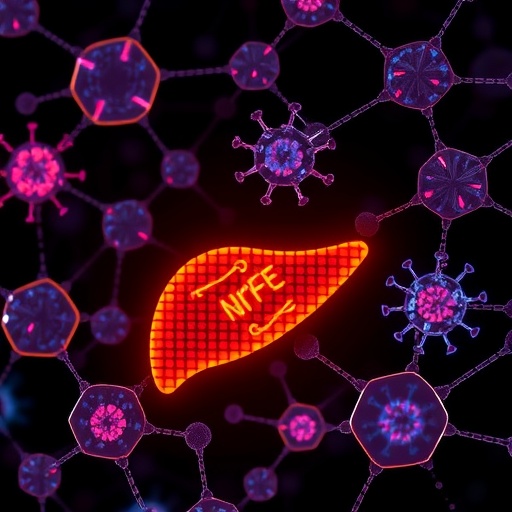
In a groundbreaking study that could reshape our understanding of immune regulation in cancer, researchers have identified how a master regulator of cellular metabolism, Nrf2, facilitates the accumulation of regulatory T cells (Tregs) within hepatocellular carcinoma (HCC). This discovery opens new avenues for therapeutic intervention in liver cancer, a malignancy notorious for its poor prognosis and resistance to immunotherapy.
Hepatocellular carcinoma, the most common primary liver cancer, creates an immunosuppressive microenvironment that enables tumor growth and metastasis. Central to this immunosuppression are Tregs, which dampen anti-tumor immune responses, allowing cancer cells to evade detection and destruction. However, the metabolic pathways driving the expansion and maintenance of Tregs within the tumor milieu have remained elusive—until now.
The study, led by Perpiñán, Sompairac, and Marin Correa and published in Nature Communications in 2026, highlights the pivotal role of Nrf2, a transcription factor well-known for its role in oxidative stress response. Their work demonstrates that Nrf2 activation prompts a metabolic reprogramming in Tregs that supports their proliferation and immunosuppressive function within HCC tumors.
Through detailed molecular analyses, the researchers revealed that Nrf2 orchestrates a shift in Treg metabolism toward enhanced oxidative phosphorylation and glutamine metabolism. This metabolic adaptation not only boosts Treg survival but also reinforces their suppressive capabilities in the tumor microenvironment. By modulating key metabolic enzymes and pathways, Nrf2 effectively tailors Tregs’ energy requirements to the hostile, nutrient-deprived cancer niche.
This metabolic rewiring driven by Nrf2 contrasts with the glycolytic reliance commonly observed in effector T cells, underscoring the distinct bioenergetic demands that define immune cell subsets in cancer. The ability of Tregs to flexibly adapt their metabolism may contribute significantly to their dominance in HCC, thereby undermining effective anti-tumor immunity.
Importantly, the research team utilized both in vitro systems and murine models of HCC to validate the role of Nrf2, showing that genetic or pharmacological inhibition of Nrf2 reduced Treg infiltration and slowed tumor progression. These findings suggest that Nrf2 may serve as a promising target to reshape the tumor immune landscape, potentially enhancing the efficacy of existing immunotherapies.
Moreover, this study sheds light on the intersection between metabolic control and immune regulation, a nexus gaining attention for its therapeutic potential. By unraveling the mechanistic links between Nrf2-driven metabolism and Treg function, the research provides valuable insights that could inform combination strategies integrating metabolic inhibitors with checkpoint blockade therapies.
As liver cancer incidence rises globally and clinical outcomes remain dismal for advanced disease, innovative approaches tapping into tumor metabolism and immune modulation are urgently needed. Nrf2’s role in Treg accumulation presents a compelling target to disrupt the immunosuppressive fortress within HCC, offering new hope for more effective treatments.
Future investigations will need to explore how Nrf2’s metabolic programming interplays with other cellular processes in the tumor microenvironment and assess the safety and efficacy of Nrf2 inhibitors in clinical settings. Nonetheless, this study marks a significant step forward in decoding the metabolic underpinnings of immune escape in liver cancer.
Perpiñán, E., Sompairac, N., Marin Correa, D. et al. Nrf2-mediated metabolic reprogramming drives regulatory T cell accumulation in hepatocellular carcinoma. Nat Commun (2026). https://doi.org/10.1038/s41467-026-73485-3
Cite Scienmag News
Nathaniel Bowman. (July 13, 2026). Nrf2 Metabolic Shift Boosts Regulatory T Cells in Liver Cancer. Scienmag. https://scienmag.com/nrf2-metabolic-shift-boosts-regulatory-t-cells-in-liver-cancer/
Nathaniel Bowman. "Nrf2 Metabolic Shift Boosts Regulatory T Cells in Liver Cancer." Scienmag, 13 July 2026, https://scienmag.com/nrf2-metabolic-shift-boosts-regulatory-t-cells-in-liver-cancer/. Accessed 3 September 2026.
Nathaniel Bowman. "Nrf2 Metabolic Shift Boosts Regulatory T Cells in Liver Cancer." Scienmag. July 13, 2026. https://scienmag.com/nrf2-metabolic-shift-boosts-regulatory-t-cells-in-liver-cancer/


