

Thursday, September 3, 2026
Science
No Result
View All Result
  • Login
  • HOME
  • SCIENCE NEWS
  • CONTACT US
  • HOME
  • SCIENCE NEWS
  • CONTACT US
No Result
View All Result
Scienmag
No Result
View All Result
Home Science News Medicine

Nrf2 Metabolic Shift Boosts Regulatory T Cells in Liver Cancer

July 13, 2026
in Medicine
Nathaniel Bowman
By Nathaniel Bowman Scienmag Editorial Profile - Precision Oncology
Reading Time: 2 mins read
0
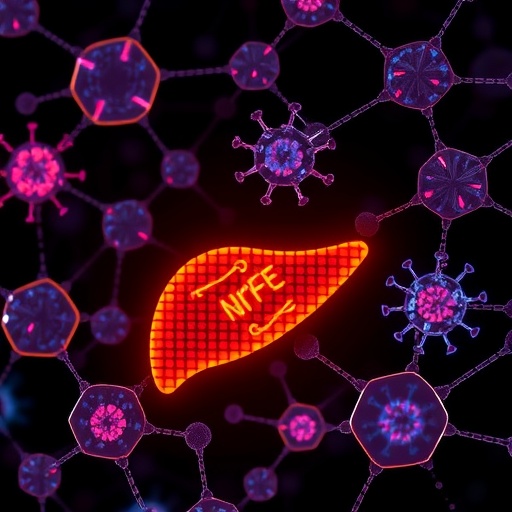
Nrf2 Metabolic Shift Boosts Regulatory T Cells in Liver Cancer

Nrf2 Metabolic Shift Boosts Regulatory T Cells in Liver Cancer

65
SHARES
587
VIEWS
Share on FacebookShare on Twitter
ADVERTISEMENT

In a groundbreaking study that could reshape our understanding of immune regulation in cancer, researchers have identified how a master regulator of cellular metabolism, Nrf2, facilitates the accumulation of regulatory T cells (Tregs) within hepatocellular carcinoma (HCC). This discovery opens new avenues for therapeutic intervention in liver cancer, a malignancy notorious for its poor prognosis and resistance to immunotherapy.

Hepatocellular carcinoma, the most common primary liver cancer, creates an immunosuppressive microenvironment that enables tumor growth and metastasis. Central to this immunosuppression are Tregs, which dampen anti-tumor immune responses, allowing cancer cells to evade detection and destruction. However, the metabolic pathways driving the expansion and maintenance of Tregs within the tumor milieu have remained elusive—until now.

The study, led by Perpiñán, Sompairac, and Marin Correa and published in Nature Communications in 2026, highlights the pivotal role of Nrf2, a transcription factor well-known for its role in oxidative stress response. Their work demonstrates that Nrf2 activation prompts a metabolic reprogramming in Tregs that supports their proliferation and immunosuppressive function within HCC tumors.

Through detailed molecular analyses, the researchers revealed that Nrf2 orchestrates a shift in Treg metabolism toward enhanced oxidative phosphorylation and glutamine metabolism. This metabolic adaptation not only boosts Treg survival but also reinforces their suppressive capabilities in the tumor microenvironment. By modulating key metabolic enzymes and pathways, Nrf2 effectively tailors Tregs’ energy requirements to the hostile, nutrient-deprived cancer niche.

This metabolic rewiring driven by Nrf2 contrasts with the glycolytic reliance commonly observed in effector T cells, underscoring the distinct bioenergetic demands that define immune cell subsets in cancer. The ability of Tregs to flexibly adapt their metabolism may contribute significantly to their dominance in HCC, thereby undermining effective anti-tumor immunity.

Importantly, the research team utilized both in vitro systems and murine models of HCC to validate the role of Nrf2, showing that genetic or pharmacological inhibition of Nrf2 reduced Treg infiltration and slowed tumor progression. These findings suggest that Nrf2 may serve as a promising target to reshape the tumor immune landscape, potentially enhancing the efficacy of existing immunotherapies.

Moreover, this study sheds light on the intersection between metabolic control and immune regulation, a nexus gaining attention for its therapeutic potential. By unraveling the mechanistic links between Nrf2-driven metabolism and Treg function, the research provides valuable insights that could inform combination strategies integrating metabolic inhibitors with checkpoint blockade therapies.

As liver cancer incidence rises globally and clinical outcomes remain dismal for advanced disease, innovative approaches tapping into tumor metabolism and immune modulation are urgently needed. Nrf2’s role in Treg accumulation presents a compelling target to disrupt the immunosuppressive fortress within HCC, offering new hope for more effective treatments.

Future investigations will need to explore how Nrf2’s metabolic programming interplays with other cellular processes in the tumor microenvironment and assess the safety and efficacy of Nrf2 inhibitors in clinical settings. Nonetheless, this study marks a significant step forward in decoding the metabolic underpinnings of immune escape in liver cancer.

Perpiñán, E., Sompairac, N., Marin Correa, D. et al. Nrf2-mediated metabolic reprogramming drives regulatory T cell accumulation in hepatocellular carcinoma. Nat Commun (2026). https://doi.org/10.1038/s41467-026-73485-3

Subject of Research: Medicine

Article Title: Nrf2 Metabolic Shift Boosts Regulatory T Cells in Liver Cancer

Article References: Perpiñán, E., Sompairac, N., Marin Correa, D., Ramon-Gil, E., Man, R., Camell-Raventos, D., Savoldelli, R., Fleming, M., Bellersheim, L., Santos, C., Elgosbi, M., Lozano, J., Maddaloni, M., Schmidl, C., Kodela, E., Piqué-Gili, M., de Sande, A., Pinyol, R., Higginbotham, S., ... Safinia, N. (2026). Nrf2-mediated metabolic reprogramming drives regulatory T cell accumulation in hepatocellular carcinoma. Nature Communications, 17(1), Article 8639. https://doi.org/10.1038/s41467-026-73485-3

Image Credits: AI Generated

DOI: 10.1038/s41467-026-73485-3

Keywords: cancer immunotherapy resistance mechanisms, glutamine metabolism in tumor immune evasion, hepatocellular carcinoma immune suppression, immune evasion mechanisms in liver cancer, metabolic control of Treg function, metabolic reprogramming in cancer immunology, Nrf2 regulation in liver cancer, Nrf2 signaling pathway in cancer, oxidative phosphorylation in regulatory T cells, therapeutic targets in hepatocellular carcinoma, Treg cell expansion in tumor microenvironment, tumor microenvironment metabolic shifts

Cite Scienmag News

Nathaniel Bowman. (July 13, 2026). Nrf2 Metabolic Shift Boosts Regulatory T Cells in Liver Cancer. Scienmag. https://scienmag.com/nrf2-metabolic-shift-boosts-regulatory-t-cells-in-liver-cancer/

Nathaniel Bowman. "Nrf2 Metabolic Shift Boosts Regulatory T Cells in Liver Cancer." Scienmag, 13 July 2026, https://scienmag.com/nrf2-metabolic-shift-boosts-regulatory-t-cells-in-liver-cancer/. Accessed 3 September 2026.

Nathaniel Bowman. "Nrf2 Metabolic Shift Boosts Regulatory T Cells in Liver Cancer." Scienmag. July 13, 2026. https://scienmag.com/nrf2-metabolic-shift-boosts-regulatory-t-cells-in-liver-cancer/


Tags: cancer immunotherapy resistance mechanismsglutamine metabolism in tumor immune evasionhepatocellular carcinoma immune suppressionimmune evasion mechanisms in liver cancermetabolic control of Treg functionmetabolic reprogramming in cancer immunologyNrf2 regulation in liver cancerNrf2 signaling pathway in canceroxidative phosphorylation in regulatory T cellstherapeutic targets in hepatocellular carcinomaTreg cell expansion in tumor microenvironmenttumor microenvironment metabolic shifts
Share26Tweet16
Previous Post

Human Activities Intensify Hydrometeorological Drought Across North Africa Over Time

Next Post

Latitudinal Manganese Patterns Linked to Earth’s Major Ice Ages

Related Posts

Efficacy of venous coupler versus hand-sewn venous anastomosis in free-flap reconstruction: a single-centre randomized controlled trial
Medicine

Efficacy of venous coupler versus hand-sewn venous anastomosis in free-flap reconstruction: a single-centre randomized controlled trial

September 3, 2026
Living Near Green Spaces May Lower ALS Risk, Italian Study Finds
Medicine

Living Near Green Spaces May Lower ALS Risk, Italian Study Finds

September 3, 2026
Ketogenic Diet Shows Promise as Epigenetic Therapy for SETD1B Epilepsy
Medicine

Ketogenic Diet Shows Promise as Epigenetic Therapy for SETD1B Epilepsy

September 3, 2026
Adverse Drug Reactions Common and Often Preventable in Ethiopian Obstetric Patients
Medicine

Adverse Drug Reactions Common and Often Preventable in Ethiopian Obstetric Patients

September 3, 2026
Expert Insights on Cancer Care Leadership With Professor Timothy Eberlein
Medicine

Expert Insights on Cancer Care Leadership With Professor Timothy Eberlein

September 3, 2026
Recurrent Pulmonary Alveolar Proteinosis Challenges Care After Double Lung Transplant
Medicine

Recurrent Pulmonary Alveolar Proteinosis Challenges Care After Double Lung Transplant

September 3, 2026
Next Post
Latitudinal Manganese Patterns Linked to Earth’s Major Ice Ages

Latitudinal Manganese Patterns Linked to Earth's Major Ice Ages

  • Mothers who receive childcare support from maternal grandparents show more optimized

    Mothers who receive childcare support from maternal grandparents show more parental warmth, finds NTU Singapore study

    27656 shares
    Share 11059 Tweet 6912
  • University of Seville Breaks 120-Year-Old Mystery, Revises a Key Einstein Concept

    1061 shares
    Share 424 Tweet 265
  • Bee body mass, pathogens and local climate influence heat tolerance

    682 shares
    Share 273 Tweet 171
  • Researchers record first-ever images and data of a shark experiencing a boat strike

    546 shares
    Share 218 Tweet 137
  • Groundbreaking Clinical Trial Reveals Lubiprostone Enhances Kidney Function

    531 shares
    Share 212 Tweet 133
Science

Embark on a thrilling journey of discovery with Scienmag.com—your ultimate source for cutting-edge breakthroughs. Immerse yourself in a world where curiosity knows no limits and tomorrow’s possibilities become today’s reality!

RECENT NEWS

  • Panda-livestock interface reveals divergent virus-sharing patterns
  • Sugarcane Waste Transformed Into Biodegradable Films to Rival Plastic Packaging
  • Fecal S100B protein shows promise for assessing C. difficile severity
  • New Mid-Late Maturing Sugarcane Variety CoH 179 Joins India’s Breeding Pipeline

Categories

  • Agriculture
  • Anthropology
  • Archaeology
  • Athmospheric
  • Biology
  • Biotechnology
  • Blog
  • Bussines
  • Cancer
  • Chemistry
  • Climate
  • Earth Science
  • Editorial Policy
  • Marine
  • Mathematics
  • Medicine
  • Pediatry
  • Policy
  • Psychology & Psychiatry
  • Science Education
  • Social Science
  • Space
  • Technology and Engineering

Subscribe to Blog via Email

Enter your email address to subscribe to this blog and receive notifications of new posts by email.

Join 5,151 other subscribers

© 2025 Scienmag - Science Magazine

Welcome Back!

Login to your account below

Forgotten Password?

Retrieve your password

Please enter your username or email address to reset your password.

Log In
No Result
View All Result
  • HOME
  • SCIENCE NEWS
  • CONTACT US

© 2025 Scienmag - Science Magazine

Discover more from Science

Subscribe now to keep reading and get access to the full archive.

Continue reading