


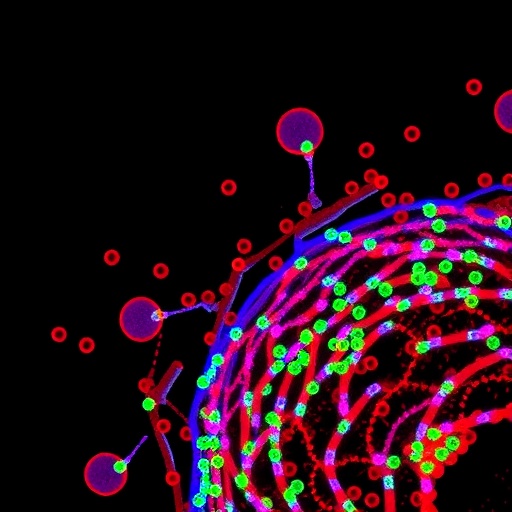
In a groundbreaking study published in Cell Death Discovery, researchers have unveiled new layers of complexity in eosinophil biology, shedding light on the diverse subtypes of these immune cells and highlighting promising therapeutic targets. Eosinophils, traditionally recognized for their roles in allergic reactions and parasitic infections, are now emerging as multifaceted players with distinct functional subpopulations that could revolutionize immunological research and treatment approaches.
Historically, eosinophils have been treated as a homogeneous group, primarily viewed through the lens of their involvement in asthma and other eosinophil-associated disorders. However, this new research challenges that paradigm by demonstrating that eosinophils are not a monolithic population but rather comprise several subtypes with unique phenotypes and functions. Using advanced single-cell sequencing technologies and flow cytometry, the team delineated eosinophil subsets based on differential expression of surface markers, transcription factors, and cytokine profiles.
One of the key technical breakthroughs in this study involved high-dimensional immune profiling, which allowed for the precise categorization of eosinophils at various stages of maturation and activation states within different tissue microenvironments. This nuanced understanding reveals that certain eosinophil subsets are pro-inflammatory and contribute to tissue damage, while others have regulatory roles that might mitigate excessive immune responses.
Moreover, the identification of subtype-specific molecular pathways opens new avenues for targeted interventions. The researchers highlighted particular signaling cascades and receptors that are selectively expressed by pathogenic eosinophil populations. Modulating these pathways could enable the development of therapies that selectively inhibit harmful eosinophil activity without compromising their beneficial functions, a significant advance over current broad-spectrum treatments.
This comprehensive eosinophil atlas also underscores the cell’s involvement beyond classic allergic mechanisms, implicating eosinophil diversity in various chronic inflammatory and fibrotic diseases. Enhanced mapping of functional heterogeneity provides critical insights into how eosinophils interact with other components of the immune system, including T cells and macrophages, and influence tissue remodeling processes.
Importantly, this research offers a conceptual framework for reinterpreting clinical data from conditions with eosinophilic involvement. By identifying biomarkers specific to eosinophil subtypes, clinicians could improve diagnostic accuracy and tailor therapies more precisely to patient-specific immune landscapes.
As eosinophil-targeted drugs are becoming increasingly popular, especially in the treatment of severe asthma and hypereosinophilic syndromes, these findings pave the way for next-generation biologics that could offer enhanced efficacy with reduced side effects. The molecular targets uncovered in this study warrant further preclinical and clinical investigation to realize their full therapeutic potential.
In conclusion, the diverse functionality of eosinophil subsets marks a new frontier in immunology, opening promising research directions and the possibility of precision medicine strategies to modulate eosinophil-driven pathology without compromising host defense. This study represents a significant step forward in appreciating the complexity of innate immune responses.
Cite Scienmag News
Ophelia Keating. (July 10, 2026). New Discoveries in Eosinophil Subtypes Reveal Potential Therapeutic Targets. Scienmag. https://scienmag.com/new-discoveries-in-eosinophil-subtypes-reveal-potential-therapeutic-targets/
Ophelia Keating. "New Discoveries in Eosinophil Subtypes Reveal Potential Therapeutic Targets." Scienmag, 10 July 2026, https://scienmag.com/new-discoveries-in-eosinophil-subtypes-reveal-potential-therapeutic-targets/. Accessed 3 September 2026.
Ophelia Keating. "New Discoveries in Eosinophil Subtypes Reveal Potential Therapeutic Targets." Scienmag. July 10, 2026. https://scienmag.com/new-discoveries-in-eosinophil-subtypes-reveal-potential-therapeutic-targets/


