

Friday, September 4, 2026
Science
No Result
View All Result
  • Login
  • HOME
  • SCIENCE NEWS
  • CONTACT US
  • HOME
  • SCIENCE NEWS
  • CONTACT US
No Result
View All Result
Scienmag
No Result
View All Result
Home Science News Medicine

Resting-State Electroretinography Detects Retinal Oscillations in Retinitis Pigmentosa

July 10, 2026
in Medicine
Ophelia Keating
By Ophelia Keating Scienmag Editorial Profile - Health Services Research
Reading Time: 2 mins read
0
Resting-State Electroretinography Detects Retinal Oscillations in Retinitis Pigmentosa

Resting-State Electroretinography Detects Retinal Oscillations in Retinitis Pigmentosa

65
SHARES
587
VIEWS
Share on FacebookShare on Twitter
ADVERTISEMENT

A groundbreaking study has revealed pathological retinal oscillations in both mice and human patients affected by retinitis pigmentosa (RP), a degenerative eye disease that leads to progressive vision loss. Using resting-state electroretinography (ERG), researchers have provided unprecedented insight into the intrinsic electrical activity of the retina, challenging current conceptions of RP pathology.

Retinitis pigmentosa is characterized by the gradual degeneration of photoreceptors, primarily rods, resulting in night blindness and peripheral vision loss. Traditional ERG methods typically measure retinal responses to light stimuli, but this innovative approach examines the retinal electrical activity in the absence of visual input, known as resting-state ERG. This allows for the detection of spontaneous oscillatory behavior that may reflect underlying disease mechanisms.

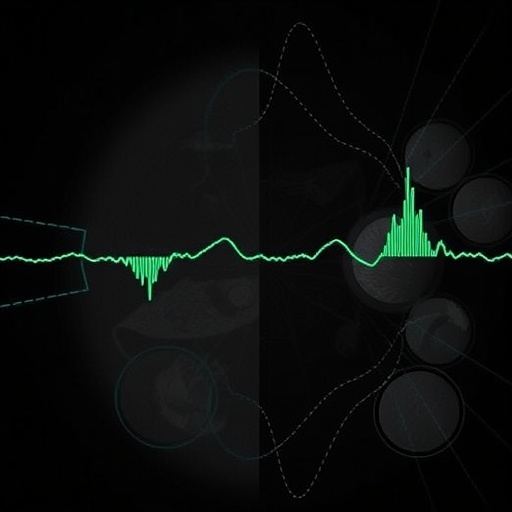
The research team employed resting-state ERG recordings in murine models genetically engineered to mimic human RP, as well as in patients diagnosed with the disorder. Consistent across species, the data revealed abnormal rhythmic oscillations in the retinal signals, distinct from normal retinal electrophysiological patterns. These pathological oscillations implicate disruptions within the retinal circuitry far earlier than previously appreciated.

Mechanistically, these spontaneous oscillations are believed to arise from maladaptive feedback loops between retinal interneurons, particularly amacrine and bipolar cells, which become hyperactive as photoreceptor input diminishes. This aberrant activity may contribute to retinal dysfunction and exacerbate vision loss, making it a potential target for therapeutic intervention.

Beyond diagnostic implications, this study suggests that resting-state ERG can serve as a sensitive biomarker for monitoring disease progression and treatment efficacy in RP. As current clinical assessments largely rely on functional and structural evaluations, the ability to noninvasively detect intrinsic retinal network abnormalities could revolutionize patient management.

The findings also pave the way for exploring neuromodulatory strategies aimed at normalizing retinal oscillatory activity. By modulating synaptic interactions pharmacologically or through emerging optical technologies, it may be possible to alleviate symptoms or slow degeneration in RP.

Overall, this work represents a paradigm shift in understanding retinal degenerative diseases, highlighting the importance of electrical network behavior within the retina rather than focusing solely on photoreceptor loss. Future research will likely explore the broader applicability of resting-state ERG in other retinal disorders.

As retinitis pigmentosa remains a leading cause of inherited blindness despite extensive research, novel approaches like this provide crucial avenues for earlier intervention and personalized therapeutics, bringing new hope to millions worldwide affected by the disease.


Litvin, D.G., Boizot, A., Corna, A. et al. Resting-state electroretinography reveals pathological retinal oscillations in retinitis pigmentosa mice and patients. Nat Commun (2026). https://doi.org/10.1038/s41467-026-75520-9

Subject of Research: Retinal pathological oscillations in retinitis pigmentosa explored through resting-state electroretinography.

Article Title: Resting-state electroretinography reveals pathological retinal oscillations in retinitis pigmentosa mice and patients.

Article References: Litvin, D. G., Boizot, A., Corna, A., Navarro, A., Keller, J., Heuschkel, M. O., Roux, A., Zeck, G., Tran, H. V., & Ghezzi, D. (2026). Resting-state electroretinography reveals pathological retinal oscillations in retinitis pigmentosa mice and patients. Nature Communications, 17(1), Article 8537. https://doi.org/10.1038/s41467-026-75520-9

Image Credits: AI Generated

DOI: 10.1038/s41467-026-75520-9

Keywords: abnormal retinal rhythmic oscillations in retinitis pigmentosa, early detection of retinal dysfunction through resting-state ERG, electrophysiological biomarkers for retinitis pigmentosa, human retinal electrophysiology in retinal degeneration, murine models of retinitis pigmentosa using ERG, pathological retinal oscillations as diagnostic, resting-state electroretinography in retinal degenerative diseases, retinal circuitry disruptions in retinitis pigmentosa, retinal oscillations in retinitis pigmentosa, spontaneous retinal electrical activity in degenerative eye disease

Cite Scienmag News

Ophelia Keating. (July 10, 2026). Resting-State Electroretinography Detects Retinal Oscillations in Retinitis Pigmentosa. Scienmag. https://scienmag.com/resting-state-electroretinography-detects-retinal-oscillations-in-retinitis-pigmentosa/


Ophelia Keating. "Resting-State Electroretinography Detects Retinal Oscillations in Retinitis Pigmentosa." Scienmag, 10 July 2026, https://scienmag.com/resting-state-electroretinography-detects-retinal-oscillations-in-retinitis-pigmentosa/. Accessed 4 September 2026.

Ophelia Keating. "Resting-State Electroretinography Detects Retinal Oscillations in Retinitis Pigmentosa." Scienmag. July 10, 2026. https://scienmag.com/resting-state-electroretinography-detects-retinal-oscillations-in-retinitis-pigmentosa/

Tags: abnormal retinal rhythmic oscillations in retinitis pigmentosaearly detection of retinal dysfunction through resting-state ERGelectrophysiological biomarkers for retinitis pigmentosahuman retinal electrophysiology in retinal degenerationmurine models of retinitis pigmentosa using ERGpathological retinal oscillations as diagnosticresting-state electroretinography in retinal degenerative diseasesretinal circuitry disruptions in retinitis pigmentosaretinal oscillations in retinitis pigmentosaspontaneous retinal electrical activity in degenerative eye disease
Share26Tweet16
Previous Post

First Human Trial Explores Immune-Engineered Cell Therapy for Type 1 Diabetes

Next Post

Digital Training Boosts Teachers’ Strategies for Tackling Philosophy Misconceptions

Related Posts

Machine Learning Predicts Elite Male Sprint Cycling Performance in Multinational Study
Medicine

Machine Learning Predicts Elite Male Sprint Cycling Performance in Multinational Study

September 4, 2026
Genetic and protein insights into GRIN epilepsy in Chinese children
Medicine

Genetic and protein insights into GRIN epilepsy in Chinese children

September 4, 2026
Loneliness and Distress Intolerance Shape Mothers’ Problematic Smartphone Use
Medicine

Loneliness and Distress Intolerance Shape Mothers’ Problematic Smartphone Use

September 4, 2026
DNA evidence yields in child sexual abuse cases: Turkish retrospective study
Medicine

DNA evidence yields in child sexual abuse cases: Turkish retrospective study

September 4, 2026
Turkish validity and reliability study of the motivation for healing scale in cancer patients
Medicine

Turkish validity and reliability study of the motivation for healing scale in cancer patients

September 4, 2026
Imaging and surgery for rare bridging bronchus, artery sling, and heart defect
Medicine

Imaging and surgery for rare bridging bronchus, artery sling, and heart defect

September 4, 2026
Next Post
Digital Training Boosts Teachers’ Strategies for Tackling Philosophy Misconceptions

Digital Training Boosts Teachers' Strategies for Tackling Philosophy Misconceptions

  • Mothers who receive childcare support from maternal grandparents show more optimized

    Mothers who receive childcare support from maternal grandparents show more parental warmth, finds NTU Singapore study

    27656 shares
    Share 11059 Tweet 6912
  • University of Seville Breaks 120-Year-Old Mystery, Revises a Key Einstein Concept

    1061 shares
    Share 424 Tweet 265
  • Bee body mass, pathogens and local climate influence heat tolerance

    682 shares
    Share 273 Tweet 171
  • Researchers record first-ever images and data of a shark experiencing a boat strike

    546 shares
    Share 218 Tweet 137
  • Groundbreaking Clinical Trial Reveals Lubiprostone Enhances Kidney Function

    531 shares
    Share 212 Tweet 133
Science

Embark on a thrilling journey of discovery with Scienmag.com—your ultimate source for cutting-edge breakthroughs. Immerse yourself in a world where curiosity knows no limits and tomorrow’s possibilities become today’s reality!

RECENT NEWS

  • COVID-19 Pandemic Stress and Fertility Plans Among American Couples
  • How ownership structures shape moral narratives and personal identity
  • Financial Knowledge Shapes How Investors Build Their Portfolios
  • Dynamic landslide susceptibility mapping using multi-temporal inventories in the Belluno Alps

Categories

  • Agriculture
  • Anthropology
  • Archaeology
  • Athmospheric
  • Biology
  • Biotechnology
  • Blog
  • Bussines
  • Cancer
  • Chemistry
  • Climate
  • Earth Science
  • Editorial Policy
  • Marine
  • Mathematics
  • Medicine
  • Pediatry
  • Policy
  • Psychology & Psychiatry
  • Science Education
  • Social Science
  • Space
  • Technology and Engineering

Subscribe to Blog via Email

Enter your email address to subscribe to this blog and receive notifications of new posts by email.

Join 5,151 other subscribers

© 2025 Scienmag - Science Magazine

Welcome Back!

Login to your account below

Forgotten Password?

Retrieve your password

Please enter your username or email address to reset your password.

Log In
No Result
View All Result
  • HOME
  • SCIENCE NEWS
  • CONTACT US

© 2025 Scienmag - Science Magazine

Discover more from Science

Subscribe now to keep reading and get access to the full archive.

Continue reading