


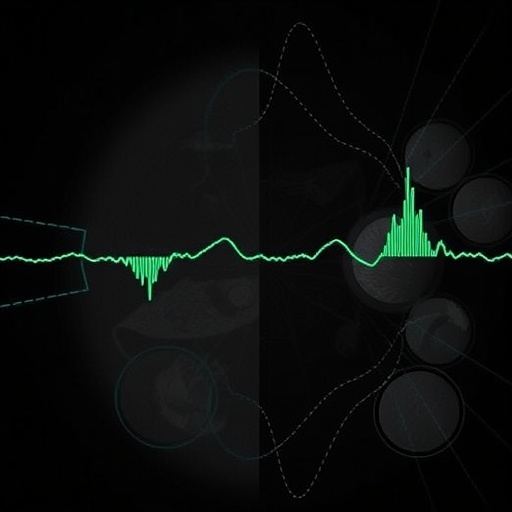
A groundbreaking study has revealed pathological retinal oscillations in both mice and human patients affected by retinitis pigmentosa (RP), a degenerative eye disease that leads to progressive vision loss. Using resting-state electroretinography (ERG), researchers have provided unprecedented insight into the intrinsic electrical activity of the retina, challenging current conceptions of RP pathology.
Retinitis pigmentosa is characterized by the gradual degeneration of photoreceptors, primarily rods, resulting in night blindness and peripheral vision loss. Traditional ERG methods typically measure retinal responses to light stimuli, but this innovative approach examines the retinal electrical activity in the absence of visual input, known as resting-state ERG. This allows for the detection of spontaneous oscillatory behavior that may reflect underlying disease mechanisms.
The research team employed resting-state ERG recordings in murine models genetically engineered to mimic human RP, as well as in patients diagnosed with the disorder. Consistent across species, the data revealed abnormal rhythmic oscillations in the retinal signals, distinct from normal retinal electrophysiological patterns. These pathological oscillations implicate disruptions within the retinal circuitry far earlier than previously appreciated.
Mechanistically, these spontaneous oscillations are believed to arise from maladaptive feedback loops between retinal interneurons, particularly amacrine and bipolar cells, which become hyperactive as photoreceptor input diminishes. This aberrant activity may contribute to retinal dysfunction and exacerbate vision loss, making it a potential target for therapeutic intervention.
Beyond diagnostic implications, this study suggests that resting-state ERG can serve as a sensitive biomarker for monitoring disease progression and treatment efficacy in RP. As current clinical assessments largely rely on functional and structural evaluations, the ability to noninvasively detect intrinsic retinal network abnormalities could revolutionize patient management.
The findings also pave the way for exploring neuromodulatory strategies aimed at normalizing retinal oscillatory activity. By modulating synaptic interactions pharmacologically or through emerging optical technologies, it may be possible to alleviate symptoms or slow degeneration in RP.
Overall, this work represents a paradigm shift in understanding retinal degenerative diseases, highlighting the importance of electrical network behavior within the retina rather than focusing solely on photoreceptor loss. Future research will likely explore the broader applicability of resting-state ERG in other retinal disorders.
As retinitis pigmentosa remains a leading cause of inherited blindness despite extensive research, novel approaches like this provide crucial avenues for earlier intervention and personalized therapeutics, bringing new hope to millions worldwide affected by the disease.
Litvin, D.G., Boizot, A., Corna, A. et al. Resting-state electroretinography reveals pathological retinal oscillations in retinitis pigmentosa mice and patients. Nat Commun (2026). https://doi.org/10.1038/s41467-026-75520-9
Cite Scienmag News
Ophelia Keating. (July 10, 2026). Resting-State Electroretinography Detects Retinal Oscillations in Retinitis Pigmentosa. Scienmag. https://scienmag.com/resting-state-electroretinography-detects-retinal-oscillations-in-retinitis-pigmentosa/
Ophelia Keating. "Resting-State Electroretinography Detects Retinal Oscillations in Retinitis Pigmentosa." Scienmag, 10 July 2026, https://scienmag.com/resting-state-electroretinography-detects-retinal-oscillations-in-retinitis-pigmentosa/. Accessed 4 September 2026.
Ophelia Keating. "Resting-State Electroretinography Detects Retinal Oscillations in Retinitis Pigmentosa." Scienmag. July 10, 2026. https://scienmag.com/resting-state-electroretinography-detects-retinal-oscillations-in-retinitis-pigmentosa/


