


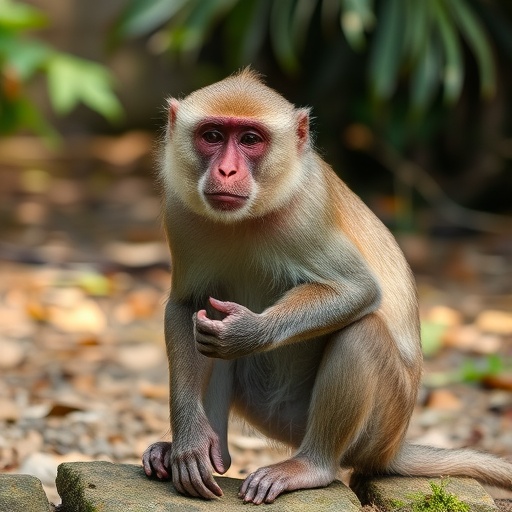
In a groundbreaking study set to reshape our understanding of primate biology and conservation, researchers have unveiled the profound hematological changes that occur when rhesus macaques are transitioned from wild to captive environments. This process, commonly referred to as “dewilding,” involves the gradual removal of animals from their natural habitats, often for rehabilitation, research, or conservation purposes. The research, published in Nature Communications, provides an unprecedented look at how environmental shifts during dewilding affect the blood chemistry and immune function of these primates.
Rhesus macaques, widely studied for their physiological and behavioral parallels to humans, serve as a crucial model for understanding the impact of environmental stressors on health. The team, led by Smith, Kiwanuka, and Pessenda, focused on tracking hematological parameters as macaques transitioned from wild living conditions to controlled environments. Their findings are compelling: alterations in white blood cell counts, red blood cell morphology, and key biochemical markers indicate systemic physiological stress.
One of the most striking observations was the significant reduction in lymphocyte concentrations, a critical component of the adaptive immune response. This suggests that the removal from a natural ecosystem and subsequent exposure to novel captive conditions can compromise immune defenses. Additionally, changes in red blood cell indices hinted at the onset of microcytic anemia in some individuals, potentially linked to altered nutrition and reduced physical activity typically associated with enclosure living.
The study also delved into the mechanistic underpinnings of these changes. Environmental factors such as altered pathogen exposure, dietary shifts, and reduced social interactions were considered primary drivers. Particularly noteworthy was the correlation between reduced ultraviolet (UV) light exposure in captivity and vitamin D metabolism, influencing hematopoiesis and immune cell function. This nuanced approach allowed the researchers to piece together a complex web of environmental impacts on blood physiology.
Technically, the team utilized flow cytometry and high-throughput hematology analyzers to provide a detailed cellular profile. Coupled with biochemical assays, this multifaceted methodology ensured both quantitative and qualitative data integrity. The longitudinal design of the study, spanning several months of dewilding, enabled the capture of dynamic hematological trajectories rather than static snapshots.
These findings have broad implications, not only for primate conservation strategies but also for biomedical research reliant on primate models. Understanding how captivity-induced hematological shifts can confound experimental outcomes urges a reevaluation of animal welfare and experimental design protocols. Moreover, this research highlights the need for adaptive management strategies in sanctuaries and zoos to mitigate health risks associated with dewilding.
As conservation efforts increasingly focus on rehabilitating and relocating wildlife, insights gained from this study underscore the importance of monitoring physiological health beyond behavioral assessments. The hematological markers identified could serve as valuable biomarkers for assessing the well-being and resilience of animals undergoing environmental transitions.
Ultimately, the work by Smith and colleagues opens new avenues for interdisciplinary research, blending ecology, immunology, and veterinary medicine. It is a stark reminder of the intricate connections between environment and physiology, emphasizing that even subtle habitat changes can ripple through an organism’s biology with profound consequences.
Cite Scienmag News
Margaret Porter. (July 10, 2026). Environmental Changes Impact Blood Health in Dewilded Rhesus Macaques. Scienmag. https://scienmag.com/environmental-changes-impact-blood-health-in-dewilded-rhesus-macaques/
Margaret Porter. "Environmental Changes Impact Blood Health in Dewilded Rhesus Macaques." Scienmag, 10 July 2026, https://scienmag.com/environmental-changes-impact-blood-health-in-dewilded-rhesus-macaques/. Accessed 4 September 2026.
Margaret Porter. "Environmental Changes Impact Blood Health in Dewilded Rhesus Macaques." Scienmag. July 10, 2026. https://scienmag.com/environmental-changes-impact-blood-health-in-dewilded-rhesus-macaques/


