


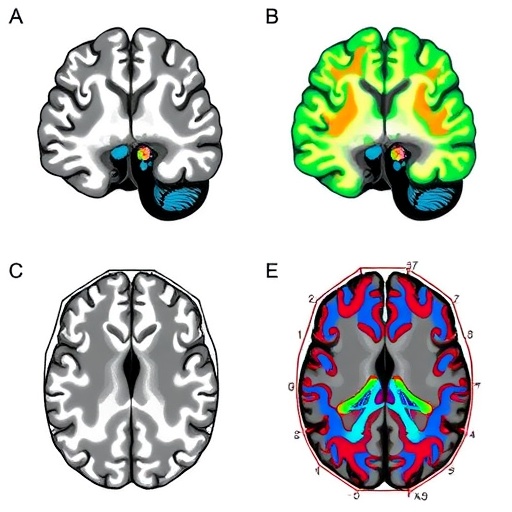
A groundbreaking study published in Translational Psychiatry unveils novel insights into the dynamic brain network alterations characteristic of posttraumatic stress disorder (PTSD). Utilizing advanced neuroimaging techniques, researchers have delineated the spatiotemporal architecture of large-scale functional networks, shedding light on the neural correlates that underpin the debilitating symptoms of PTSD.
Employing resting-state functional magnetic resonance imaging (fMRI), the research team captured temporal fluctuations in brain activity across multiple interconnected regions. This approach allowed the delineation of both spatial configurations and temporal dynamics of functional networks, providing a more comprehensive view of brain organization in PTSD patients compared to traditional static connectivity analyses.
The study identifies distinct alterations in key functional networks, including the default mode network (DMN), salience network (SN), and central executive network (CEN), which are critical for cognitive and emotional regulation. Notably, PTSD subjects exhibited disrupted synchrony within and between these networks, reflecting impaired integration of internal and external information processing that may contribute to hallmark symptoms such as intrusive memories and hypervigilance.
A novel contribution of this work is the emphasis on spatiotemporal features, highlighting not only which brain regions are differently connected but also when and how these connections fluctuate over time. Such dynamic connectivity patterns provide a richer neural signature of PTSD, suggesting that the disorder involves instability in brain network coordination rather than mere static disruptions.
Furthermore, the study leverages sophisticated computational models and graph theoretical metrics to quantify network properties such as modularity, nodal efficiency, and temporal variability. These quantifiable signatures reveal that PTSD networks show reduced efficiency and heightened temporal volatility, indicating compromised information flow and network resilience.
By mapping these functional disruptions onto symptom severity scores, the authors demonstrate robust correlations, advancing the potential for neuroimaging-derived biomarkers that could assist in diagnosing PTSD or tracking treatment response. This opens avenues for precision medicine approaches tailored to neural dysfunction patterns rather than solely clinical presentation.
Overall, this research marks a significant leap in understanding the neurobiological underpinnings of PTSD through the lens of time-varying brain connectivity. It underscores the importance of considering the dynamic nature of brain function in psychiatric disorders, providing a scaffold for future explorations into targeted interventions that restore network stability.
As the field moves forward, integrating longitudinal studies and multimodal imaging may further unravel how trauma reshapes neural circuitry over time. The tools and findings presented here lay a foundation for developing novel diagnostics and therapeutics aimed at the intricate dance of brain networks disrupted in PTSD.
Cite Scienmag News
Cassandra Pierce. (July 10, 2026). Distinct Spatiotemporal Patterns in Brain Networks Linked to PTSD. Scienmag. https://scienmag.com/distinct-spatiotemporal-patterns-in-brain-networks-linked-to-ptsd/
Cassandra Pierce. "Distinct Spatiotemporal Patterns in Brain Networks Linked to PTSD." Scienmag, 10 July 2026, https://scienmag.com/distinct-spatiotemporal-patterns-in-brain-networks-linked-to-ptsd/. Accessed 3 September 2026.
Cassandra Pierce. "Distinct Spatiotemporal Patterns in Brain Networks Linked to PTSD." Scienmag. July 10, 2026. https://scienmag.com/distinct-spatiotemporal-patterns-in-brain-networks-linked-to-ptsd/


