

Thursday, July 9, 2026
Science
No Result
View All Result
  • Login
  • HOME
  • SCIENCE NEWS
  • CONTACT US
  • HOME
  • SCIENCE NEWS
  • CONTACT US
No Result
View All Result
Scienmag
No Result
View All Result
Home Science News Agriculture

Plant Roots Avoid Rot by Steering Clear of Infected Areas

July 9, 2026
in Agriculture
Reading Time: 2 mins read
0
Plant Roots Avoid Rot by Steering Clear of Infected Areas

Plant Roots Avoid Rot by Steering Clear of Infected Areas

65
SHARES
587
VIEWS
Share on FacebookShare on Twitter
ADVERTISEMENT

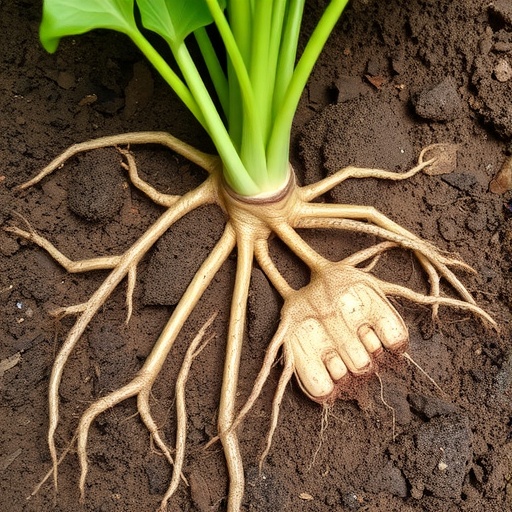
Researchers have uncovered a novel plant tropism—termed saprotropism—that guides roots to actively avoid zones of decaying plant matter. This discovery, led by scientists at the Institute of Science and Technology Austria (ISTA) and Northwest A&F University in China, reveals how roots sense the chemical landscape shaped by microbial decomposition to navigate the soil environment. Unlike classical tropisms such as phototropism or gravitropism, saprotropism involves roots bending away from rotting plant tissues but intriguingly not from decomposing animal matter.

The study shows that roots treat decaying plant material as a biologically hostile environment, inhibiting growth and activating defense pathways. This avoidance strategy parallels animal behavior, where rotten food is instinctively shunned due to microbial threats. Using experimental setups including a vertical split-agar system, researchers demonstrated that roots respond to acidic microenvironments created by fungi breaking down plant residues. Specifically, fungal metabolites acidify the soil locally, establishing pH gradients that roots detect before direct contact.

Mechanistically, exposure to asymmetric acidification alters the distribution of abscisic acid (ABA) within root tip cells. This hormonal gradient rearranges the cytoskeleton and growth patterns, driving the root to curve away from the decay source. Unlike other well-known tropisms, saprotropism operates independently of auxin, emphasizing a unique signaling pathway. The reversible nature of the response correlates with the decomposition stage; as plant matter fully mineralizes and acidification dissipates, roots cease to avoid the once hostile zone.

This phenomenon has been observed not only in the model plant Arabidopsis thaliana but also across diverse crops including rapeseed, tomato, and wheat, implying a widespread adaptive trait. The researchers highlight the agricultural implications: excessive retention of undecomposed crop residues could generate extensive toxic zones that overwhelm root navigation, fostering root diseases by increasing pathogen exposure. Deciphering the molecular mechanisms behind saprotropism could pave the way for breeding crops with enhanced decay avoidance, offering a proactive defense strategy against soilborne pathogens.

By reading the subtle chemical cues left by microbial decomposition, plants demonstrate remarkable environmental awareness. Saprotropism expands the known repertoire of plant sensing and response mechanisms, underscoring the complexity of belowground ecological interactions. This breakthrough not only deepens fundamental understanding of plant-soil-microbe dynamics but also holds promise for advancing sustainable agricultural practices in the face of global food security challenges.


Subject of Research: Not applicable
Article Title: Roots navigate around decay regions by sensing local pH gradients
News Publication Date: 9-Jul-2026
Web References: http://dx.doi.org/10.1126/science.adw6568
References: Bao et al. / Science
Image Credits: © Bao et al. / Science
Keywords: Plant tropisms, Saprotropism, Plant physiology, Root growth, Abscisic acid, Soil microbiology, Plant-microbe interactions, Agriculture

Tags: abscisic acid role in root growthfungal metabolites influence on rootshormonal signaling in root tropismsnovel plant tropism discoveryplant defense mechanisms against soil pathogensplant root avoidance of decaying plant matterplant saprotropism soil navigationplant-microbe interactions in soilroot bending away from rotting tissuesroot response to acidic microenvironmentsroots sensing microbial decompositionsoil pH gradients and root behavior
Share26Tweet16
Previous Post

Third-party repairs boost customer loyalty and trust in utility products

Next Post

AI system automates biomedical research workflows to enhance efficiency

Related Posts

Wearable Devices Developed to Monitor Plant Health in Real Time
Agriculture

Wearable Devices Developed to Monitor Plant Health in Real Time

July 9, 2026
Designing Successful Living Labs for Agriculture and Nutrition Research
Agriculture

Designing Successful Living Labs for Agriculture and Nutrition Research

July 9, 2026
Sawdust-Based Material Effectively Cleans Dye and Food Processing Wastewater
Agriculture

Sawdust-Based Material Effectively Cleans Dye and Food Processing Wastewater

July 8, 2026
Harnessing Neglected Livestock for Sustainable Food Systems in the Global South
Agriculture

Harnessing Neglected Livestock for Sustainable Food Systems in the Global South

July 8, 2026
EU scientists warn Europe faces imminent pollinator collapse risk
Agriculture

EU scientists warn Europe faces imminent pollinator collapse risk

July 8, 2026
Plastic mulch’s soil microplastic contribution vastly overstated.
Agriculture

Plastic mulch’s soil microplastic contribution vastly overstated.

July 6, 2026
Next Post
AI system automates biomedical research workflows to enhance efficiency

AI system automates biomedical research workflows to enhance efficiency

  • Mothers who receive childcare support from maternal grandparents show more

    Mothers who receive childcare support from maternal grandparents show more parental warmth, finds NTU Singapore study

    27656 shares
    Share 11059 Tweet 6912
  • University of Seville Breaks 120-Year-Old Mystery, Revises a Key Einstein Concept

    1061 shares
    Share 424 Tweet 265
  • Bee body mass, pathogens and local climate influence heat tolerance

    682 shares
    Share 273 Tweet 171
  • Researchers record first-ever images and data of a shark experiencing a boat strike

    546 shares
    Share 218 Tweet 137
  • Groundbreaking Clinical Trial Reveals Lubiprostone Enhances Kidney Function

    531 shares
    Share 212 Tweet 133
Science

Embark on a thrilling journey of discovery with Scienmag.com—your ultimate source for cutting-edge breakthroughs. Immerse yourself in a world where curiosity knows no limits and tomorrow’s possibilities become today’s reality!

RECENT NEWS

  • Exploring Nanoscale Materials in the COCOON Laboratory
  • Yeast Supplement Could Enhance Cancer Immunity Safely
  • Waste Cotton Stalks and Eggshells Turned into Biochar for Antibiotic Cleanup
  • New Winn CIPP Cohort Launched by Pharma and Academic Coalition

Categories

  • Agriculture
  • Anthropology
  • Archaeology
  • Athmospheric
  • Biology
  • Biotechnology
  • Blog
  • Bussines
  • Cancer
  • Chemistry
  • Climate
  • Earth Science
  • Editorial Policy
  • Marine
  • Mathematics
  • Medicine
  • Pediatry
  • Policy
  • Psychology & Psychiatry
  • Science Education
  • Social Science
  • Space
  • Technology and Engineering

Subscribe to Blog via Email

Enter your email address to subscribe to this blog and receive notifications of new posts by email.

Join 5,146 other subscribers

© 2025 Scienmag - Science Magazine

Welcome Back!

Login to your account below

Forgotten Password?

Retrieve your password

Please enter your username or email address to reset your password.

Log In
No Result
View All Result
  • HOME
  • SCIENCE NEWS
  • CONTACT US

© 2025 Scienmag - Science Magazine

Discover more from Science

Subscribe now to keep reading and get access to the full archive.

Continue reading
