

Thursday, July 9, 2026
Science
No Result
View All Result
  • Login
  • HOME
  • SCIENCE NEWS
  • CONTACT US
  • HOME
  • SCIENCE NEWS
  • CONTACT US
No Result
View All Result
Scienmag
No Result
View All Result
Home Science News Medicine

LINC01929 Drives Breast Cancer via TFRC-Linked Ferroptosis Pathway

July 9, 2026
in Medicine
Reading Time: 2 mins read
0
LINC01929 Drives Breast Cancer via TFRC-Linked Ferroptosis Pathway

LINC01929 Drives Breast Cancer via TFRC-Linked Ferroptosis Pathway

65
SHARES
587
VIEWS
Share on FacebookShare on Twitter
ADVERTISEMENT

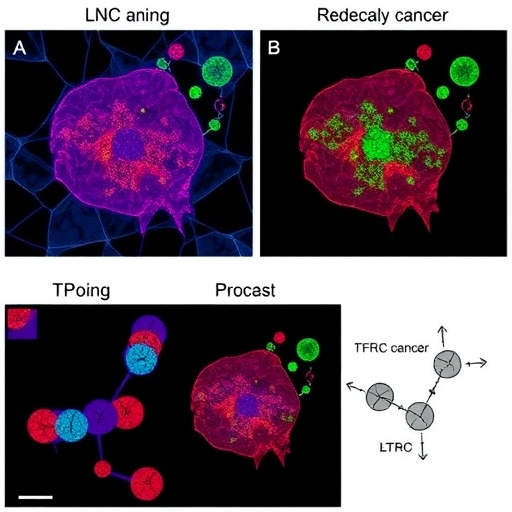
A newly published study reveals a groundbreaking molecular pathway that could reshape our understanding of breast cancer progression. Researchers have identified the long non-coding RNA (lncRNA) LINC01929 as a critical promoter of breast cancer growth, operating through a novel ferroptosis-associated mechanism linked to the transferrin receptor (TFRC).

LINC01929, a previously underexplored RNA molecule that does not code for proteins, has been implicated in various cancers but its precise role remained elusive. This study, appearing in Cell Death Discovery, uncovers how LINC01929 significantly enhances breast tumor development by mediating ferroptosis—a distinct form of regulated cell death characterized by iron-dependent lipid peroxidation.

Central to this mechanism is the transferrin receptor (TFRC), a protein crucial for iron uptake within cells. The research demonstrates that LINC01929 interacts closely with TFRC, ultimately modulating intracellular iron levels. Elevated iron facilitates lipid peroxidation, a hallmark of ferroptosis, but intriguingly, the study shows that cancer cells hijack this pathway to evade death and promote their survival and proliferation.

Using a combination of molecular biology techniques, the team mapped how LINC01929 upregulates TFRC expression, thereby altering the balance of ferroptotic signaling in breast cancer cells. This axis appears to create a permissive environment where cancer cells avoid ferroptosis-driven cell death, enabling sustained tumor growth.

Moreover, the study highlights that interfering with LINC01929 expression or blocking the LINC01929-TFRC interaction sensitizes breast cancer cells to ferroptosis inducers. This finding opens up promising therapeutic avenues, suggesting that targeting this lncRNA or the related ferroptosis pathway may halt tumor progression or enhance the efficacy of existing treatments.

The implications of this discovery are profound. Ferroptosis, once considered a niche cell death modality, is increasingly linked to cancer biology, and this research places LINC01929 as a pivotal regulator within this context. By exploiting ferroptotic pathways, breast cancer cells gain a survival advantage, potentially contributing to treatment resistance and metastasis.

Importantly, the study provides a molecular framework that could guide future drug development focused on lncRNAs and ferroptosis regulators. Given the complexity of ferroptosis in cancer, the identification of LINC01929’s role offers a novel biomarker for prognosis and a new target to enhance therapeutic responses.

As breast cancer remains a leading cause of cancer-related deaths globally, understanding these underlying molecular mechanisms is critical. The research team’s insights into the LINC01929-TFRC-ferroptosis axis shed light on the delicate interplay between iron metabolism, cell death, and tumor biology, highlighting new frontiers for intervention.

Ultimately, this work exemplifies how intricate non-coding RNA networks orchestrate cancer cell fate decisions, underscoring the importance of integrating ferroptosis research into future oncological strategies.

Subject of Research: Breast cancer progression and ferroptosis pathways regulated by long non-coding RNA LINC01929.

Article Title: LINC01929 promotes breast cancer progression through a TFRC-associated ferroptosis pathway.

Article References:
Li, G., Yu, Z., Xu, H. et al. LINC01929 promotes breast cancer progression through a TFRC-associated ferroptosis pathway. Cell Death Discov. (2026). https://doi.org/10.1038/s41420-026-03248-y

Image Credits: AI Generated

DOI: https://doi.org/10.1038/s41420-026-03248-y

Tags: breast cancer progressionferroptosis evasion strategies in breast cancerferroptosis in tumor developmentgene regulation by LINC01929 in canceriron-dependent cell death mechanismslncRNA regulation of ferroptosislong non-coding RNA in cancermolecular pathways in breast cancer growthnon-coding RNAs and tumor survivalnovel therapeutic targets in breast cancerrole of transferrin receptor in cancerTFRC-mediated iron regulation in cancer
Share26Tweet16
Previous Post

Epitope Editing Enables Safe Transplantation and In Vivo Cell Selection

Next Post

Small-Scale Ocean Turbulence Impacts Climate Beyond Surface Waters

Related Posts

Genetic Study Connects IBS to Lipid Metabolism and Triglyceride Control
Medicine

Genetic Study Connects IBS to Lipid Metabolism and Triglyceride Control

July 9, 2026
Air-Permeable Hydrogels Created via Viscoelastic Aerogel Phase Separation
Medicine

Air-Permeable Hydrogels Created via Viscoelastic Aerogel Phase Separation

July 9, 2026
PALACE Enables High-Quality Phage Assembly from Metagenomic Data
Medicine

PALACE Enables High-Quality Phage Assembly from Metagenomic Data

July 9, 2026
Stopping GLP-1RA Linked to Increased Depression and Anxiety in Type 2 Diabetes
Medicine

Stopping GLP-1RA Linked to Increased Depression and Anxiety in Type 2 Diabetes

July 9, 2026
Epitope Editing Enables Safe Transplantation and In Vivo Cell Selection
Medicine

Epitope Editing Enables Safe Transplantation and In Vivo Cell Selection

July 9, 2026
Study shows lung tumors hijack nervous system to starve body
Medicine

Study shows lung tumors hijack nervous system to starve body

July 9, 2026
Next Post
Small-Scale Ocean Turbulence Impacts Climate Beyond Surface Waters

Small-Scale Ocean Turbulence Impacts Climate Beyond Surface Waters

  • Mothers who receive childcare support from maternal grandparents show more

    Mothers who receive childcare support from maternal grandparents show more parental warmth, finds NTU Singapore study

    27656 shares
    Share 11059 Tweet 6912
  • University of Seville Breaks 120-Year-Old Mystery, Revises a Key Einstein Concept

    1061 shares
    Share 424 Tweet 265
  • Bee body mass, pathogens and local climate influence heat tolerance

    682 shares
    Share 273 Tweet 171
  • Researchers record first-ever images and data of a shark experiencing a boat strike

    546 shares
    Share 218 Tweet 137
  • Groundbreaking Clinical Trial Reveals Lubiprostone Enhances Kidney Function

    531 shares
    Share 212 Tweet 133
Science

Embark on a thrilling journey of discovery with Scienmag.com—your ultimate source for cutting-edge breakthroughs. Immerse yourself in a world where curiosity knows no limits and tomorrow’s possibilities become today’s reality!

RECENT NEWS

  • Dynamic Mixture-of-Experts Enhances and Explains Daily Streamflow Simulation
  • Penn Engineers Create AI to Control Cellular Signals via Peptides
  • Genetic Study Connects IBS to Lipid Metabolism and Triglyceride Control
  • Food insecurity influences choice of telehealth abortion, study finds

Categories

  • Agriculture
  • Anthropology
  • Archaeology
  • Athmospheric
  • Biology
  • Biotechnology
  • Blog
  • Bussines
  • Cancer
  • Chemistry
  • Climate
  • Earth Science
  • Editorial Policy
  • Marine
  • Mathematics
  • Medicine
  • Pediatry
  • Policy
  • Psychology & Psychiatry
  • Science Education
  • Social Science
  • Space
  • Technology and Engineering

Subscribe to Blog via Email

Enter your email address to subscribe to this blog and receive notifications of new posts by email.

Join 5,147 other subscribers

© 2025 Scienmag - Science Magazine

Welcome Back!

Login to your account below

Forgotten Password?

Retrieve your password

Please enter your username or email address to reset your password.

Log In
No Result
View All Result
  • HOME
  • SCIENCE NEWS
  • CONTACT US

© 2025 Scienmag - Science Magazine

Discover more from Science

Subscribe now to keep reading and get access to the full archive.

Continue reading
