

Thursday, September 3, 2026
Science
No Result
View All Result
  • Login
  • HOME
  • SCIENCE NEWS
  • CONTACT US
  • HOME
  • SCIENCE NEWS
  • CONTACT US
No Result
View All Result
Scienmag
No Result
View All Result
Home Science News Marine

International Team Warns Science Alone Can’t Save Coral Reefs

July 8, 2026
in Marine
Margaret Porter
By Margaret Porter Scienmag Editorial Profile - Biodiversity Science
Reading Time: 2 mins read
0
International Team Warns Science Alone Can’t Save Coral Reefs

International Team Warns Science Alone Can’t Save Coral Reefs

65
SHARES
587
VIEWS
Share on FacebookShare on Twitter
ADVERTISEMENT

Coral reefs are vanishing at an alarming pace due to climate change, marine heatwaves, pollution, and coastal development. These ecosystems, known for their remarkable biodiversity and ecological significance, are critical to the food security, coastal protection, and cultural identity of hundreds of millions worldwide. However, recent research published in Science Advances argues that traditional scientific approaches alone are insufficient to halt their decline and calls for an innovative strategy integrating science with art and design.

A team led by Prof. Oren Levy from Bar-Ilan University, alongside international collaborators, emphasizes the necessity of merging the rigor of ecological science with the emotional and cultural power of creative disciplines. This interdisciplinary approach aims to translate complex environmental data into impactful visual and experiential messages that resonate deeply with diverse audiences, thereby fostering public engagement and catalyzing meaningful conservation actions.

The article highlights how artistic mediums such as environmental installations, documentary films, music, graphic design, and public art have successfully communicated the urgency of coral reef conservation. Particularly, design disciplines are recognized for their potential to distill intricate ecological information into compelling narratives. Graphic designers transform scientific datasets into captivating visual stories, product designers incorporate reef-inspired biomimicry into everyday objects, and fashion designers connect marine ecological beauty with consumer behaviors, raising awareness through textiles and campaigns.

Beyond aesthetics, this fusion provides a channel to embed coral reef conservation into collective cultural consciousness. Landscape architects, for example, draw inspiration from coral morphologies to create public spaces that foster environmental appreciation. This convergence of art, science, and community underscores coral reefs’ multifaceted value extending beyond ecological function to include socio-economic and cultural dimensions.

To spearhead this vision, the Coral Art-Science Consortium was established—a nonprofit coalition of scientists, artists, educators, policymakers, and community leaders collaborating to amplify coral reef awareness. The consortium’s digital platform serves as a global hub for creative projects, educational resources, and participatory initiatives designed to empower broader audiences and promote philanthropic support.

This novel framework reflects an urgent need: addressing the coral reef crisis demands not only ecological restoration and scientific innovation but also a transformation in public perception and political action. The consortium envisions exhibitions, public events, citizen-science programs, and digital storytelling as vital tools to galvanize collective responsibility.

Ultimately, the authors advocate a paradigm shift in environmental communication that harnesses the emotive potential of artistic expression alongside scientific evidence. By bridging empirical research and human experience, this approach aspires to build a global movement that sustains coral reefs for future generations.

Subject of Research: Coral reef conservation through interdisciplinary collaboration of science and art

Article Title: International Team Warns Science Alone Can’t Save Coral Reefs

Article References: Original research article

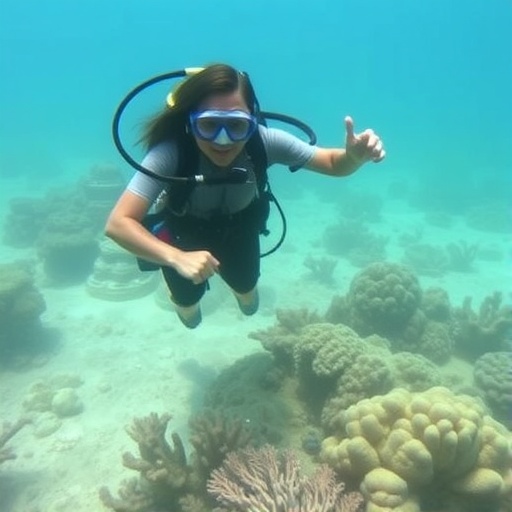
Image Credits: AI Generated

DOI: Not provided

Keywords: coral reef biodiversity and ecosystem importance, coral reef conservation, creative approaches to climate change impact, ecological data visualization for awareness, innovative conservation methods combining science and design, integrating cultural identity into conservation efforts, interdisciplinary environmental strategies, marine heatwaves and pollution effects on coral reefs, public engagement in coral reef protection, role of artistic mediums in environmental activism, science and art collaboration for ecological preservation, visual communication for environmental awareness

Cite Scienmag News

Margaret Porter. (July 8, 2026). International Team Warns Science Alone Can’t Save Coral Reefs. Scienmag. https://scienmag.com/international-team-warns-science-alone-cant-save-coral-reefs/

Margaret Porter. "International Team Warns Science Alone Can’t Save Coral Reefs." Scienmag, 8 July 2026, https://scienmag.com/international-team-warns-science-alone-cant-save-coral-reefs/. Accessed 3 September 2026.

Margaret Porter. "International Team Warns Science Alone Can’t Save Coral Reefs." Scienmag. July 8, 2026. https://scienmag.com/international-team-warns-science-alone-cant-save-coral-reefs/


Tags: coral reef biodiversity and ecosystem importancecoral reef conservationcreative approaches to climate change impactecological data visualization for awarenessinnovative conservation methods combining science and designintegrating cultural identity into conservation effortsinterdisciplinary environmental strategiesmarine heatwaves and pollution effects on coral reefspublic engagement in coral reef protectionrole of artistic mediums in environmental activismscience and art collaboration for ecological preservationvisual communication for environmental awareness
Share26Tweet16
Previous Post

Climate Change Threatens Northern Tree Swallow Populations Most

Next Post

ISSCR 2026 Launches in Montréal with Global Stem Cell Science Summit

Related Posts

Fish-prawn hybrid observed walking backward for the first time
Marine

Fish-prawn hybrid observed walking backward for the first time

September 3, 2026
Making climate governance actionable: a corpus-based analysis of institutionalizing climate change in tuna fisheries governance
Marine

Making climate governance actionable: a corpus-based analysis of institutionalizing climate change in tuna fisheries governance

September 3, 2026
Federal research chair program brings two global scholars to UVic
Marine

Federal research chair program brings two global scholars to UVic

September 3, 2026
Climate-smart marine planning framework designed to support biodiversity goals
Marine

Climate-smart marine planning framework designed to support biodiversity goals

August 29, 2026
Heat-tolerant corals may face greater disease risk, study finds
Marine

Heat-tolerant corals may face greater disease risk, study finds

August 28, 2026
Expanding Marine Social Sciences and Humanities into the Deep Ocean
Marine

Expanding Marine Social Sciences and Humanities into the Deep Ocean

August 28, 2026
Next Post
ISSCR 2026 Launches in Montréal with Global Stem Cell Science Summit

ISSCR 2026 Launches in Montréal with Global Stem Cell Science Summit

  • Mothers who receive childcare support from maternal grandparents show more optimized

    Mothers who receive childcare support from maternal grandparents show more parental warmth, finds NTU Singapore study

    27656 shares
    Share 11059 Tweet 6912
  • University of Seville Breaks 120-Year-Old Mystery, Revises a Key Einstein Concept

    1061 shares
    Share 424 Tweet 265
  • Bee body mass, pathogens and local climate influence heat tolerance

    682 shares
    Share 273 Tweet 171
  • Researchers record first-ever images and data of a shark experiencing a boat strike

    546 shares
    Share 218 Tweet 137
  • Groundbreaking Clinical Trial Reveals Lubiprostone Enhances Kidney Function

    531 shares
    Share 212 Tweet 133
Science

Embark on a thrilling journey of discovery with Scienmag.com—your ultimate source for cutting-edge breakthroughs. Immerse yourself in a world where curiosity knows no limits and tomorrow’s possibilities become today’s reality!

RECENT NEWS

  • Sniper and Otapiapia: Nigeria’s Organophosphate Poisoning Crisis Kills Nearly One in Four Patients
  • New framework quantifies metal exposure risks from tampon use
  • Biodegradable Nanofiber Filters Hit N95 Performance Without Electrostatic Charges
  • Gender differences in coping strategies and mental health outcomes among people living with chronic medical conditions

Categories

  • Agriculture
  • Anthropology
  • Archaeology
  • Athmospheric
  • Biology
  • Biotechnology
  • Blog
  • Bussines
  • Cancer
  • Chemistry
  • Climate
  • Earth Science
  • Editorial Policy
  • Marine
  • Mathematics
  • Medicine
  • Pediatry
  • Policy
  • Psychology & Psychiatry
  • Science Education
  • Social Science
  • Space
  • Technology and Engineering

Subscribe to Blog via Email

Enter your email address to subscribe to this blog and receive notifications of new posts by email.

Join 5,151 other subscribers

© 2025 Scienmag - Science Magazine

Welcome Back!

Login to your account below

Forgotten Password?

Retrieve your password

Please enter your username or email address to reset your password.

Log In
No Result
View All Result
  • HOME
  • SCIENCE NEWS
  • CONTACT US

© 2025 Scienmag - Science Magazine

Discover more from Science

Subscribe now to keep reading and get access to the full archive.

Continue reading