
Wednesday, July 8, 2026
Science
No Result
View All Result
  • Login
  • HOME
  • SCIENCE NEWS
  • CONTACT US
  • HOME
  • SCIENCE NEWS
  • CONTACT US
No Result
View All Result
Scienmag
No Result
View All Result
Home Science News Chemistry

Return exactly one rewritten English science news headline for the original title below. Maximum 12 words. Output plain text only. Do not use HTML, Markdown, quotes, labels, explanations, bullets, numbering, or multiple options. Original title: Public invited to online Forum on Biochar Research exploring 30 years of progress in soil, crops and climate solutions

July 7, 2026
in Chemistry
Reading Time: 4 mins read
0
Return exactly one rewritten English science news headline for the original title below. Maximum 12 words. Output plain text only. Do not use HTML, Markdown, quotes, labels, explanations, bullets, numbering, or multiple options. Original title: Public invited to online Forum on Biochar Research exploring 30 years of progress in soil, crops and climate solutions

Return exactly one rewritten English science news headline for the original title below. Maximum 12 words. Output plain text only. Do not use HTML, Markdown, quotes, labels, explanations, bullets, numbering, or multiple options. Original title: Public invited to online Forum on Biochar Research exploring 30 years of progress in soil, crops and climate solutions

65
SHARES
587
VIEWS
Share on FacebookShare on Twitter
ADVERTISEMENT
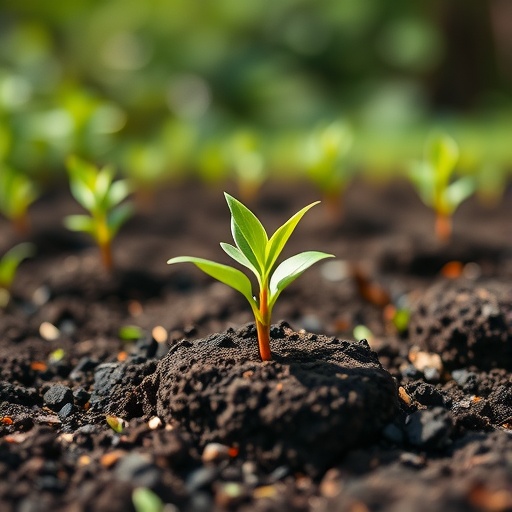
Review and synthesis of 30 years of biochar research and development
image: Review and synthesis of 30 years of biochar research and development

view more 

Credit: Stephen Joseph

A new online Forum on Biochar Research will bring together global expertise to explain how three decades of biochar science are reshaping understanding of soil health, crop productivity and climate action. The event, titled “Review and synthesis of 30 years of biochar research and development,” will be delivered by Prof. Stephen Joseph of The University of New South Wales, Australia, and hosted by Prof. Jianying Shang of China Agricultural University.

The forum will take place on July 14, 2026, at 8:00 AM BST in London, 3:00 PM CST in Beijing, 9:00 AM CEST in Central Europe, and 10:00 AM EEST in Eastern Europe. The public may join via Zoom Meeting ID: 615 672 5359, Passcode: 123456.

Biochar, a carbon-rich material made by heating biomass under limited oxygen, has attracted growing attention as a tool for improving soils while storing carbon. The lecture will synthesize evidence from 30 years of research on how biochar interacts with soil and plants, from early dissolution over the first weeks, to surface development over several months, to long-term aging in soil aggregates.

“Biochar is not a single product with one fixed effect. Its benefits depend on how it is made, where it is used and which soil constraints it is designed to address,” Prof. Joseph said. “When used wisely, biochar can support more resilient agriculture, long-term carbon storage and a circular bioeconomy.”

According to the review, biochar can increase phosphorus availability, reduce plant uptake of heavy metals, build soil organic carbon, lower non-CO2 greenhouse gas emissions and improve crop yields, especially in acidic, nutrient-poor or sandy dryland soils.

The forum will offer researchers, students, farmers, policymakers and environmental professionals a clear overview of where biochar science has been, what it has learned and how tailored biochar applications may support food security and climate mitigation.


=== 

About Biochar

Biochar (e-ISSN: 2524-7867) is the first journal dedicated exclusively to biochar research, spanning agronomy, environmental science, and materials science. It publishes original studies on biochar production, processing, and applications—such as bioenergy, environmental remediation, soil enhancement, climate mitigation, water treatment, and sustainability analysis. The journal serves as an innovative and professional platform for global researchers to share advances in this rapidly expanding field. 

Follow us on Facebook, X, and Bluesky.  

===

About Carbon Research

The journal Carbon Research is an international multidisciplinary platform for communicating advances in fundamental and applied research on natural and engineered carbonaceous materials that are associated with ecological and environmental functions, energy generation, and global change. It is a fully Open Access (OA) journal and the Article Publishing Charges (APC) are waived until Dec 31, 2025. It is dedicated to serving as an innovative, efficient and professional platform for researchers in the field of carbon functions around the world to deliver findings from this rapidly expanding field of science. The journal is currently indexed by Scopus and Ei Compendex, and as of June 2025, the dynamic CiteScore value is 15.4.

Follow us on Facebook, X, and Bluesky. 


Media Contact

Biochar Editorial Office

Shenyang Agricultural University

NEW.Community@outlook.com

Tags


  • /Applied sciences and engineering

  • /Life sciences

  • /Physical sciences/Chemistry/Environmental chemistry

  • /Applied sciences and engineering/Environmental sciences

  • /Physical sciences/Chemistry/Chemical compounds/Carbon compounds/Black carbon

bu içeriği 600 ile 800 kelime arasında olacak şekilde ve alt başlıklar ve madde içermiyecek şekilde ünlü bir science magazine için İngilizce olarak yeniden yaz. Teknik açıklamalar içersin ve Viral science news olacak şekilde İngilizce yaz. Haber dışında başka bir şey içermesin. Haber içerisinde 8 ile 10 paragraf olsun ve toplam uzunluk 600 ile 800 kelime arasında kalsın. Cevapta sadece haber olsun. Ayrıca haberi yazdıktan sonra içerikten yararlanarak aşağıdaki başlıkların bilgisi var ise haberin altında doldur. Eğer yoksa bilgisi ilgili kısmı yazma.:
Subject of Research:
Article Title:
News Publication Date:
Web References:
References:
Image Credits:

Keywords

Share26Tweet16
Previous Post

No-till weed control innovations showcased at Milan Field Day

Next Post

Return exactly one rewritten English science news headline for the original title below. Maximum 12 words. Output plain text only. Do not use HTML, Markdown, quotes, labels, explanations, bullets, numbering, or multiple options. Original title: Turning up the heat on cancer: UTEP physicists discover better nanoparticles for future therapy

Related Posts

Return exactly one rewritten English science news headline for the original title below. Maximum 12 words. Output plain text only. Do not use HTML, Markdown, quotes, labels, explanations, bullets, numbering, or multiple options. Original title: New technology could improve energy efficiency in AI data centers
Chemistry

Return exactly one rewritten English science news headline for the original title below. Maximum 12 words. Output plain text only. Do not use HTML, Markdown, quotes, labels, explanations, bullets, numbering, or multiple options. Original title: New technology could improve energy efficiency in AI data centers

July 7, 2026
Minuscule carbon rings spark breakthrough in quantum manipulation
Chemistry

Minuscule carbon rings spark breakthrough in quantum manipulation

July 7, 2026
Programmable terahertz metasurface enables optical logic and PAM-4 data encoding
Chemistry

Programmable terahertz metasurface enables optical logic and PAM-4 data encoding

July 7, 2026
New approach simplifies black hole mergers, universe’s most violent events.
Chemistry

New approach simplifies black hole mergers, universe’s most violent events.

July 7, 2026
Scientists imitate the engines that power living cells
Chemistry

Scientists imitate the engines that power living cells

July 7, 2026
Würzburg team creates brain-inspired learning electronics
Chemistry

Würzburg team creates brain-inspired learning electronics

July 7, 2026
Next Post
Return exactly one rewritten English science news headline for the original title below. Maximum 12 words. Output plain text only. Do not use HTML, Markdown, quotes, labels, explanations, bullets, numbering, or multiple options. Original title: Turning up the heat on cancer: UTEP physicists discover better nanoparticles for future therapy

Return exactly one rewritten English science news headline for the original title below. Maximum 12 words. Output plain text only. Do not use HTML, Markdown, quotes, labels, explanations, bullets, numbering, or multiple options. Original title: Turning up the heat on cancer: UTEP physicists discover better nanoparticles for future therapy

  • Mothers who receive childcare support from maternal grandparents show more

    Mothers who receive childcare support from maternal grandparents show more parental warmth, finds NTU Singapore study

    27656 shares
    Share 11059 Tweet 6912
  • University of Seville Breaks 120-Year-Old Mystery, Revises a Key Einstein Concept

    1061 shares
    Share 424 Tweet 265
  • Bee body mass, pathogens and local climate influence heat tolerance

    682 shares
    Share 273 Tweet 171
  • Researchers record first-ever images and data of a shark experiencing a boat strike

    546 shares
    Share 218 Tweet 137
  • Groundbreaking Clinical Trial Reveals Lubiprostone Enhances Kidney Function

    531 shares
    Share 212 Tweet 133
Science

Embark on a thrilling journey of discovery with Scienmag.com—your ultimate source for cutting-edge breakthroughs. Immerse yourself in a world where curiosity knows no limits and tomorrow’s possibilities become today’s reality!

RECENT NEWS

  • Postpartum bonding problems tied to abnormal neural processing of infant emotions
  • Salmonella protein SopB curbs early inflammation to slow disease progression
  • Embodied cognition yields interpretable trajectory predictions for autonomous systems.
  • Multi-metal cooperation drives lung cancer chemoresistance, reversed by MiADMSA

Categories

  • Agriculture
  • Anthropology
  • Archaeology
  • Athmospheric
  • Biology
  • Biotechnology
  • Blog
  • Bussines
  • Cancer
  • Chemistry
  • Climate
  • Earth Science
  • Editorial Policy
  • Marine
  • Mathematics
  • Medicine
  • Pediatry
  • Policy
  • Psychology & Psychiatry
  • Science Education
  • Social Science
  • Space
  • Technology and Engineering

Subscribe to Blog via Email

Success! An email was just sent to confirm your subscription. Please find the email now and click 'Confirm Follow' to start subscribing.

Join 5,147 other subscribers

© 2025 Scienmag - Science Magazine

Welcome Back!

Login to your account below

Forgotten Password?

Retrieve your password

Please enter your username or email address to reset your password.

Log In
No Result
View All Result
  • HOME
  • SCIENCE NEWS
  • CONTACT US

© 2025 Scienmag - Science Magazine