

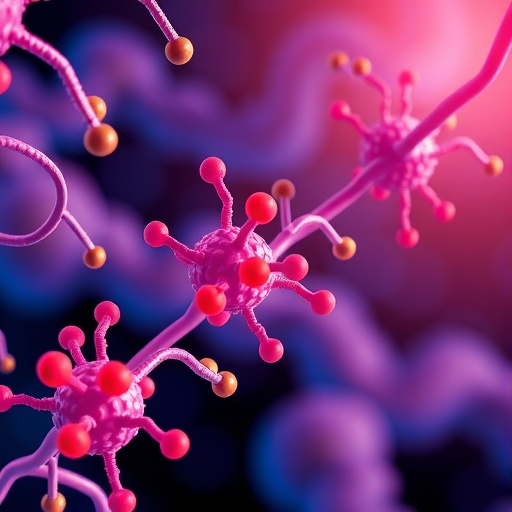
In a breakthrough that could reshape drug discovery, scientists have unveiled a novel technique for rapidly identifying DNA aptamers—short, single-stranded DNA molecules that fold into precise three-dimensional shapes—capable of latching onto G protein-coupled receptors (GPCRs), the largest and most important family of drug targets in the human body. Despite GPCRs regulating everything from pain perception to heart function, finding molecules that bind them with high specificity has long been a slow and frustrating endeavor. The new approach, called extracellular vesicle-SELEX (EV-SELEX), hijacks a natural cellular recycling process to fish out high-affinity aptamers directly from the molecular traffic leaving cells, bypassing the noise that plagues conventional methods.
The team behind the work, led by Professor Toshihide Tabata at the University of Toyama, Japan, recognized that standard aptamer selection techniques like Cell-SELEX often stumble when faced with complex membrane proteins such as GPCRs. In those traditional protocols, aptamers are exposed to whole cells, where thousands of surface proteins compete for attention, making it difficult to enrich candidates that truly recognize the target in its native, functionally relevant shape. “As neuroscientists, while working on GPCR-mediated synaptic plasticity, we noticed that there are only a limited number of experimental tools to pharmacologically manipulate neuronal GPCRs. This intrigued us to create new and efficient tools for drug development,” Tabata explains.
EV-SELEX turns this problem on its head by exploiting a phenomenon that cell biologists have long known but rarely harnessed in drug screening. When a ligand—whether a natural hormone or a synthetic molecule—binds to a GPCR, the activated receptor is often internalized via endocytosis, packaged into small membrane bubbles called extracellular vesicles, and then spat out into the surrounding medium. The researchers reasoned that by collecting these vesicles, they could capture receptor-bound aptamers that had already proven their ability to engage the GPCR in a living cellular context. This drastically reduces interference from irrelevant proteins and ensures that the aptamers are selected against a conformationally active receptor, not an artificial construct.
Putting the method to the test, the group focused on the μ-opioid receptor (MOR), a GPCR that mediates pain relief and is famously targeted by morphine and fentanyl. After a surprisingly small number of selection cycles, EV-SELEX yielded an aptamer dubbed Dapt-μR. Functional assays revealed that this DNA fragment does not simply stick to MOR—it activates it. In cultured cells, Dapt-μR triggered a robust drop in cyclic adenosine monophosphate (cAMP) levels, a classic intracellular signal of MOR activation. Adding naloxone, a MOR antagonist, completely blocked the effect, confirming that the aptamer’s action was receptor-specific and not a nonspecific artifact.
To verify that the aptamer behaves like a genuine drug lead, the researchers moved into more complex biological settings. In neuronal models, Dapt-μR significantly reduced calcium influx, a response consistent with MOR-driven modulation of ion channels. The real milestone, however, came from live animal experiments. When administered directly into the spinal canal of mice, the aptamer produced clear analgesic effects, demonstrating that a naked piece of DNA can recapitulate the pain-dampening pharmacology of classic opioid agonists. This marks one of the few examples where a DNA aptamer has been shown to agonize a GPCR and produce a systemic physiological outcome, blurring the line between traditional small-molecule drugs and nucleic acid therapeutics.
Crucially, the researchers compared EV-SELEX head-to-head with an optimized Cell-SELEX protocol and found that the vesicle-based strategy delivered high-affinity, potent aptamers in far fewer selection rounds. This efficiency gain could shave months off the early-stage development timeline for new GPCR-targeting agents. Beyond speed, the method’s reliance on native cellular trafficking means that aptamers are selected under conditions that preserve the receptor’s phosphorylation states, partner proteins, and lipid environment, all of which are critical for proper pharmacology but are lost in purified protein screens.
The ripple effects of this technique are poised to extend well beyond opioid receptors. Because the principle of EV-SELEX is universal—any GPCR that is internalized upon activation can theoretically be targeted—the platform could be rapidly adapted to receptors involved in neurological disorders, metabolic diseases, cardiovascular conditions, and cancer. In addition to generating therapeutic candidates, the technology offers a powerful way to create exquisitely selective molecular probes for fundamental receptor biology, enabling scientists to dissect signaling pathways that have remained stubbornly opaque due to a lack of suitable chemical tools.
The study, published in Communications Biology, demonstrates that EV-SELEX is not merely an incremental improvement but a conceptual rethinking of how to hunt for molecules against some of the most important, yet challenging, proteins in the human body. As Tabata concludes, “Our new technique can complete drug development in a very short time. It may help pharmaceutical companies efficiently develop therapeutic and experimental drugs for the most important drug targets, GPCRs. This technological revolution will greatly promote biomedical science.” With millions of patients awaiting next-generation medicines, a faster road to GPCR-modulating drugs could not come at a better time.
Subject of Research: Animals
Article Title: Efficient and Specific Selection of High-Affinity DNA Aptamers Targeting µ-Opioid Receptor via Functional Extracellular Vesicles
News Publication Date: 7-Jul-2026
Web References: http://dx.doi.org/10.1038/s42003-026-10525-0
References: Communications Biology, DOI: 10.1038/s42003-026-10525-0
Image Credits: Prof. Toshihide Tabata from University of Toyama, Japan
Keywords: DNA aptamers, GPCRs, EV-SELEX, μ-opioid receptor, drug discovery, extracellular vesicles, opioid analgesic, pharmacology, nucleic acid therapeutics, neuroscience


