

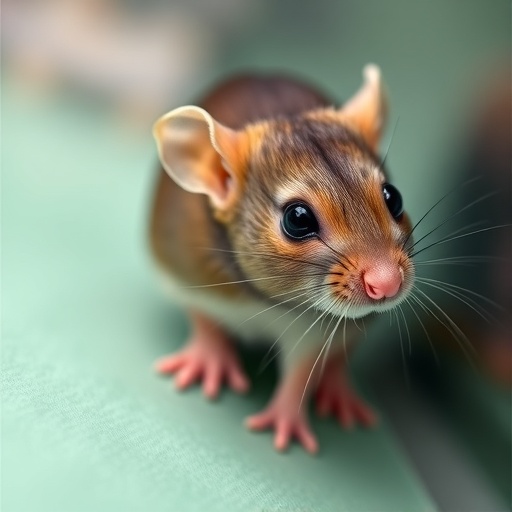
In the meticulous world of biomedical research, where mouse models underpin breakthroughs in genetics, development, and disease, the daily chore of preparing pseudopregnant female mice for embryo transfer has long been a quiet bottleneck. The conventional protocol demands technicians to painstakingly select females that are visibly in estrus, the brief window of sexual receptivity. Because only a fraction of a colony naturally enters this stage on any given day, facilities must maintain large stocks of female mice, consuming valuable space, resources, and animal lives. Now, a team in Japan has flipped this logic on its head, demonstrating that deliberately using females that are not in estrus can yield a more predictable, efficient, and ethically streamlined pipeline. The method, published in the Journal of the American Association for Laboratory Animal Science, harnesses two classic yet underutilized rodent phenomena—the Lee-Boot effect and the Whitten effect—to synchronize mating on demand while drastically reducing the number of animals required.
At the heart of this innovation lies a clever manipulation of mouse social chemistry. When female mice are housed together without male exposure, they gradually suppress each other’s estrous cycles through olfactory signals, a phenomenon known as the Lee-Boot effect. In a typical breeding colony, this is often viewed as a nuisance because it decreases the pool of obviously estrous females. Yuji Noguchi and Eiji Watanabe at the National Institute for Basic Biology (NIBB) saw it instead as an opportunity. By intentionally group-housing females, they maximized the proportion of animals exhibiting nonestrous signs—essentially stalling the colony in a state of reproductive quiescence. This created a uniform starting population, eliminating the daily scramble to cherry-pick the few females in estrus.
The real magic, however, occurs when these suppressed females are introduced to vasectomized male mice. The sudden exposure to male pheromones triggers the Whitten effect, a well-documented phenomenon where male odors rapidly reset and synchronize the estrous cycles of grouped females. Within three days, the once-nonreceptive mice surge toward estrus in a coordinated wave, culminating in timed copulation on the third day of co-housing. This transforms an unpredictable, labor-intensive selection process into a scheduled event, yielding pseudopregnant recipients with a reliability that the traditional estrus-first approach struggles to match.
The technical elegance of this protocol lies in its integration of natural reproductive endocrinology. The Whitten effect operates via the vomeronasal system, where male urinary pheromones—primarily volatile compounds such as 2,5-dimethylpyrazine and dehydro-exo-brevicomin—stimulate gonadotropin-releasing hormone neurons in the female hypothalamus. This cascade elevates luteinizing hormone and follicle-stimulating hormone, driving follicular maturation and ovulatory cycling. By first locking the hypothalamic-pituitary-ovarian axis into a quiescent phase through the Lee-Boot effect, the researchers effectively amplify the subsequent Whitten-response, ensuring a robust and synchronized rebound. This biochemical seesaw converts endogenous hormonal rhythms into a tool for precision timing rather than a variable to be contended with.
Beyond the endocrine mechanics, the approach delivers a tangible 3Rs victory—specifically in the “Reduction” of animal use, a core tenet of ethical laboratory science. Noguchi and Watanabe note that because the protocol does not depend on pre-screening for estrus, a facility can permanently reduce its stock of female mice by a significant margin. Fewer animals mean fewer cages, less bedding waste, decreased per-diem costs, and a lighter husbandry burden. In an era where institutional animal care committees and funding bodies increasingly prioritize evidence of reduction and refinement, such methodological adjustments carry outsized institutional impact. As Eiji Watanabe, corresponding author, emphasizes, the primary benefit is allowing laboratories to minimize stock animals, directly optimizing facility space and supporting reduction principles.
The experimental validation of the protocol involved systematic comparison of plug rates—the post-copulatory vaginal plug that confirms mating—between the standard estrus-selection method and the new nonestrous-first triad approach. The researchers reported that utilizing nonestrous females housed with vasectomized males for three days yielded plug check rates comparable to those achieved by meticulously selecting estrous females. Furthermore, subsequent embryo transfer experiments confirmed that the pseudopregnant recipients prepared via this method successfully carried implanted embryos to term, with pregnancy rates indistinguishable from conventional cohorts. This functional equivalency is crucial, because it assures embryologists that the welfare-driven reduction in animal numbers does not compromise experimental outcomes or embryo survival.
The ripple effects extend into the reproducibility sphere. In many labs, the subjective scoring of vaginal cytology to determine estrus introduces operator variability—some researchers may miss early estrus or misclassify metestrus as proestrus. The new protocol bypasses cytological screening entirely for the initial selection step, relying instead on the robust, binary outcome of timed co-housing. By reducing human judgment calls, the method has the potential to standardize recipient preparation across different facilities and technical staff, a quiet but persistent source of inter-laboratory variability in embryo transfer experiments.
For research institutes striving to balance scientific throughput with ethical accountability, the NIBB protocol offers a textbook example of how revisiting long-standing assumptions can unearth elegant solutions. What was once considered an obstacle—a cage full of nonreceptive females—becomes the ideal raw material for a synchronized reproductive pipeline. By pairing the reproductive brakes of the Lee-Boot effect with the accelerator of the Whitten effect, Noguchi and Watanabe have given mouse facilities worldwide a reason to rethink their breeding colonies. The work underscores a profound principle: sometimes the most efficient protocol is not to hunt for the needle of estrus in a haystack, but to redesign the haystack so that every straw aligns precisely when you need it to.
Subject of Research: Preparation of pseudopregnant recipient mice utilizing nonestrous females through sequential application of the Lee-Boot and Whitten effects.
Article Title: Not provided.
News Publication Date: Not provided.
Web References: 10.30802/AALAS-JAALAS-25-131
References: Journal of the American Association for Laboratory Animal Science, DOI: 10.30802/AALAS-JAALAS-25-131
Image Credits: Eiji Watanabe
Keywords: Lee-Boot effect, Whitten effect, pseudopregnancy, mouse embryo transfer, 3Rs, reduction, laboratory animal science, estrous synchronization, reproductive biology


