


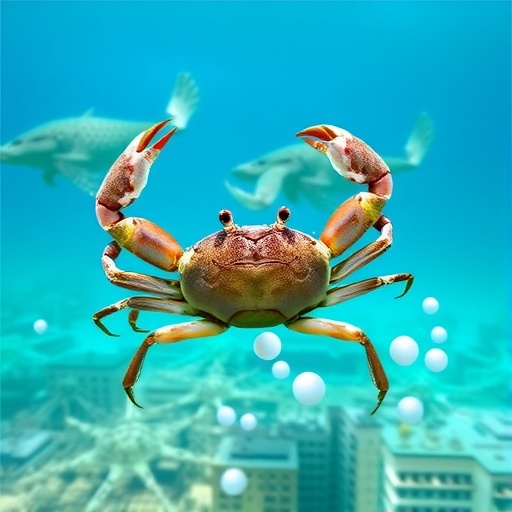
The internet has unlocked a thriving but largely invisible marketplace for some of the most visually stunning creatures on Earth: tropical land crabs. A new study has revealed that dozens of brachyuran species, including the electric-purple vampire crabs of Southeast Asia, are being bought and sold online with virtually no oversight, prompting scientists to warn of potential cascading effects on wild populations and fragile ecosystems. From the striking Red Devil Vampire Crab (Geosesarma hagen) to the heavily armored Panther Crab, these animals have emerged as coveted additions to the tropical aquarium hobby, a global industry worth hundreds of millions of dollars.
Researchers at the University of Plymouth, in collaboration with the University of Kent, conducted the first systematic assessment of the international brachyuran land crab trade by scouring English-language e-commerce platforms. Over a four-month period, the team analyzed 574 individual advertisements from 15 sellers based in the United Kingdom, the United States, and continental Europe. What they uncovered was a surprisingly diverse catalog of 25 different species on offer, ranging from wild-caught specimens to tank-bred juveniles, often shipped internationally with minimal documentation or welfare guidance.
The two most commonly listed species were the Purple Vampire Crab (Geosesarma dennerle), a diminutive crustacean with vivid violet claws that has become a sensation in nano-aquascaping circles, and the Panther Crab (Pantherina panthera), a larger, predominantly aquatic species with stark black-and-orange markings. Prices spanned an order of magnitude—from as little as £5 for unsexed juveniles to £120 for rare or adult individuals—reflecting both the species’ desirability and the opaque nature of supply chains. Crucially, nearly a third of all advertisements did not provide a species name, making traceability and scientific monitoring extraordinarily difficult. Most listings also omitted basic husbandry instructions, raising concerns about animal welfare post-purchase.
The background to this trade is a regulatory vacuum. Although eBay, one of the primary platforms for live animal sales, recently introduced a blanket ban on the sale of live invertebrates, the study found that listings persist across other sites and specialist forums, skirting enforcement. As far back as 2003, hermit crabs and true crabs already constituted the second most traded group of marine ornamental crustaceans, and their popularity has only soared with the expansion of digital commerce. The researchers point out that the trade encompasses both marine and freshwater species, but semi-terrestrial and fully terrestrial land crabs—brachyurans that require both aquatic and humid terrestrial microhabitats—present a unique set of ecological and conservation challenges.
Central to the alarm is the role these animals play in their native environments. Vampire crabs and their relatives are ecosystem engineers; they burrow, aerate soil, cycle nutrients, and occupy a pivotal position in the detrital food webs of Southeast Asian rainforest streams and peat swamps. Removing them in significant numbers could trigger trophic cascades, disrupting leaf-litter decomposition and altering invertebrate community dynamics. Because the trade volume remains unquantified, the study’s authors caution that what they have observed is likely just the tip of the iceberg, with potentially substantial numbers of animals being extracted from the wild under the radar of both customs agencies and conservation authorities.
Ella Whitaker, a PhD researcher and lead author, encapsulated the paradox: “Vampire crabs are a very striking species and that is what makes them so desirable. However, they are also key ecosystem engineers, and it is highly possible that removing them from their environment could have a variety of consequences. Our findings show there is a significant demand for these species and that there are sellers able to source them and ship them all over the world. With no regulation or global monitoring, the full impact of these practices is still something of a mystery, and it is likely what we have documented so far is the tip of the iceberg.”
Dr Lucy Turner, Associate Professor in Marine Biology and the study’s senior author, expressed her own astonishment that her long-term work on land crabs as model organisms for climate change research had never intersected with the pet trade until now. “Although I’ve worked on crabs for many years, and used land crabs as model species in my research, I had no idea that people also kept them as pets. Our research highlights that little is known about the scale of this trade, and this could be a significant threat to wild populations.” Her team is now pivoting to investigate captive breeding protocols and husbandry standards, hoping to reduce pressure on wild stocks while satisfying the burgeoning hobbyist demand.
The study, published in Oryx – The International Journal of Conservation, underscores an urgent need for international monitoring frameworks akin to those governing the trade in corals or reptiles. The authors argue that without accurate species-level identification and robust reporting of import-export data, policymakers remain blindfolded. As the online exotic pet trade accelerates into new taxonomic frontiers, the colourful crabs that scuttle between waterfalls and tree roots in Asian forests may soon find themselves at the center of a conservation debate that has, until now, remained largely submerged.
Cite Scienmag News
Margaret Porter. (July 6, 2026). First study assesses global online trade in land crabs. Scienmag. https://scienmag.com/first-study-assesses-global-online-trade-in-land-crabs/
Margaret Porter. "First study assesses global online trade in land crabs." Scienmag, 6 July 2026, https://scienmag.com/first-study-assesses-global-online-trade-in-land-crabs/. Accessed 4 September 2026.
Margaret Porter. "First study assesses global online trade in land crabs." Scienmag. July 6, 2026. https://scienmag.com/first-study-assesses-global-online-trade-in-land-crabs/


