


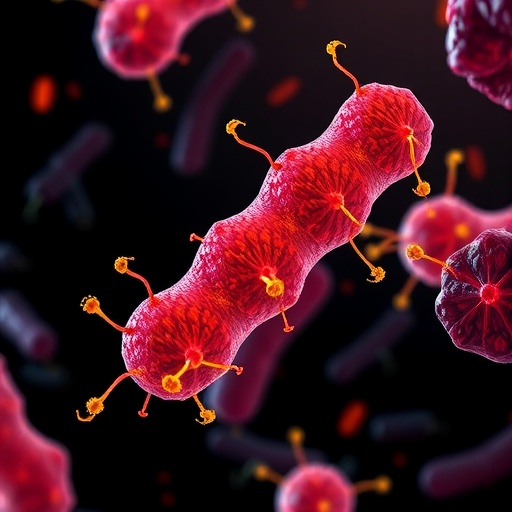
A cunning molecular maneuver allows Salmonella to silence the gut’s early warning system, not by shutting down the genetic instructions for alarm signals but by sabotaging the cellular machinery that reads them. This discovery, published in Nature Communications, reveals how the foodborne pathogen uses a single injected protein to intercept and destroy the messenger RNA molecules that code for critical immune signals, delaying the body’s inflammatory counterattack just long enough for the bacteria to consolidate their foothold. The work upends the conventional view that bacteria merely block the activation of immune genes, instead demonstrating a stealthier form of warfare waged after those genes have already been turned on.
Salmonella enterica serovars are responsible for millions of infections worldwide each year, causing illnesses that range from self-limiting gastroenteritis to life-threatening systemic disease. The initial battleground is the intestinal epithelium, where the pathogen attaches and uses a needle-like apparatus—the type III secretion system—to inject a cocktail of effector proteins directly into host cells. This molecular syringe is the cornerstone of Salmonella’s virulence, delivering dozens of proteins that manipulate the host from the inside out. For years, researchers have known that one of the most versatile of these effectors is SopB, a phosphoinositide phosphatase that remodels the cell’s membrane lipids, drives bacterial uptake, and activates pro-survival pathways. The new study reveals an unanticipated second career for SopB: it is also a silencer of post-transcriptional gene regulation, a layer of cellular control that has, until now, been largely overlooked in the arms race between pathogen and host.
When intestinal cells sense an invasion, they do not simply flip a transcriptional switch and wait for new proteins to be manufactured. Many of the most potent alarm signals—cytokines like interleukin-8 (IL-8), which beckons neutrophils to the site of infection—are regulated at the level of messenger RNA stability and translation. Their mRNA transcripts contain adenine- and uracil-rich elements (AREs) in their 3’ untranslated regions, which act as docking platforms for a suite of RNA-binding proteins. Some of these proteins, such as HuR, protect the message from degradation and boost its translation, while others, like tristetraprolin (TTP), mark it for rapid destruction. This post-transcriptional rheostat allows a cell to mount a hair-trigger inflammatory response without the lag inherent in new transcription. Salmonella, it seems, has evolved to jam precisely this rapid-response circuit.
The international research team behind the study found that cells infected with wild-type Salmonella accumulated far less IL-8 protein than those exposed to a mutant strain lacking SopB, even though both sets of cells had comparable levels of IL-8 mRNA. This was the first clue that SopB was uncoupling transcription from translation. Using a series of elegant biochemical and genetic experiments, the scientists traced the effect to a specific signaling cascade. SopB’s phosphatase activity, which reduces the cellular pool of phosphatidylinositol-4,5-bisphosphate (PIP2) and increases phosphatidylinositol-3-phosphate, was triggering the activation of a kinase called MK2. Activated MK2, in turn, phosphorylated the RNA-binding protein TTP, enhancing its affinity for the ARE sequences in cytokine mRNAs. The consequence was dramatic: the half-life of IL-8 and other pro-inflammatory transcripts plummeted, and the ribosomes that should have been churning out alarm signals were left idle.
This intervention is exquisitely timed and spatially refined. By targeting the post-transcriptional machinery, SopB does not need to silence the nuclear factor-κB (NF-κB) or mitogen-activated protein kinase (MAPK) pathways that drive transcription—the cell’s nucleus remains completely oblivious, continuing to churn out fresh cytokine mRNAs in a futile effort to sound the alarm. Meanwhile, the cytoplasm becomes a dead-letter office. The result, as the team observed in a murine model of colitis, is a striking damping of early tissue inflammation. In animals infected with SopB-deficient Salmonella, the gut epithelium became quickly flooded with neutrophils and the telltale signs of acute inflammation appeared within hours. In contrast, the wild-type bacteria kept the tissue surprisingly quiescent during the critical first 24 to 48 hours, allowing the pathogen to replicate and penetrate deeper into the mucosa before the full force of the immune system arrived.
The consequences for disease progression are profound. By delaying the onset of inflammation, Salmonella not only shields itself from an early neutrophil onslaught but also creates a more permissive environment for its own dissemination. Neutrophils are professional killers that can phagocytose bacteria and release toxic granules; postponing their recruitment gives the pathogen a time window during which it can hijack macrophages, traverse the epithelial barrier, and seed secondary sites. The study demonstrated that the suppression of early cytokine release via the SopB–MK2–TTP axis was directly correlated with increased bacterial burden and more severe tissue pathology later in the infection cycle. This reveals a counterintuitive strategy: the bacteria actively promote a temporary “peace” that paradoxically enables a more destructive later phase of disease.
The findings open a new conceptual frontier in host-pathogen interactions, positioning the post-transcriptional regulation of inflammatory mediators as a central battleground. It is a vulnerability that other pathogens are likely to exploit. Indeed, the researchers note that several other bacterial effectors are known to interact with the MK2 pathway or RNA-binding proteins, suggesting that this mode of immune sabotage may be widespread. From a clinical perspective, the work suggests that therapeutics designed to stabilize the post-transcriptional machinery in epithelial cells—perhaps by inhibiting the phosphatase activity of SopB or blocking the phosphorylation of TTP—could restore the early alarm and prevent Salmonella from gaining a foothold. Such an approach would bypass the need to target the bacteria directly, a strategy that becomes increasingly attractive in an era of rising antimicrobial resistance.
Beyond gastroenteritis, the implications ripple outward to chronic inflammatory conditions. A finely tuned post-transcriptional control system is essential for maintaining intestinal homeostasis, and its subversion by a pathogen could leave lasting scars. Some studies have linked Salmonella infections to an increased risk of irritable bowel syndrome and reactive arthritis, and it is plausible that the disturbance of cytokine kinetics described here contributes to these long-term consequences. The team is now probing whether the same mechanism is hijacked by other enteric pathogens, including Shigella and pathogenic E. coli, and whether the molecular players involved—MK2, TTP, and their regulatory partners—could serve as universal drug targets for dampening harmful inflammation, whether it is triggered by infection or by autoimmune flare-ups.
In the ceaseless evolutionary dance between microbe and host, Salmonella has choreographed a move of breathtaking subtlety. It does not smash the alarm button; it simply disconnects the wires that link the button to the bell. By revealing the molecular details of this sabotage, the study not only rewrites the textbook on bacterial immune evasion but also hands immunologists a new set of tools to potentially intercept the saboteur. The next time you encounter a bout of food poisoning, remember that while your body is rushing to file a scream for help, the invader is busily editing the tape before it ever reaches the microphone.
Cite Scienmag News
Ophelia Keating. (July 6, 2026). Salmonella protein SopB curbs early inflammation to slow disease progression. Scienmag. https://scienmag.com/salmonella-protein-sopb-curbs-early-inflammation-to-slow-disease-progression/
Ophelia Keating. "Salmonella protein SopB curbs early inflammation to slow disease progression." Scienmag, 6 July 2026, https://scienmag.com/salmonella-protein-sopb-curbs-early-inflammation-to-slow-disease-progression/. Accessed 3 September 2026.
Ophelia Keating. "Salmonella protein SopB curbs early inflammation to slow disease progression." Scienmag. July 6, 2026. https://scienmag.com/salmonella-protein-sopb-curbs-early-inflammation-to-slow-disease-progression/


