


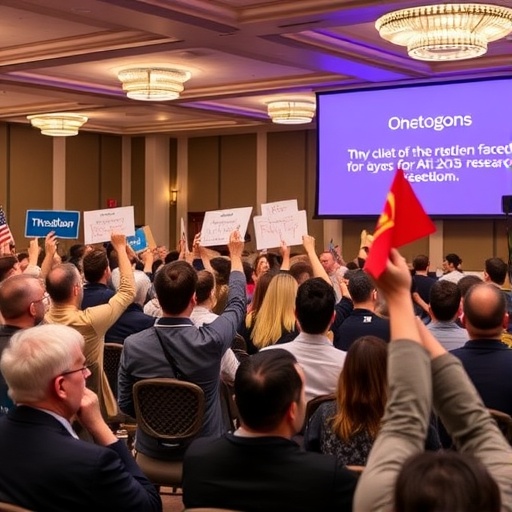
The halls of the Bundeskunsthalle in Bonn still echoed with the gravity of the words as the annual assembly of the Deutsche Forschungsgemeinschaft (DFG), Germany’s largest research funding organization, drew to a close on the first day of July 2026. Over three days, the statutory bodies of this central self-governing institution for science had convened to dissect a topic that has become alarmingly urgent not just in Germany but across Western democracies: how to safeguard the freedom and independence of research against a rising tide of hostility, political instrumentalization, and ideological attacks. What emerged was not merely a routine gathering of grant committees, but a full-throated intellectual defense of the very epistemological foundations upon which open societies are built. The DFG President, Professor Katja Becker, a biochemist known for her measured precision, delivered an unusually pointed rebuke of the research policy positions held by the party Alternative für Deutschland (AfD), framing its proposals as fundamentally incompatible with the German constitution and, more broadly, with the logic of scientific inquiry itself. This was not a partisan political statement, she argued, but a necessary defense of the principle that knowledge must be generated through open, evidence-based processes free from ideological predetermination.
At the heart of Becker’s critique was the AfD’s manifesto for the upcoming state elections in Saxony-Anhalt and Mecklenburg-Western Pomerania, which explicitly calls for the abolition of specific research fields and the dismantling of third-party funding mechanisms that rely on established scholarly quality criteria. The justification offered in the manifesto rests on the claim that contemporary research has become “politicized” and “ideological,” a charge that, upon inspection, inverts the relationship between science and ideology in a manner that many scholars find deeply Orwellian. Becker dissected this logic with the scalpel of a scientist: the demand that certain fields be abolished because they produce politically inconvenient findings is itself the purest form of ideological interference. By contrast, the peer-review systems of the DFG, which distribute over €3.8 billion annually across more than 30,000 projects, are designed precisely to insulate funding decisions from such political winds. The rigorous process relies on panels of elected researchers who evaluate applications solely on scholarly merit, originality, and methodological soundness, using a bottom-up, curiosity-driven model that has been the engine of Germany’s scientific prowess since the DFG’s reorganization after the Second World War. To replace this with a system where politicians dictate which questions are permissible would represent a return to the darkest chapters of German science, when fields like “German Physics” were weaponized to purge Jewish scientists and suppress relativity theory, a historical trauma that still informs the DFG’s institutional DNA.
The technical architecture of the DFG’s funding ecosystem offers a bulwark against such encroachment, but only if it is actively defended. The organization operates on the principle of scientific self-governance, where researchers themselves, through a complex electoral college of universities, research institutes, and learned societies, appoint the peers who sit on review boards and senate committees. This ensures that the definition of “quality” remains endogenous to the scientific community. The DFG Senate’s newly completed policy paper on resilience, prepared by an ad hoc working group chaired by Vice Presidents Professor Britta Siegmund, a noted immunologist, and Professor Johannes Grave, an art historian, maps out a taxonomy of threat scenarios that range from the overt—direct legislative attacks on specific disciplines—to the insidious, such as the gradual erosion of institutional trust through disinformation campaigns that portray peer review as a closed, self-serving cartel. The paper, which is due for imminent publication, outlines actionable countermeasures, including rapid-response communication protocols, legal interventions at the constitutional court level when academic freedom is legislatively curtailed, and a reinforcement of civic education that explicates the societal returns on investment from fundamental research. One key technical recommendation is the development of transparent algorithmic tools to demonstrate the fairness of review processes, using AI-driven audits of peer review outcomes to detect biases while preserving confidentiality, thus publicly debunking myths of ideological groupthink.
The DFG President’s speech at the festive event on Tuesday evening went far beyond a mere institutional statement; it wove together the philosophical common roots of democracy and scientific inquiry in a way that resonated with the 400 guests from academia, politics, and society, including State Secretary Dr. Rolf-Dieter Jungk of the Federal Ministry of Research, Technology and Space (BMFTR) and North Rhine-Westphalia’s Minister for Science Ina Brandes. Becker argued that both democracy and the scientific method are founded on the belief that arguments should carry greater weight than authority, that criticism is more productive than certainty, and that learning matters more than being right. In an age where social media amplifies assertions over evidence, she described the free pursuit of knowledge as society’s immune system, capable of distinguishing between genuine knowledge and mere assertion, between evidence and ideology. When that system is compromised, the body politic loses its ability to self-correct, becoming vulnerable to the opportunistic infections of populism. This metaphor was not accidental; it parallels the biological concept of immune tolerance, where a system must distinguish between self and non-self without overreacting to harmless stimuli. A resilient research system, she implied, must similarly maintain a delicate homeostasis between openness to novel, even uncomfortable, ideas and the rejection of those that violate the basic tenets of rational discourse. The speech, later made available in full as a text entitled For the Freedom and Independence of Research, is likely to be cited widely as a landmark defense of scientific autonomy in the current political climate.
Looking at the granular funding data presented in the DFG’s 2025 annual report, one can directly observe the tangible output of this autonomous system. The organization funded 30,090 projects with a total volume of approximately €3.8 billion. The individual investigator grant, the bedrock of innovative, high-risk research, accounted for 16,532 projects—more than half of all funded activities—with €1.4 billion allocated. This dispersed, bottom-up approach, where any qualified researcher can submit a proposal on any topic and have it judged purely on merit, is the very antithesis of the politically directed science envisioned by the AfD manifesto. A further €1.6 billion flowed into 846 coordinated networks, comprising 11,458 projects within Collaborative Research Centres, Research Training Groups, and Priority Programmes. These larger structures are designed to tackle complex, interdisciplinary problems that require a critical mass of expertise, such as understanding the neural correlates of consciousness or developing new materials for quantum computing. Disciplinary breakdowns reveal the life sciences leading with €1.3 billion (35.1%), followed by the natural sciences at €890 million (23.2%), engineering sciences at €788 million (20.6%), and humanities and social sciences at €663 million (17.3%); a cross-disciplinary pool of €148 million covers projects not neatly categorized. These numbers demonstrate that the system, left to its own devices, naturally distributes resources according to the evolving landscape of knowledge, rather than according to a centralized political plan. Any attempt to surgically remove specific fields, as the AfD proposes, would not only cripple those disciplines but would sever the connective interdisciplinary tissue that allows, for example, medical advances to draw on fundamental physics, or climate models to integrate social behavior data.
During the meetings of the statutory bodies, another critical technical topic was the integration of artificial intelligence into both the research it funds and its own funding processes. The DFG has been piloting AI-assisted tools to help match proposals with suitable reviewers from its database of over 100,000 experts, a task that becomes combinatorially explosive given the interdisciplinary nature of modern proposals. The challenge is to train models that understand semantic content beyond keyword matching, using natural language processing to parse the conceptual core of a grant application and identify reviewers whose published work demonstrates genuine expertise in that specific niche. However, the Senate discussions emphasized that AI must remain a supportive tool, not a decision-maker, because the subtle art of evaluating scientific novelty and methodological soundness requires a human capacity for abductive reasoning—inferring the best explanation—that current machine learning architectures, based largely on pattern recognition, simply do not possess. Moreover, the algorithms must be transparent and auditable to prevent the very accusations of opacity that political actors leverage to delegitimize existing peer review. An additional technical focus was the forthcoming statement from the Permanent Senate Commission on the Transformation of Agricultural and Food Systems (SKAE), which deals with the contribution of “living labs” to systems research in the agricultural, food, and nutritional sciences. Living labs are real-world experimental spaces where researchers, farmers, consumers, and policymakers co-create innovations and monitor their effects in situ, rather than in isolated laboratory conditions. The SKAE paper scrutinizes the methodological challenges of such open-system experiments, particularly how to establish causal inference when you cannot control all variables, and advocates for advanced statistical techniques like directed acyclic graphs and Bayesian causal networks to disentangle the complex feedback loops in food systems.
The assembly also oversaw the election of two new Vice Presidents who will shape the DFG’s strategic direction from January 2027. Professor Lutz Mädler, a process engineer from the University of Bremen, brings deep expertise in the scaling of chemical processes and the physics of particulate systems, a field where Germany has historically led through a close integration of fundamental thermodynamics and industrial application. His work on spray flame synthesis for nanoparticle production embodies the translation of fundamental knowledge into technology. Alongside him, Professor Christian Walter, an international law scholar from Ludwig-Maximilians-Universität Munich, will take office. His research on the fragmentation of international law and the legal architecture of global governance is exceptionally relevant as the DFG navigates an increasingly fraught landscape of international research collaboration amid geopolitical tensions. They succeed Professor Hans Hasse, whose work on molecular thermodynamics has been pivotal for energy transition technologies, and Professor Marietta Auer, a legal scholar who has profoundly analyzed the relationship between private law and social order. The elections reflect the DFG’s unique governance model, where the member organizations—universities, Max Planck Society, Helmholtz Association, Fraunhofer Society, and the academies—exercise their collective vote, ensuring that leadership is drawn from across the entire spectrum of the German research landscape.
In a moment that highlighted the positive force of research communication, the DFG and the Stifterverband jointly awarded the Communicator Award, endowed with €50,000 and the most prestigious honor of its kind in Germany, to Professor Ute Schmid of the University of Bamberg. A computer scientist holding the Chair of Cognitive Systems, Schmid was recognized for her tireless work bridging the persistent gap between artificial intelligence research and the lay public. Her approach goes beyond superficial outreach; she developed didactic methods based on cognitive modeling to teach machine learning principles in schools, enabling students to build and train simple neural networks and, crucially, to understand their limitations, such as susceptibility to adversarial examples where a few pixel changes can flip a classifier’s judgment. This technical grounding in the inner workings of AI is precisely the kind of societal inoculation against both unbridled techno-utopianism and fear-driven technophobia that Becker’s broader defense of evidence-based discourse demands. Schmid’s work with industry and policymakers also focuses on the explainability of AI decisions, a topic at the frontier of computer science where post-hoc explanation methods like LIME and SHAP are being scrutinized for their fidelity to the models’ actual decision logic. By empowering citizens with a mechanistic understanding of algorithms, Schmid’s education initiatives contribute directly to the resilience of an open society, ensuring that the public debate around AI is informed by knowledge rather than assertion.
The international dimension of research cooperation, a traditional strength of German science, also commanded significant attention during the discussions. The DFG’s partnerships with counterpart organizations across the globe, from the National Science Foundation in the United States to the São Paulo Research Foundation in Brazil, are built on the premise that knowledge knows no borders and that the greatest scientific challenges—pandemic preparedness, climate change, biodiversity loss—demand globalized intellectual supply chains. However, the increasing geopolitical fragmentation and the securitization of research data pose technical challenges to this model. The statutory bodies delved into the delicate balance between open science and research security, particularly in dual-use technologies such as advanced semiconductors, synthetic biology, and cryptographic quantum networks. The DFG’s approach, articulated in a series of internal guidelines, is to develop granular “know-your-partner” protocols and risk assessment matrices that evaluate collaborations based on the specific research artifact and its potential for weaponization, rather than applying blanket nationalist restrictions that would cripple fundamental physics or virology. This technical calibration of security versus openness requires constant maintenance and draws on expertise from legal scholars like the newly elected Vice President Walter, as well as ethicists and security analysts who can model the probabilistic pathways from basic research to malicious application.
The setting of the annual meeting’s closure also carried symbolic weight. Bonn, the city that served as the capital of West Germany during the Cold War, embodies the post-war reconstruction of German democracy on the pillars of a free press, an independent judiciary, and, crucially, autonomous research institutions. The decision to hold the 2027 annual meeting in Marburg, a town whose Philipps University, founded in 1527, is the oldest Protestant university in the world and a historic site of Enlightenment thought, signals a deliberate anchoring of the DFG’s identity in the long arc of intellectual history that resists authoritarian closures. This historical consciousness is not mere ceremony; it is an active component of the DFG’s resilience strategy, reminding both scientists and the public that the freedom to follow a line of inquiry wherever it leads was hard-won and is perpetually fragile. The assembly’s final General Assembly, where the funding figures and organizational developments were formally ratified, thus served not only as an administrative checkpoint but as a renewed covenant among Germany’s research institutions to defend the principle of self-governance. The election of eight new Senate members and the reelection of four others further refreshed the gene pool of ideas that will guide this defense, bringing in early-career perspectives alongside seasoned research managers, all bound by a shared commitment to the principle that the best science emerges not from political directives but from the fertile chaos of free inquiry, constrained only by the rigorous standards of evidence and argument.
In the weeks and months following this meeting, the scientific community will closely watch the state elections in Saxony-Anhalt and Mecklenburg-Western Pomerania, where the AfD’s potential participation in government could translate its research policy manifestos into executive action. The DFG, by drawing a bright line in the sand, has made clear that any attempt to defund specific research areas through political decree will be met with constitutional challenges and a robust public defense of the epistemological foundations of democracy. The resilience policy paper, once released, is expected to serve as a template for other scientific organizations globally that face similar populist pressures, from the National Institutes of Health in the United States to UK Research and Innovation. The techniques for auditing peer review with AI, the methodologies for causal inference in living labs, and the strategies for transparent science communication exemplified by the Communicator Award are not just administrative tools; they constitute a comprehensive immune system for the body of knowledge. The DFG annual meeting of 2026 will likely be remembered not for any single funding decision or policy tweak, but for the moment when the German research establishment collectively articulated that its foundational values are not negotiable. As Katja Becker’s words continue to resonate, the task ahead lies in implementing the technical and social safeguards that can make the freedom and independence of research durable enough to withstand the political storms that are, without doubt, gathering strength on the horizon.
Cite Scienmag News
Courtney Benton. (July 6, 2026). At DFG annual gathering, researchers rally to safeguard scientific freedom—and deliver a blistering rebuke to AfD’s research agenda. Scienmag. https://scienmag.com/at-dfg-annual-gathering-researchers-rally-to-safeguard-scientific-freedom-and-deliver-a-blistering-rebuke-to-afds-research-agenda/
Courtney Benton. "At DFG annual gathering, researchers rally to safeguard scientific freedom—and deliver a blistering rebuke to AfD’s research agenda." Scienmag, 6 July 2026, https://scienmag.com/at-dfg-annual-gathering-researchers-rally-to-safeguard-scientific-freedom-and-deliver-a-blistering-rebuke-to-afds-research-agenda/. Accessed 3 September 2026.
Courtney Benton. "At DFG annual gathering, researchers rally to safeguard scientific freedom—and deliver a blistering rebuke to AfD’s research agenda." Scienmag. July 6, 2026. https://scienmag.com/at-dfg-annual-gathering-researchers-rally-to-safeguard-scientific-freedom-and-deliver-a-blistering-rebuke-to-afds-research-agenda/


