


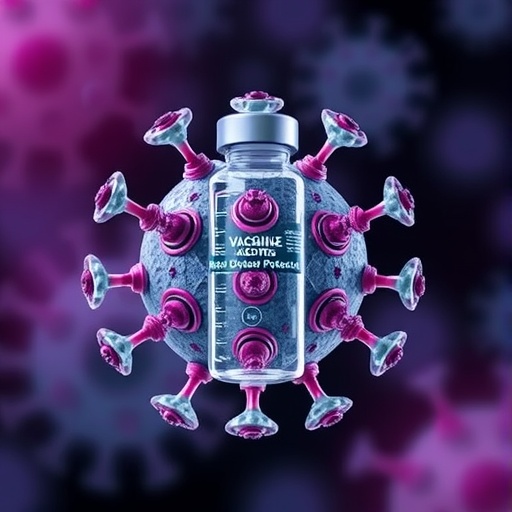
In a groundbreaking development that is poised to reshape the landscape of infectious disease prevention, a team of researchers led by Kim, Y.C., Song, X., and Watanabe, Y. has unveiled a highly detailed structural and immunogenic analysis of virus-like particles (VLPs) derived from the ChAdOx1 Chikungunya vaccine candidate. Published in the prestigious journal npj Viruses, this 2026 study offers unprecedented insights into how these engineered VLPs stimulate immune protection against the debilitating Chikungunya virus, potentially transforming our approach to vaccine design and efficacy.
The Chikungunya virus, a mosquito-borne alphavirus, has been a persistent global health threat, causing febrile illness and severe arthritis-like symptoms that can lead to chronic pain in infected individuals. Despite its impact, the challenge in developing a highly effective vaccine has long been hampered by the complex immunogenic properties of the virus and the intricacies of host immune responses. The ChAdOx1 vector platform, originally developed for other viral pathogens, now forms the foundation for a promising Chikungunya vaccine candidate, whose structural elements are rendered into VLPs that mimic the virus without containing genetic material, thereby ensuring safety while triggering immune recognition.
This study meticulously characterizes the architecture of the ChAdOx1 Chik-derived Chikungunya VLPs using advanced cryo-electron microscopy (cryo-EM) and biophysical techniques. The researchers successfully resolved the three-dimensional conformation of these VLPs at near-atomic resolution, revealing how native viral proteins such as the envelope glycoproteins E1 and E2 arrange to present highly antigenic epitopes. Understanding this spatial arrangement is critical because it informs how the immune system recognizes and mounts a defense against real viral particles during infection.
In addition to structural elucidation, the team performed an extensive immunogenic assessment through both in vitro and in vivo experiments. Animal models immunized with the ChAdOx1-derived VLPs exhibited potent humoral responses, as evidenced by high titers of neutralizing antibodies. These antibodies were shown to effectively block virus entry into host cells, a vital step in preventing viral replication and disease progression. Moreover, the VLP vaccine induced robust cellular immunity, including T-cell responses, which are essential for long-term immunological memory and protection against future infections.
One of the pivotal revelations from this study lies in the mechanistic rationale inferred from the integrated structural and immunogenic data. The researchers propose a model wherein the spatially organized viral epitopes on the VLP surface act synergistically to engage B-cell receptors with high avidity, leading to potent antibody affinity maturation. Concurrently, the VLPs’ particulate nature facilitates efficient uptake and presentation by antigen-presenting cells, such as dendritic cells, thereby priming T-helper cells and orchestrating a coordinated adaptive immune response. This dual activation pathway elucidates why the ChAdOx1 Chikungunya VLP vaccine exhibits superior protective efficacy.
The implications of these findings extend beyond the immediate context of Chikungunya virus vaccination. By leveraging structural vaccinology principles, the scientists demonstrate a paradigm shift towards rational vaccine design that is informed by precise molecular details rather than empirical approaches. This strategy could accelerate the development of vaccines against a host of emerging and re-emerging viral pathogens, many of which share structural or immunological similarities with Chikungunya.
Furthermore, this study underscores the versatility of the ChAdOx1 viral vector platform, originally celebrated for its role in COVID-19 vaccine development. Its application to Chikungunya indicates a modular platform capable of rapid adaptation to diverse pathogens, thereby facilitating swift responses to future outbreaks. The elucidation of VLP-based immunogenic mechanisms also offers a blueprint for optimizing antigen presentation and enhancing vaccine safety by avoiding the use of live-attenuated or replication-competent virus forms.
An intriguing aspect of the study is the analysis of the stability and scalability of the ChAdOx1 Chik-derived VLPs. The researchers report that these VLPs maintain structural integrity under various storage conditions, a key consideration for vaccine distribution, especially in low-resource settings where cold chain logistics are challenging. Additionally, the manufacturing process benefits from the non-infectious nature of VLPs, potentially reducing biosafety requirements and production costs, which are critical factors for global vaccine accessibility.
The comprehensive nature of the research also integrates epitope mapping studies, identifying conserved and immunodominant regions within the viral envelope proteins that could serve as universal targets for broad-spectrum vaccine candidates. Such cross-reactivity could prove invaluable given the genetic diversity of Chikungunya virus strains circulating worldwide. The identification of these epitopes guides future engineering efforts aimed at enhancing vaccine breadth and durability.
Importantly, the study confirms that immunization with the ChAdOx1 Chik-derived VLPs does not trigger antibody-dependent enhancement (ADE), a phenomenon observed in some viral infections where vaccine-induced antibodies paradoxically exacerbate disease severity. This safety profile elevates the vaccine candidate’s clinical potential, assuaging concerns that have historically constrained the development of certain viral vaccines.
The authors also explored the dynamics of memory B-cell formation post-vaccination, discovering sustained levels of memory cells over extended periods. This finding indicates that the VLP vaccine could confer long-lasting immunity, reducing the need for frequent booster doses – a crucial feature for controlling epidemics in endemic regions.
Additionally, insights into the glycosylation patterns of the E2 envelope protein, as revealed by mass spectrometry and structural data, suggest that these post-translational modifications influence immune recognition. By incorporating native-like glycosylation profiles, the VLPs better mimic authentic viral surfaces, enhancing vaccine efficacy.
Taken together, this study marks a major milestone in our understanding of Chikungunya virus immunology and vaccine development. It seamlessly demonstrates how integrating cutting-edge structural biology with immunology can unlock the mechanistic underpinnings of protective immunity, thereby accelerating the translation of vaccine candidates from bench to bedside.
As the global health community faces the ever-present threat of emerging viral infections, these findings highlight the promise of precision vaccine design strategies. The ChAdOx1 Chik-derived VLP platform not only showcases scientific innovation but also offers a tangible pathway to effective vaccines that could mitigate the burden of mosquito-borne diseases worldwide.
Ongoing clinical trials inspired by these preclinical findings will be critical to validate the translational potential of this vaccine candidate. Early data from human studies are anticipated to provide further insights into dosage, safety, and immunogenicity in diverse populations, paving the way for regulatory approvals and mass immunization efforts.
Ultimately, this research signifies a leap forward in virology and vaccinology, reaffirming the value of multidisciplinary collaboration and technological advancement in conquering infectious diseases. The structural and immunogenic blueprint provided by Kim and colleagues not only solves longstanding puzzles surrounding Chikungunya virus immunity but also charts a clear course towards effective, durable, and safe vaccines that can save millions of lives.
Cite Scienmag News
Kristina Jarvis. (June 30, 2026). ChAdOx1 Chik VLPs Reveal Key Vaccine Protection Mechanisms. Scienmag. https://scienmag.com/chadox1-chik-vlps-reveal-key-vaccine-protection-mechanisms/
Kristina Jarvis. "ChAdOx1 Chik VLPs Reveal Key Vaccine Protection Mechanisms." Scienmag, 30 June 2026, https://scienmag.com/chadox1-chik-vlps-reveal-key-vaccine-protection-mechanisms/. Accessed 1 September 2026.
Kristina Jarvis. "ChAdOx1 Chik VLPs Reveal Key Vaccine Protection Mechanisms." Scienmag. June 30, 2026. https://scienmag.com/chadox1-chik-vlps-reveal-key-vaccine-protection-mechanisms/


