


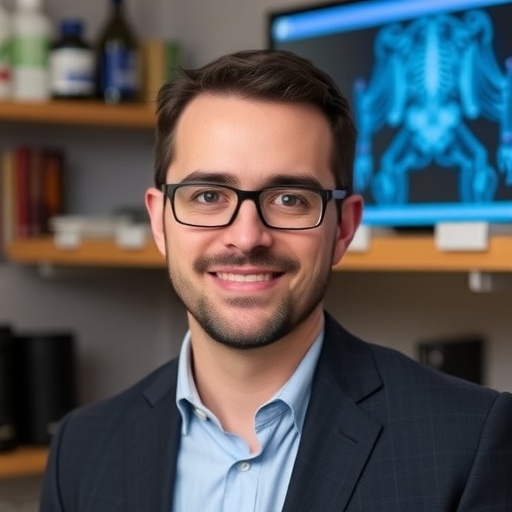
(Vienna, 23 June 2026) In a remarkable display of scientific accomplishment, Christoph Bock has achieved a rare milestone by consecutively securing ERC Starting, Consolidator, and Advanced Grants. This sequence of high-profile funding underscores the groundbreaking nature of his work in genetic screening and immunotherapy. His research group, supported by prior ERC grants, has revolutionized the field by developing sophisticated methodologies such as the CROP-seq technique, which integrates CRISPR screening with single-cell RNA sequencing to enable comprehensive functional genetic screens at unprecedented resolution. This method has paved the way for dissecting complex genetic networks and cellular behaviors with unparalleled precision.
Building upon these technological innovations, Bock’s team advanced computational approaches that leverage artificial intelligence for interpreting vast single-cell datasets. One such platform, CellWhisperer AI, uses chat-based interfaces for in-depth analysis, making single-cell data more accessible and interpretable, thereby accelerating biological discovery. Most recently, Bock’s lab employed CRISPR-based screening to engineer chimeric antigen receptor (CAR) T cells with enhanced anti-tumor efficacy, particularly against hematological malignancies. This approach mimics artificial evolution, optimizing gene functions to bolster CAR T cells’ cancer-fighting capabilities, a development now preparing for clinical translation.
The new ERC Advanced Grant propels this research to tackle one of oncology’s most formidable challenges: rendering CAR T cells effective against solid tumors. Unlike blood cancers, solid tumors create an immunosuppressive microenvironment that hampers immune cell infiltration and function. Furthermore, solid tumors often share surface markers with normal tissues, raising concerns about off-tumor toxicity when CAR T cells indiscriminately attack healthy cells. Overcoming these obstacles requires next-generation designs capable of navigating the tumor’s complex biology while minimizing collateral damage.
CAR T cell therapy, sometimes referred to as “living drugs,” entails genetically modifying a patient’s own T cells to express receptors that recognize specific tumor-associated antigens, thereby directing the immune system to cancer cells. While highly effective in some blood cancers like certain leukemias and lymphomas, CAR T cells have historically faltered against the more intricate and less immunologically accessible solid tumors such as lung, breast, and colon cancers. These malignancies constitute a major portion of cancer-related mortality worldwide, highlighting the urgent need for innovative therapeutic strategies.
One critical hindrance has been the tumor microenvironment—a hostile milieu composed of suppressive cells, soluble factors, and metabolic constraints—which systematically disables infiltrating T cells. Another key problem is antigen specificity: solid tumors rarely present unique markers that unequivocally distinguish malignant from normal tissue. This lack of specificity raises the stakes for CAR T cell therapy, as indiscriminate targeting may cause severe toxicities, undermining safety and clinical applicability.
The Solid-CART project, under Bock’s leadership, confronts these dual challenges by integrating high-throughput CRISPR screens with sophisticated mouse tumor models possessing intact immune systems. This approach systematically identifies genes that can enhance CAR T cell potency and resilience within the tumor microenvironment. Parallelly, the project harnesses cutting-edge AI to design regulatory DNA circuits implementing “two-factor authentication” mechanisms. These synthetic genetic programs enable CAR T cells to execute cytotoxicity exclusively when encountering the correct combination of tumor-specific signals, thereby significantly reducing damage to healthy tissues.
Targeting HER2-positive tumors across lung, breast, and colon cancer subtypes anchors the project within a clinically relevant context. Although HER2 is a well-characterized oncogenic receptor and established drug target, existing therapies often fall short due to therapeutic resistance or toxicity. Moreover, current CAR T approaches against HER2 have been limited by toxic effects related to HER2 expression on normal cells. Solid-CART aims to overcome these limitations by engineering CAR T cells with refined discrimination capabilities and enhanced functional persistence within solid tumors.
The translational ambition of the Solid-CART initiative extends beyond preclinical validation, intending to bring the most promising CAR T constructs into human clinical trials. This translational pipeline benefits from a close collaboration with Antonia Müller, Professor of Cell Therapy at the Medical University of Vienna, ensuring alignment with clinical imperatives and regulatory standards. Such integration is vital for bridging the gap between laboratory innovations and patient-ready therapies capable of fundamentally altering cancer treatment paradigms.
ERC Advanced Grants symbolize some of the highest honor and resources available to European researchers, awarded for visionary, high-impact projects that carry inherent risks yet promise transformative rewards. By securing this support, Bock’s laboratory receives the freedom and stability to pursue ambitious goals that address unmet medical needs and push the boundaries of current biomedical knowledge.
For the CeMM Research Center for Molecular Medicine, this achievement further consolidates its standing as a beacon of frontier biomedical research. CeMM’s mission to seamlessly integrate basic scientific breakthroughs with clinical application echoes through projects like Solid-CART, which embody precision medicine’s promise. By developing next-generation CAR T cell therapies with clinical relevance to major solid tumors, CeMM reinforces its role as a catalyst in translating molecular insights into life-saving treatments.
In summary, Christoph Bock’s visionary endeavor represents a significant leap forward in cancer immunotherapy by tackling the formidable challenges posed by solid tumors. Combining high-resolution genetic screening, AI-driven synthetic biology, and rigorous preclinical models, the Solid-CART project exemplifies how multidisciplinary innovation can unlock new therapeutic horizons. As these engineered “living drugs” advance toward clinical testing, their potential to transform cancer care grows ever more tangible, promising hope for patients afflicted with some of the deadliest malignancies.
News Publication Date: 23 June 2026
Web References:
https://www.nature.com/articles/nmeth.4177
https://www.nature.com/articles/s41587-025-02857-9
https://www.nature.com/articles/s41586-025-09507-9
Cite Scienmag News
Nathaniel Bowman. (June 24, 2026). Christoph Bock Awarded ERC Advanced Grant to Develop “Living Drugs” for Cancer Treatment. Scienmag. https://scienmag.com/christoph-bock-awarded-erc-advanced-grant-to-develop-living-drugs-for-cancer-treatment/
Nathaniel Bowman. "Christoph Bock Awarded ERC Advanced Grant to Develop “Living Drugs” for Cancer Treatment." Scienmag, 24 June 2026, https://scienmag.com/christoph-bock-awarded-erc-advanced-grant-to-develop-living-drugs-for-cancer-treatment/. Accessed 4 September 2026.
Nathaniel Bowman. "Christoph Bock Awarded ERC Advanced Grant to Develop “Living Drugs” for Cancer Treatment." Scienmag. June 24, 2026. https://scienmag.com/christoph-bock-awarded-erc-advanced-grant-to-develop-living-drugs-for-cancer-treatment/


