


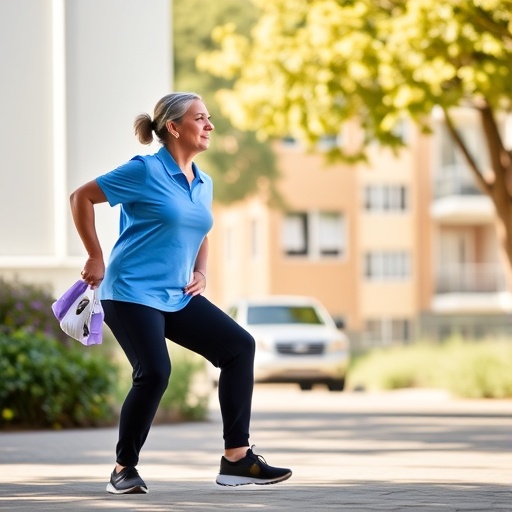
Breast cancer survivorship is increasingly being defined not by the end of treatment, but by what happens afterward. For many people, surgery, chemotherapy, radiation and hormone therapy can leave lasting effects on balance, coordination, strength and confidence in movement. A multicenter randomized controlled trial titled “Effects of a sensorimotor-based, movement quality-focused intervention on functional mobility in breast cancer survivors” has placed a spotlight on a rehabilitation question that is gaining urgency: can improving the way survivors move be as important as helping them move more?
The study focuses on functional mobility, a broad clinical term describing the ability to perform movement-related tasks required in daily life. Walking, rising from a chair, turning, climbing stairs and maintaining balance all depend on more than muscle strength alone. They require the nervous system to integrate information from the eyes, inner ear, muscles, joints and skin, then coordinate an appropriate motor response. Cancer treatment can disrupt this system indirectly through fatigue, neuropathy, pain, reduced physical activity, fear of movement and changes in body awareness. A sensorimotor rehabilitation program targets these interactions rather than treating mobility as a simple measure of power or endurance.
That distinction is central to the trial’s scientific importance. Conventional exercise programs for cancer survivors often emphasize aerobic capacity, resistance training or flexibility. These approaches can be highly effective, but they may not fully address how a person controls movement. A movement quality-focused intervention asks different questions. Is weight transferred smoothly from one leg to the other? Does the trunk remain stable during turning? Can the participant adjust posture when balance is challenged? Are movements symmetrical, economical and appropriately timed? These details can reveal hidden limitations that may not be captured by a basic strength test or a short walking assessment.
In a sensorimotor intervention, participants may be guided through activities that challenge postural control, body awareness, coordination and the ability to adapt to changing conditions. Exercises can involve shifting the center of mass, controlling the pelvis and trunk, stepping in multiple directions, responding to external cues or performing tasks with altered visual input. The technical goal is not simply to make muscles contract more strongly, but to refine communication between the central nervous system and the musculoskeletal system. Repeated practice can help the brain update its internal model of the body, improve anticipatory postural adjustments and make corrective reactions faster and more precise.
The randomized controlled design gives the findings particular weight. By assigning participants to an intervention or comparison condition, researchers can estimate whether changes in functional mobility are linked to the rehabilitation program rather than to spontaneous recovery, increased motivation or the passage of time. A multicenter format adds another layer of relevance because participants are recruited and treated across different clinical locations. If a movement-based protocol produces benefits under these conditions, it may be more likely to function beyond a single specialist clinic. At the same time, multicenter trials must manage differences in therapist training, equipment, patient populations and local treatment routines, making protocol fidelity an important part of interpretation.
For breast cancer survivors, mobility problems can arise through several overlapping pathways. Peripheral neuropathy may reduce the accuracy of information arriving from the feet, making uneven surfaces or low-light environments more difficult to navigate. Shoulder pain or restricted arm movement can alter trunk mechanics and balance strategies. Lymphedema, whether present in the arm or surrounding tissues, may influence comfort and movement confidence. Fatigue can reduce the willingness to engage in demanding activity, while fear of pain or injury can lead to protective movement patterns. Over time, these adaptations may become inefficient, increasing physical effort during ordinary tasks and encouraging further inactivity.
A movement quality approach is therefore potentially valuable because it addresses the organization of movement, not just its visible outcome. Two people may complete the same walking test in the same amount of time while using very different strategies. One may move with stable alignment and adaptable balance; another may rely on excessive trunk motion, stiffened joints or cautious, energy-consuming steps. Detailed assessments of functional mobility can capture some of these differences through timed transfers, walking tasks, turning tests, balance challenges or composite performance batteries. However, the clinical meaning of an improvement depends on whether it is large enough to exceed measurement error and whether it translates into greater independence in everyday life.
The trial also arrives at a moment when cancer rehabilitation is becoming more personalized. Survivors are not a uniform group: age, cancer stage, treatment history, reconstruction status, neuropathy, musculoskeletal health and pre-existing activity levels can all shape rehabilitation needs. A sensorimotor program may be especially relevant for individuals who remain physically active but feel unstable, hesitant or inefficient during movement. It could also complement resistance and aerobic exercise rather than replace them. Strength provides the capacity to generate force, cardiovascular training supports sustained activity, and sensorimotor practice helps the nervous system apply those resources in a coordinated way. The most effective long-term programs may combine all three.
Interpreting the study will require attention to more than whether the intervention group improved statistically. Researchers and clinicians will need to examine the size of the changes, the durability of any benefits, adherence to the sessions and the extent to which improvements were visible in daily function. It will also matter whether the program was safe, acceptable and feasible for survivors coping with treatment-related fatigue or limited access to rehabilitation services. If the findings show meaningful gains in mobility, they could support a broader shift in survivorship care, encouraging clinicians to evaluate balance, coordination and movement strategy alongside pain, strength and aerobic fitness. If the effects are modest or limited to specific subgroups, the results could still help identify who benefits most and which components of sensorimotor training deserve further study.
The broader message is that recovery after breast cancer is not only a biological process; it is also a process of relearning how to inhabit and trust the body. A person may be free of active disease yet continue to navigate uncertainty every time they step off a curb, rise from a chair or turn quickly in a crowded room. By focusing on the quality and adaptability of movement, the multicenter trial brings attention to a dimension of survivorship that is often overlooked. Its significance ultimately rests on whether laboratory and clinic-based gains become safer, more confident and more independent movement in real life. That is the standard by which sensorimotor rehabilitation may prove its most lasting impact.
Cite Scienmag News
Nathaniel Bowman. (August 25, 2026). Comment Evaluates Movement-Focused Intervention for Mobility in Breast Cancer Survivors. Scienmag. https://scienmag.com/comment-evaluates-movement-focused-intervention-for-mobility-in-breast-cancer-survivors/
Nathaniel Bowman. "Comment Evaluates Movement-Focused Intervention for Mobility in Breast Cancer Survivors." Scienmag, 25 August 2026, https://scienmag.com/comment-evaluates-movement-focused-intervention-for-mobility-in-breast-cancer-survivors/. Accessed 5 September 2026.
Nathaniel Bowman. "Comment Evaluates Movement-Focused Intervention for Mobility in Breast Cancer Survivors." Scienmag. August 25, 2026. https://scienmag.com/comment-evaluates-movement-focused-intervention-for-mobility-in-breast-cancer-survivors/


