


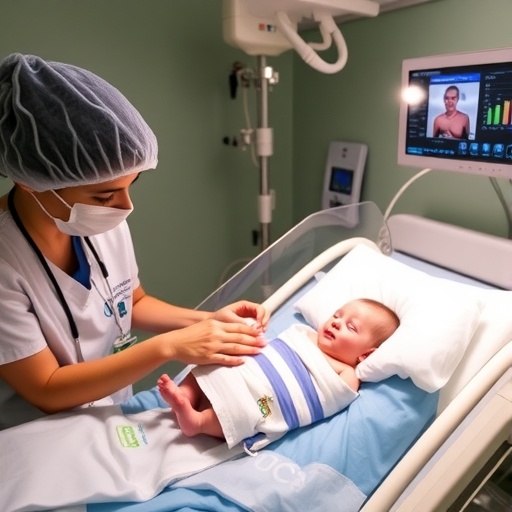
In a landmark development poised to reshape the landscape of pediatric healthcare in Europe, the path towards establishing a dedicated residency program in Neonatal Critical Care Medicine (NCCM) has been officially paved. This breakthrough, meticulously chronicled by Roehr et al. and published in the Journal of Perinatology, heralds an era where neonates requiring intensive medical support receive care from specialists with focused training and expertise, elevating survival and long-term outcomes. The establishment of a separate residency reflects both the complexity of neonatal critical care and the increasing recognition of its distinct clinical and research challenges compared to broader pediatrics or adult critical care fields.
Neonatal critical care is uniquely complex because it addresses the needs of the most vulnerable patients—newborns whose physiological systems are immature and often compromised by prematurity, congenital anomalies, or perinatal complications. While pediatricians and neonatologists have traditionally managed these critical patients, the expanding technological and therapeutic armamentarium in modern NICUs demands a level of specialized training that general pediatric residencies cannot fully encompass. The new residency framework aims to develop skill sets integrating advanced respiratory support techniques, neurodevelopmental monitoring, and precision pharmacotherapy tailored to neonates’ distinct physiology.
The scientific community has long debated the necessity of delineating NCCM as an independent specialty. Such specialization promises to unify training programs across Europe, standardize protocols, and foster innovation in clinical practice, research, and health policy. Roehr and colleagues systematically analyzed workforce data, educational curricula, and clinical outcomes to demonstrate that the current educational models inadequately prepare physicians for the intricacies of intensive neonatal care. Their findings underscore the critical gap that a separate residency can fill, enhancing the quality and consistency of care delivered in neonatal intensive care units (NICUs).
One of the pivotal technical discussions highlighted in the article involves the integration of cutting-edge technologies, such as high-frequency oscillatory ventilation, extracorporeal membrane oxygenation (ECMO), and near-infrared spectroscopy for cerebral oxygenation monitoring. Mastery over these modalities requires dedicated training, which the proposed residency will emphasize. Trainees will gain proficiency not only in operating these devices but also in interpreting complex physiological data to make timely and life-saving clinical decisions. This advanced competence ultimately improves neonatal outcomes by minimizing the risk of iatrogenic injury while optimizing supportive care.
The separate residency also advocates incorporating robust training in neonatal pharmacology, a field distinct from adult medicine due to variations in drug metabolism and receptor sensitivity inherent in neonates. The nuances of dosing, drug interactions, and adverse effect profiles have been historically underrepresented in pediatric residencies. By prioritizing pharmacological education, this specialized residency ensures neonatologists are equipped to deliver precision medicine, tailoring treatments that reduce toxicity while maximizing efficacy. This is vital in the context of evolving antimicrobial resistance and emerging therapies targeting neonatal pathologies.
Roehr et al. spotlight the importance of interdisciplinary collaboration as a hallmark of Neonatal Critical Care Medicine. The newly envisioned residency emphasizes synergistic teamwork among neonatologists, nurses, respiratory therapists, nutritionists, and developmental specialists. This multidisciplinary approach facilitates comprehensive care addressing the multifaceted needs of critically ill neonates. The residency curriculum explicitly trains physicians to function as leaders within this team, advocating for patient-centered protocols that integrate family involvement and developmental care principles known to improve neurocognitive outcomes.
Epidemiological data sourced in the study reveal that neonatal mortality and morbidity rates in some European regions have plateaued despite advances in neonatal care technology. The authors argue that this stagnation stems partly from inconsistent expertise and training standards across institutions. A formalized residency program in NCCM will promote uniform clinical guidelines and evidence-based practices that can reverse these trends. This aligns with broader European Union health strategies aiming to reduce infant mortality disparities and enhance neonatal health equity.
Furthermore, the dedicated residency pathway supports enhanced research capabilities. Physicians trained exclusively in neonatal critical care will be better positioned to conduct translational research bridging laboratory findings with bedside applications. Priorities include investigations into neonatal immune function, the impact of perinatal inflammation on neurodevelopment, and the optimization of ventilatory strategies. By embedding research training within the residency, the specialty will cultivate clinician-scientists who drive continual innovation in this rapidly evolving domain.
Logistically, the paper outlines the framework for implementing NCCM residencies across diverse healthcare systems. This includes defining core competencies, minimum duration of training, and rigorous assessment criteria tailored to neonatal medicine’s demands. The residency is projected to span 3 to 4 years post-medical school, integrating rotations in NICUs, pediatric intensive care units, and specialized neurodevelopmental assessment centers. International accreditation bodies are being engaged to standardize the curriculum, ensuring that graduates possess universally recognized expertise.
The paper also addresses potential challenges, such as resource allocation, faculty availability, and integration with existing pediatric and neonatal programs. Strategies to overcome these barriers include remote learning platforms, simulation-based training modules, and mentorship networks. Emphasizing partnerships between leading European academic hospitals and smaller regional centers can facilitate knowledge dissemination and equitable access to specialized training.
Critically, the article underscores the potential impact on patient families. By consolidating neonatal critical care training, the residency seeks to improve consistency in communication, clinical decision-making transparency, and support for parents navigating the intense emotional strain of the NICU environment. Skilled neonatologists trained through this program will be adept at delivering compassionate, family-centered care that respects cultural diversity and ethical considerations inherent in neonatal medicine.
In terms of broader healthcare policy, establishing a distinct NCCM residency aligns with global trends recognizing subspecialty training’s importance in improving health outcomes. This initiative positions Europe as a leader in defining rigorous neonatal critical care standards, potentially serving as a model adopted by other regions worldwide. By fostering excellence in education and clinical practice, this new specialty pathway aims to reduce neonatal mortality, prevent long-term disabilities, and optimize developmental trajectories for countless infants.
Scientific discourse around neonatal critical care increasingly emphasizes the role of genomics and personalized medicine. The residency curriculum incorporates training on emerging technologies such as genetic screening, metabolomics, and targeted therapeutics. Physicians will acquire competencies to interpret complex genetic data and counsel families on implications for prognosis and treatment. This precision medicine approach represents the frontier of neonatal care and highlights the residency’s commitment to integrating cutting-edge science into clinical practice.
Finally, the establishment of NCCM as a separate residency field symbolizes a paradigm shift in how neonatal health is prioritized. It embodies recognition of the extraordinary challenges and specialized knowledge required to care for the tiniest patients during their most critical moments. This monumental step embodies a vision where dedicated expertise, scientific rigor, and compassionate care converge, promising a future where every newborn receives the highest standard of critical care tailored to their unique needs.
Cite Scienmag News
Harold Sullivan. (June 22, 2026). Europe Advances Separate Residency in Neonatal Critical Care. Scienmag. https://scienmag.com/europe-advances-separate-residency-in-neonatal-critical-care/
Harold Sullivan. "Europe Advances Separate Residency in Neonatal Critical Care." Scienmag, 22 June 2026, https://scienmag.com/europe-advances-separate-residency-in-neonatal-critical-care/. Accessed 5 September 2026.
Harold Sullivan. "Europe Advances Separate Residency in Neonatal Critical Care." Scienmag. June 22, 2026. https://scienmag.com/europe-advances-separate-residency-in-neonatal-critical-care/


