


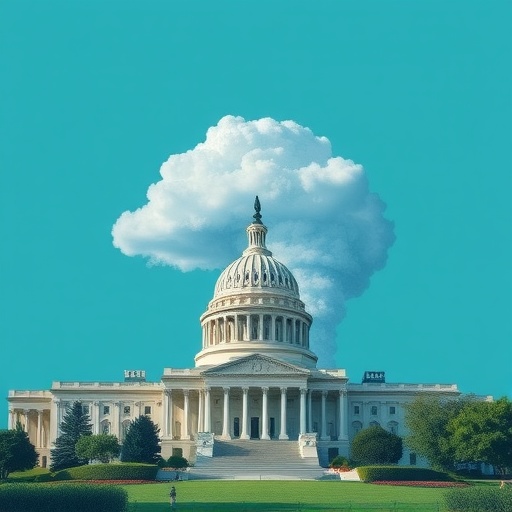
In the urgent and multifaceted battle against climate change, understanding the psychological pathways that drive individual and collective action is crucial. Recent research underscores governmental efficacy—not merely as a political concept but as a psychological catalyst—as a pivotal determinant in galvanizing public engagement with climate initiatives. This insight shifts the paradigm from traditional economic or policy-driven explanations to a deeper recognition of how people’s belief in government competence fundamentally shapes climate-related behaviors and attitudes.
Climate change, as a global crisis, demands robust cooperation between citizens, governments, and institutions. Governments worldwide often attempt to implement policies and programs aimed at reducing carbon emissions, promoting renewable energy, and enhancing sustainability. However, such measures frequently encounter public skepticism or apathy. The research conducted by Goldwert, Sabherwal, and Vlasceanu highlights that the perception of government efficacy—that is, the public’s confidence in the government’s ability to enact meaningful change—acts as a critical psychological mechanism enabling or hindering climate action.
At its core, governmental efficacy is a psychological construct reflecting the belief that governmental bodies possess the competence, resources, and willpower to address climate crises effectively. This belief influences individuals’ propensity to participate in climate activism, adopt environmentally friendly behaviors, and support pro-environmental policies. The study reveals that when people trust that their government can and will perform decisively and competently on environmental issues, they feel empowered and are more motivated to contribute to the collective effort.
Moreover, the research draws on extensive psychological theory and behavioral science frameworks to explain how perceptions of governmental efficacy impact motivation. Notably, the role of self-efficacy—the belief in one’s own ability to effect change—is intertwined with collective efficacy regarding governments. When governments demonstrate efficacy, they enhance citizens’ sense of personal and collective agency, creating a feedback loop that fosters more dynamic participation in climate solutions.
The authors intricately explore how different dimensions of governmental efficacy influence climate engagement. These include the perceived transparency of government actions, accountability mechanisms, the clarity of communication regarding climate policies, and the tangible outcomes of implemented measures. Each of these dimensions works collectively to nurture a sense of trust and effectiveness, which is indispensable for sustaining long-term climate action.
Additionally, the research proffers that diminished confidence in government efficacy can have a demobilizing effect, breeding cynicism and disengagement. This dynamic is particularly salient in regions or countries where political instability, corruption, or historical failures undermine trust in public institutions. In such contexts, grassroots movements and non-governmental organizations often struggle to compensate for the psychological vacuum left by ineffective governance structures.
In transcending the usual discourses surrounding climate action, this research brings psychological determinants to the forefront. It suggests that increasing governmental efficacy perception is not solely a task for policymakers but also for communicators, educators, and community leaders. Strategic public engagement that transparently showcases government capabilities and ethical commitments can foster this efficacy perception, transforming passive observers into active participants.
The implications of this study extend to international climate policy frameworks, where nations’ commitments and track records are scrutinized by citizens and global observers alike. High-profile failures to meet targets or opaque governance breeds disillusionment. Conversely, governments that effectively communicate both their successes and challenges—and engage citizens in problem-solving—can inspire broader public confidence and support.
Furthermore, this psychological perspective has ripple effects on innovation and technology acceptance in climate mitigation. When citizens trust their governments’ ability to manage the complexities of new technologies—such as carbon capture, geoengineering, or renewable infrastructure—they are more likely to endorse and adopt these innovations. This psychological endorsement is crucial for scaling emerging climate solutions from experimental phases to widespread societal integration.
The authors also delve into the nuanced relationship between governmental efficacy and media narratives. Media representations not only shape public perception but also reflect and influence political accountability. Transparent and factual media coverage that highlights government efficacy in climate matters can amplify motivation for individual and collective action, while sensationalism or misinformation can erode these perceptions.
From a policy standpoint, the research advocates for governance models that prioritize transparency, inclusivity, and responsiveness. Collaborative governance, which involves stakeholders across sectors and levels, tends to enhance perceptions of efficacy by distributing responsibility and fostering shared ownership of climate goals. Such models not only bolster democratic legitimacy but also improve policy resilience through diversified input and adaptive capacities.
This study also explores the temporal dynamics of governmental efficacy. Short-term successes in climate policy can provide critical psychological boosts, fostering sustained engagement. Yet, it is the consistency of governmental performance and communication over time that cements long-range trust and motivation. This insight supports sustained investment not only in technical capacity but also in institutional stability and ethical governance.
Given the rising tide of climate anxiety and eco-paralysis among populations worldwide, the authors emphasize the transformative power of reinforcing governmental efficacy. In psychological terms, this approach combats helplessness and despair by cultivating hope and agency, critical emotions necessary for lasting behavioral change.
As climate change continues to present complex and evolving challenges, the integration of psychological perspectives like governmental efficacy into environmental strategies can significantly amplify their effectiveness. By recognizing and nurturing this vital pathway, societies can unlock new levels of climate engagement, ensuring that policies and initiatives do not languish in public disinterest but instead become powerful catalysts for collective transformation.
Ultimately, the research by Goldwert, Sabherwal, and Vlasceanu offers a compelling, empirically grounded narrative that elevates the psychological mechanisms underpinning climate action. It opens fresh avenues for research and practice, suggesting that tackling climate change is as much about fostering belief in collective competence as it is about technical innovation or legislative frameworks. This paradigm encourages a holistic understanding that intertwines governance, psychology, and social dynamics in the deeply interconnected quest for a sustainable future.
Cite Scienmag News
Glenn Wilkins. (June 21, 2026). Governmental Efficacy Drives Climate Action Psychology. Scienmag. https://scienmag.com/governmental-efficacy-drives-climate-action-psychology/
Glenn Wilkins. "Governmental Efficacy Drives Climate Action Psychology." Scienmag, 21 June 2026, https://scienmag.com/governmental-efficacy-drives-climate-action-psychology/. Accessed 4 September 2026.
Glenn Wilkins. "Governmental Efficacy Drives Climate Action Psychology." Scienmag. June 21, 2026. https://scienmag.com/governmental-efficacy-drives-climate-action-psychology/


