


In the relentless quest to improve neonatal care, predicting bronchopulmonary dysplasia (BPD) remains one of the most formidable challenges for clinicians and researchers alike. This chronic lung disease predominantly affects premature infants who require respiratory support, often leaving these vulnerable newborns facing prolonged hospitalization and long-term respiratory complications. The study by Radeschi and Shalish, published in Pediatric Research in 2026, fundamentally reassesses the complexity involved in predicting BPD, proposing a sophisticated framework that integrates multifaceted physiological data to tackle this persistent clinical enigma. Their work is a critical step toward advancing neonatal prognosis by marrying intricate biological signals with state-of-the-art analytical techniques.
Bronchopulmonary dysplasia is not caused by a single factor; it emerges from the interplay of various genetic, inflammatory, and environmental elements that influence lung development and injury in premature infants. Historically, prediction efforts have relied on simplistic models emphasizing easily measurable variables such as gestational age, birth weight, and oxygen dependency at defined postnatal intervals. However, these models have fallen short in accuracy and clinical utility, often providing a binary outlook that cannot fully capture the nuanced progression of lung injury or the heterogeneous responses of individual neonates to interventions. Such limitations underscore the necessity of a more nuanced approach that accounts for the intricate and dynamic nature of neonatal lung pathophysiology.
Radeschi and Shalish’s approach leverages the integration of physiological data collected longitudinally from premature infants, including respiratory mechanics, gas exchange metrics, hemodynamic parameters, and biochemical markers of inflammation and oxidative stress. This multidimensional dataset provides a rich tapestry from which patterns predictive of disease trajectory can be extracted. For instance, dynamic measurements like lung compliance and resistance over time reflect evolving mechanical changes within the infant’s respiratory system, while biochemical markers offer a window into the underlying molecular processes driving lung damage and repair. By synthesizing these data streams, their framework acknowledges the continuum of disease evolution rather than reducing it to dichotomous outcomes.
A key innovation in this research is the deployment of advanced computational models capable of managing and interpreting this high-dimensional data. Traditional statistical models often struggle with multicollinearity and the sheer volume of variables, which can obscure subtle but clinically significant relationships. Machine learning algorithms, on the other hand, excel at detecting complex, non-linear interactions within large datasets. By applying these intelligent analytical strategies to longitudinal physiological profiles, the authors demonstrate markedly improved predictive accuracy, potentially allowing clinicians to identify at-risk infants far earlier than standard protocols permit. This early identification is paramount for optimizing therapeutic interventions and ultimately mitigating the severity or incidence of BPD.
The framework does not merely stop at prediction; it fosters a deeper mechanistic understanding of BPD pathogenesis. For example, temporal changes in respiratory mechanics, when mapped against inflammatory marker dynamics, may reveal critical windows during which lung tissue is particularly vulnerable or responsive to treatment. Identifying these windows guides not only prognostication but also the personalization of treatment regimens, whereby therapies can be tailored, intensified, or tapered according to an infant’s unique physiological trajectory. This paradigm shift—from reactive to proactive and personalized care—represents a milestone in the evolving management of premature lung disease.
Despite the promise of this integrative strategy, Radeschi and Shalish emphasize the intrinsic complexity underlying BPD prediction, cautioning against oversimplification. They convincingly argue that embracing complexity is essential; clinical outcomes depend on myriad interacting factors and temporal dynamics that simplistic models cannot capture. Hence, complexity itself should not be viewed as a barrier but as an accurate reflection of biological reality, whose incorporation into predictive frameworks enriches rather than complicates clinical decision-making. It is through this lens that future research must operate, moving beyond reductionist assumptions to holistically address neonatal pulmonary vulnerability.
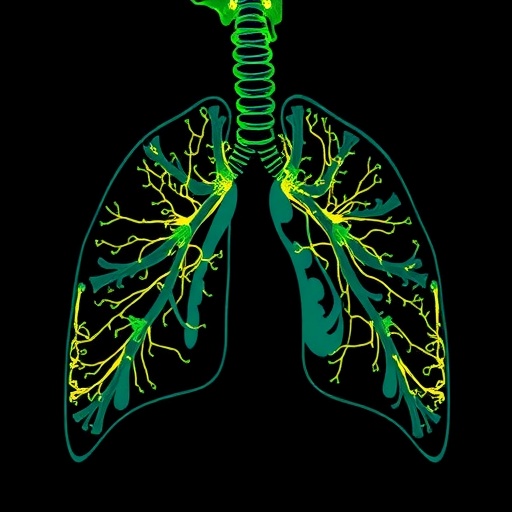
The graphical depiction featured in their study encapsulates the conceptual shift toward integrating multiple physiological domains. It illustrates how continuous monitoring of variables such as lung function, inflammation, and systemic circulation creates a feedback loop between observed data and computational interpretation. This bidirectional flow, in which new data refines models and model outputs inform clinical interventions, epitomizes the vision of a learning healthcare system tailored to neonatal medicine. As technology in sensor development and data analytics advances, such models will only become more precise and temporally sensitive, facilitating real-time adjustments to care plans.
In practical terms, implementation of this predictive framework demands comprehensive, longitudinal data collection supported by robust informatics infrastructure within neonatal intensive care units (NICUs). Integration with existing electronic health records and bedside monitoring systems will enable seamless data capture while minimizing the burden on clinical staff. Furthermore, interdisciplinary collaboration among neonatologists, bioengineers, data scientists, and biostatisticians is crucial to translate these computational models into clinically actionable tools. Equally important is ensuring that predictive insights are communicated effectively to healthcare providers and families to support shared decision-making and informed consent.
An additional dimension explored concerns the heterogeneity of BPD phenotypes. The physiological integration approach acknowledges that BPD is not a single entity but potentially comprises multiple subtypes with distinct pathobiological signatures. For example, some infants may demonstrate predominant airway injury and obstruction, while others exhibit alveolar simplification driven by vascular underdevelopment. By dissecting these phenotypic variations through integrated physiological profiling, the framework holds potential for stratifying patients into subgroups that may respond differently to therapeutic strategies—a critical advancement toward precision neonatal medicine.
The longitudinal nature of data collection is especially impactful in capturing the temporal progression and potential recovery phases of BPD. Dynamic changes in physiological parameters over days and weeks post-birth can reveal trajectories that static measurements miss. This temporal resolution enables the differentiation of transient versus progressive lung impairment and the assessment of intervention responses in real-time. As such, the framework moves beyond snapshot assessments to portray the evolving pathophysiology of each infant’s lung development, offering a continuous narrative that informs prognosis and therapeutic planning.
The path forward, however, invites several challenges that the authors acknowledge. Ensuring data quality and consistency across institutions, addressing missing data points inherent in clinical settings, and standardizing physiological measures remain critical hurdles. Moreover, ethical considerations surrounding data privacy and the deployment of predictive algorithms in vulnerable populations necessitate rigorous oversight. Clinicians must also balance model-driven insights with clinical experience, avoiding overreliance on computational outputs at the expense of holistic patient care.
Importantly, Radeschi and Shalish’s framework is designed to be adaptable, accommodating ongoing advances in biomarker discovery, sensor technology, and computational methodologies. As novel physiological signals become measurable with greater fidelity and new molecular pathways implicated in BPD are identified, these can be incorporated into the integrative model without foundational restructuring. This flexibility ensures that the framework evolves alongside scientific progress, remaining relevant and progressively more powerful as a clinical tool.
In sum, the innovative framework proposed by Radeschi and Shalish redefines how bronchopulmonary dysplasia can be predicted and managed in neonatal care. By embracing complexity and integrating an array of physiological data, their work transcends the limitations of traditional predictive models, offering a dynamic, mechanistic, and patient-centered approach. This strategy not only promises enhanced prognostic accuracy but also paves the way for individualized interventions that hold the potential to transform outcomes for the smallest and most vulnerable patients.
The implications of this approach extend beyond BPD to other neonatal and pediatric conditions characterized by multifactorial pathologies. It underscores a broader scientific and clinical paradigm shift toward systems biology and precision medicine, wherein rich, longitudinal data streams inform tailored care pathways. As neonatal intensive care continues to evolve with technological and analytical innovations, frameworks like that of Radeschi and Shalish will be instrumental in bridging basic science discoveries with bedside practice, ultimately improving survival and quality of life for premature infants worldwide.
As neonatal medicine embraces these advances, the collaborative efforts of multidisciplinary teams will be vital to harnessing the full potential of integrated physiological data. Training clinicians to interpret complex model outputs, aligning research objectives with clinical priorities, and fostering open data-sharing environments will accelerate the translation of predictive models into routine practice. Through these concerted efforts, the formidable challenge of predicting and mitigating bronchopulmonary dysplasia may finally be met with the precision and sophistication it demands.
Cite Scienmag News
Harold Sullivan. (June 16, 2026). Decoding Bronchopulmonary Dysplasia: Integrating Physiological Data. Scienmag. https://scienmag.com/decoding-bronchopulmonary-dysplasia-integrating-physiological-data/
Harold Sullivan. "Decoding Bronchopulmonary Dysplasia: Integrating Physiological Data." Scienmag, 16 June 2026, https://scienmag.com/decoding-bronchopulmonary-dysplasia-integrating-physiological-data/. Accessed 4 September 2026.
Harold Sullivan. "Decoding Bronchopulmonary Dysplasia: Integrating Physiological Data." Scienmag. June 16, 2026. https://scienmag.com/decoding-bronchopulmonary-dysplasia-integrating-physiological-data/


