


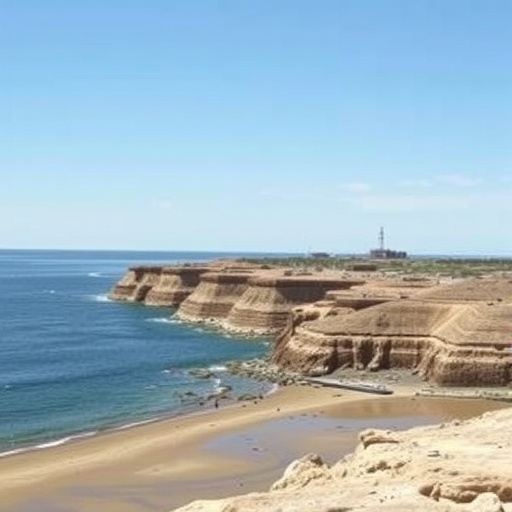
Coastal ecosystems across the globe are facing an unprecedented crisis, one that stems not from direct marine activities but from the relentless degradation of terrestrial landscapes, specifically due to unregulated mining operations. A groundbreaking study published in Communications Earth & Environment sheds light on the extensive and often overlooked impact of decades-long unregulated terrestrial mining on coastal ecosystems. This research meticulously unpacks how mining activities far inland can trigger a cascade of environmental consequences that ripple through river systems and ultimately devastate coastal environments.
At the heart of the investigation lies a complex interplay between terrestrial mining practices and coastal ecosystem health. Terrestrial mining, particularly when unregulated, involves the removal of large volumes of earth materials, disrupting soil integrity, vegetation cover, and local hydrology. This alteration increases sediment mobilization, which, when transported via river networks, leads to sediment overload in estuaries and coastal waters. The study utilizes advanced geochemical tracing and satellite imagery to quantify the sediment flux originating from mining sites and its deposition patterns along coastlines. A stark correlation emerges between mining intensity and sediment deposition rates, heightening turbidity and smothering vital benthic habitats.
This sediment influx carries more than just physical debris; it acts as a vector for chemical contaminants commonly associated with mining operations. Heavy metals, including mercury, arsenic, and lead, leach into waterways, compounding the toxicity faced by coastal flora and fauna. The research details the bioaccumulation pathways through which these metals permeate the food web, impairing reproductive capacities of fish populations and leading to declines in biodiversity. Bioindicators sampled along affected coastlines reveal significant physiological stress markers, underscoring the pervasive influence of contaminants tied to terrestrial mining runoff.
Another critical dimension highlighted in the study is the alteration of nutrient cycles induced by mining-derived sediment inputs. Although nutrients such as nitrogen and phosphorus could potentially enhance productivity, the excessive and imbalanced inputs disrupt the delicate equilibrium of coastal nutrient dynamics. These disturbances fuel harmful algal blooms and hypoxic zones, which suffocate marine life and degrade fisheries. The research emphasizes that the spatial and temporal variability of these events correlates closely with mining activity patterns upstream, flagging a previously underappreciated terrestrial driver of coastal eutrophication.
Hydrological modeling featured in the research elucidates that deforestation and soil destabilization around mining sites amplify flood risks downstream. Floodwaters, laden with fine sediments and contaminants, inundate coastal wetlands and mangroves, pivotal habitats that act as natural buffers against storm surges and coastal erosion. The degradation of these protective ecosystems further compounds the vulnerability of coastal communities to climate change-related sea-level rise and extreme weather events. Through integrating hydrological data with ecological assessments, the study presents a comprehensive picture of how anthropogenic land disturbances propagate vulnerabilities into coastal zones.
To explore the temporal dimension of degradation, the researchers synthesized satellite imagery spanning multiple decades, revealing a striking expansion of sediment plumes and coastal habitat loss concurrent with the intensification of terrestrial mining activities. These high-resolution temporal maps offer compelling evidence of how sustained unregulated mining catalyzes persistent and worsening coastal ecosystem deterioration. The cumulative impact manifests in the shrinking of coral reefs, loss of seagrass beds, and the fragmentation of tidal marshes, habitats critical for fisheries and carbon sequestration.
The economic and social implications of these findings resonate beyond environmental spheres. Coastal regions reliant on fishing and tourism suffer tangible economic losses as biodiversity declines and water quality deteriorates. The research integrates socio-economic data with ecological degradation patterns, highlighting communities disproportionately affected by mining-driven ecosystem disruptions. This nexus between industrial activity, environmental degradation, and socio-economic hardship forms a potent call for more stringent mining regulations and sustainable land management policies.
Technologically, the study pioneers the use of integrated environmental monitoring frameworks combining remote sensing, in situ biogeochemical sampling, and ecosystem services modeling. This multidisciplinary approach enables unprecedented insights into the diffuse and complex impacts of terrestrial mining on marine environments. The researchers advocate for the adoption of such holistic monitoring systems in global environmental governance frameworks to preemptively identify and mitigate mining-related ecosystem threats.
Policy implications drawn from the study are robust and urgent. The authors argue that current mining regulations and environmental assessments are insufficient in capturing the long-term downstream effects of terrestrial operations. They suggest that coastal ecosystem health indicators be incorporated into terrestrial resource extraction oversight. Furthermore, the paper posits the establishment of cross-jurisdictional management bodies capable of coordinating river basin and coastal zone governance to tackle pollution and habitat degradation holistically.
In addition to governance, restoration strategies receive careful analysis. The study highlights innovative rehabilitative techniques such as sediment retention structures, reforestation of riparian buffers, and the reestablishment of natural flooding regimes to mitigate the negative downstream effects of mining. These methods show promising potential in restoring ecosystem functions and resilience but require substantial investment and multi-sector collaboration to scale effectively.
The study’s findings also intersect with global commitments to biodiversity conservation and climate change mitigation. Coastal ecosystems like mangroves and seagrasses serve as critical carbon sinks, and their degradation due to mining-induced sedimentation threatens the achievement of carbon sequestration targets. By quantifying these losses, the research provides essential data for integrating mining impacts into global carbon accounting and climate policy frameworks, underscoring the broader environmental consequences beyond biodiversity alone.
Moreover, this investigation challenges the traditional compartmentalized perspective that isolates terrestrial mining impacts from marine conservation agendas. It urges a paradigm shift towards recognizing land-sea interactions as tightly coupled systems wherein terrestrial disruptions manifest profoundly in marine realms. This systems-thinking approach is essential for devising effective environmental management strategies capable of addressing the root causes of coastal ecosystem degradation.
Ultimately, the study presents a sobering picture of how decades of unregulated terrestrial mining have imperiled some of the planet’s most productive and biodiverse coastal ecosystems. It provides a scientifically rigorous foundation for recognizing the interconnectedness of terrestrial and marine environments in environmental impact assessments. The work not only illuminates critical environmental challenges but also paves the way for integrated policy responses essential to safeguarding the future health of coastal ecosystems worldwide.
The research represented in this article is a clarion call to environmental scientists, policymakers, and industry stakeholders alike to foreground the latent yet profound coastal consequences of terrestrial extractive practices. It signals that addressing coastal ecosystem degradation demands a holistic re-evaluation of land use and mining regulation, enhanced environmental monitoring, and robust interdisciplinary cooperation to restore and protect these invaluable natural systems.
Cite Scienmag News
Violet Maxwell. (June 16, 2026). Decades of Mining Devastate Coastal Ecosystems. Scienmag. https://scienmag.com/decades-of-mining-devastate-coastal-ecosystems/
Violet Maxwell. "Decades of Mining Devastate Coastal Ecosystems." Scienmag, 16 June 2026, https://scienmag.com/decades-of-mining-devastate-coastal-ecosystems/. Accessed 4 September 2026.
Violet Maxwell. "Decades of Mining Devastate Coastal Ecosystems." Scienmag. June 16, 2026. https://scienmag.com/decades-of-mining-devastate-coastal-ecosystems/


