


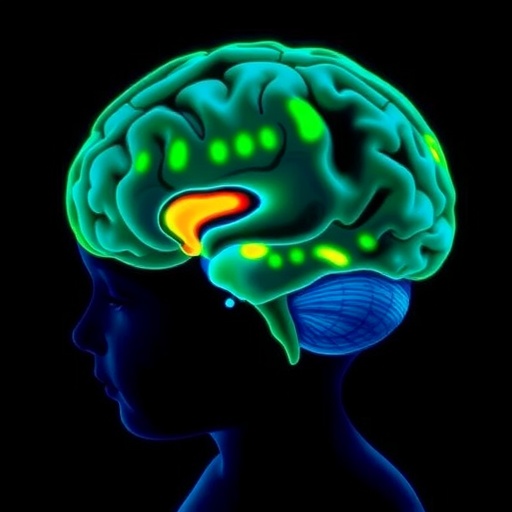
In a groundbreaking advancement in the interface of neuroscience and early childhood development, researchers have uncovered distinctive patterns of language acquisition in infants born to mothers grappling with severe mental illness (SMI). Utilizing functional near-infrared spectroscopy (fNIRS), a cutting-edge non-invasive neuroimaging technology, the team has pushed the boundaries of early detection and intervention, opening a new frontier in understanding developmental trajectories influenced by maternal mental health.
Language development in infants is a complex and dynamic process shaped by a myriad of genetic, environmental, and neurological factors. Traditionally, early markers for deviations in language acquisition have been challenging to pinpoint, especially in contexts of maternal psychopathology, due to the subtlety of early symptoms and the lack of reliable biomarkers. This new study pioneers the application of fNIRS to monitor cerebral hemodynamics associated with language processing in infancy, marking a pivotal step toward unveiling the neurobiological underpinnings shaped by maternal mental health status.
The significance of this research lies in its multidisciplinary approach, integrating psychology, psychiatry, and neuroengineering to unravel how severe maternal mental illness may influence infant brain development. Severe mental illnesses, encompassing major depressive disorder, bipolar disorder, and schizophrenia, affect a considerable proportion of pregnant women globally. These conditions not only impose psychosocial challenges but also potentially disrupt the intrauterine environment and postnatal caregiving, both critical for optimal neurodevelopment.
Functional near-infrared spectroscopy operates by projecting near-infrared light through the scalp, which is absorbed differentially by oxygenated and deoxygenated hemoglobin in the cerebral cortex. By capturing changes in oxygenation levels, fNIRS provides real-time insights into neural activity during cognitive tasks. Unlike other neuroimaging modalities such as functional MRI, fNIRS offers the distinct advantage of being portable, cost-effective, and tolerant to movement, making it especially suited for studies involving infants.
The team’s methodology involved recruiting a cohort of infants aged six to twelve months from mothers diagnosed with severe mental illness, alongside a control group of infants from mothers without psychiatric conditions. During the experiments, the infants were exposed to a battery of language stimuli encompassing phonemes, words, and prosody while fNIRS sensors non-invasively recorded cortical responses. Crucially, this protocol allowed the researchers to map functional activation patterns within brain regions classically involved in language processing, such as the left temporal and frontal areas.
Upon analyzing the neuroimaging data, the study revealed distinct activation patterns in infants of mothers with SMI compared to controls. Specifically, these infants showed attenuated hemodynamic responses in the left superior temporal gyrus, an area intricately linked to speech perception and early language comprehension. This diminished activation may suggest delays or atypical development of neural circuits critical for language acquisition, potentially forecasting later communicative difficulties.
Importantly, the research also detected heightened activity in right hemispheric homologous regions, implying a potential compensatory mechanism or altered lateralization of language functions. Brain lateralization—whereby certain cognitive functions are dominantly managed by one hemisphere—is foundational to efficient language processing. Disruptions to this lateralization in early development can have profound implications, possibly correlating with speech delays or neurodevelopmental disorders like autism spectrum disorder (ASD).
These findings challenge existing paradigms by illustrating that the neurobiological impact of maternal mental illness begins far earlier than overt behavioral manifestations, effectively during the first year of life. The study underscores the critical window in infancy where intervention strategies may be most potent, emphasizing the urgency of early screening protocols in at-risk populations. Detecting subtle neurofunctional alterations at this nascent stage has the potential to revolutionize preventive psychiatry and developmental support frameworks.
The implications of this research extend beyond mere observation. By harnessing fNIRS as a diagnostic and monitoring tool, clinicians may soon be poised to introduce targeted interventions, such as enriched language exposure, parent-infant interaction therapies, and possibly neurofeedback techniques. Early amelioration of language deficits can profoundly alter cognitive trajectories, educational outcomes, and psychosocial well-being across the lifespan.
From a technical standpoint, the study exemplifies the versatility of fNIRS in pediatric populations. Unlike electroencephalography (EEG), which measures electrical activity but has limited spatial resolution, or functional MRI, which demands immobility and sedation in infants, fNIRS strikes a balance by affording spatially localized, ecologically valid neural recordings. It also demonstrates high temporal resolution, enabling fine-grained analysis of neural dynamics as infants process linguistic inputs.
Moreover, the research integrates sophisticated signal processing algorithms to denoise the raw fNIRS data, addressing challenges such as motion artifacts, systemic physiological fluctuations, and signal drift. These advancements in preprocessing ensure that the resulting maps of cortical activation accurately represent underlying neural function rather than extraneous noise, a critical requirement for translational research aiming to inform clinical practice.
The socio-cultural context of the research cannot be understated. Mothers with severe mental illness often face stigma, inadequate healthcare, and social isolation, factors that may further compound developmental risks in their offspring. This study not only spotlights a biological dimension but advocates for holistic support systems encompassing mental health treatment for mothers, early childhood education resources, and community-based interventions tailored for vulnerable families.
Ethical considerations permeate the research design, ensuring that participants—both mothers and infants—are protected and supported through informed consent, confidentiality, and appropriate follow-up. The team adhered rigorously to ethical guidelines, highlighting the necessity of balancing scientific inquiry with the welfare of subjects, particularly in sensitive populations.
Looking ahead, the authors propose expanding their cohort to a longitudinal design, tracking infants beyond the first year to correlate early neural signatures with later language outcomes, cognitive development, and academic performance. Such longitudinal data will be invaluable for refining predictive models and optimizing timing and content of interventions.
This pioneering research opens fertile ground for cross-disciplinary collaborations, inviting integration with genetic studies exploring epigenetic modifications induced by maternal mental health, as well as with computational modeling to simulate language network development under varying environmental stressors. The marriage of these approaches heralds a new era in developmental neuroscience, where precision medicine meets early childhood education.
In summation, the use of fNIRS has illuminated previously obscured neural pathways involved in language acquisition amidst the backdrop of maternal severe mental illness, charting a course toward early identification and remediation of developmental vulnerabilities. As the field progresses, this nexus of technology, clinical insight, and compassionate care holds promise for reshaping outcomes for children born into challenging circumstances.
The widespread dissemination of these findings in a top-tier science magazine underscores their potential to influence public health policies, clinical guidelines, and parental support programs globally. Raising awareness of the neurodevelopmental correlates of maternal mental illness galvanizes stakeholders to invest in research, resources, and outreach efforts aimed at nurturing the earliest stages of human potential.
As neuroscientific tools like fNIRS become increasingly accessible, the vision of universal developmental screening during infancy edges closer to reality, enabling timely and tailored interventions that can bridge disparities and foster resilience in the next generation. This landmark study stands as a testament to the power of innovative technology coupled with empathetic research to transform lives from the very beginning.
Cite Scienmag News
Glenn Wilkins. (June 15, 2026). fNIRS Reveals Early Language Delays in Infants. Scienmag. https://scienmag.com/fnirs-reveals-early-language-delays-in-infants/
Glenn Wilkins. "fNIRS Reveals Early Language Delays in Infants." Scienmag, 15 June 2026, https://scienmag.com/fnirs-reveals-early-language-delays-in-infants/. Accessed 4 September 2026.
Glenn Wilkins. "fNIRS Reveals Early Language Delays in Infants." Scienmag. June 15, 2026. https://scienmag.com/fnirs-reveals-early-language-delays-in-infants/


