


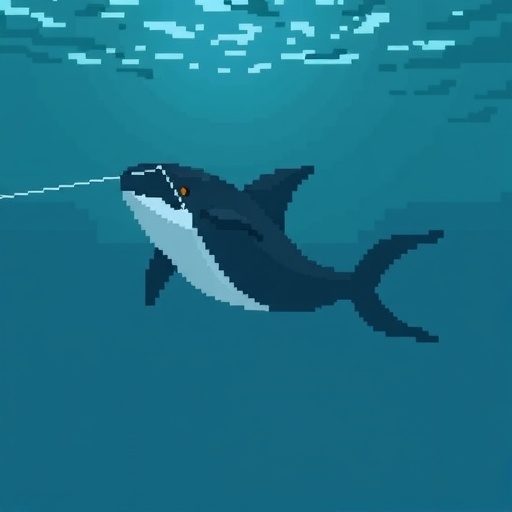
In a groundbreaking effort to digitally preserve one of the ocean’s most elusive and critically endangered marine mammals, researchers have employed cutting-edge imaging technologies to create an unprecedented digital archive of the vaquita (Phocoena sinus). This porpoise species, native solely to the shallow waters of Mexico’s northern Gulf of California, represents the smallest cetacean globally and is on the brink of extinction. Scientists meticulously scanned the full skeleton of a rare female specimen, meticulously collected in 1966, using an array of advanced imaging techniques that promise a new era for biological conservation and educational outreach.
The vaquita, measuring approximately five feet in length, remained unknown to the scientific world until its discovery in the latter half of the twentieth century. Its distinctive facial markings — most notably the dark rings around its eyes and mouth — have become an emblematic symbol signaling the urgent biodiversity crisis facing marine habitats worldwide. Today, it is estimated that only a handful of vaquitas remain, their numbers decimated primarily due to accidental capture in illegal gillnet fisheries targeting totoaba fish, whose swim bladders are highly sought after in black markets outside Mexico. Despite longstanding bans on these fisheries, illicit operations continue, fueling a tragic decline of this fragile species.
Efforts to conserve the vaquita have turned to innovative digital technologies to safeguard knowledge and foster global awareness. Teams from Florida Atlantic University (FAU), the San Diego Natural History Museum, SeaWorld California, and NOAA Fisheries collaborated to implement a comprehensive imaging project capturing one of the last complete vaquita skeletons. Utilizing an integrated approach that combines medical computed tomography (CT) scans, high-resolution micro-CT imaging, and detailed digital photography, the scientists generated a multi-scalar digital representation, revealing intricate anatomical features of the rare porpoise like never before.
The research, recently published in the journal Marine Mammal Science, outlines how the combination of macroscopic and microscopic scanning methods yielded exceptionally detailed three-dimensional digital models. Medical CT scans, which use penetrating X-rays to produce cross-sectional images, initially recorded the broader skeletal morphology. Subsequently, micro-CT—capable of visualizing structures measured in microns, surpassing the scale of a human hair’s width—enabled the capture of minute internal bone architecture, providing unprecedented insight into the vaquita’s musculoskeletal system.
This meticulous imaging workflow was designed to integrate the external morphological data with fine-grained skeletal microstructure, resulting in an interactive digital dataset of unparalleled anatomical fidelity. The ability to digitally isolate each bone and reconstruct complex articulations offers researchers, educators, and conservationists a new tool to study, replicate, and disseminate knowledge about this elusive marine mammal without the risks associated with physical handling of the fragile original specimen. This innovation is particularly critical because the delicate vaquita skeleton is both unique and vulnerable to damage.
The project’s success hinges on the high-resolution imaging capabilities and digital expertise housed within the Berlin Family Bioimaging Lab at FAU Laboratory Schools Marcus Research and Innovation Center. The lab’s integrated technological environment facilitated the extensive processing required to transform raw scan data into user-friendly, interactive three-dimensional models accessible through the MorphoSource online repository. This open-access approach democratizes valuable scientific data, enabling global scholars and institutions to engage with digital specimens that were previously inaccessible.
Beyond academic and research domains, these digital reconstructions serve as pivotal educational resources, allowing museums, classrooms, and conservation programs to showcase accurate replicas of the vaquita skeleton. Through these platforms, the vaquita’s plight can be more vividly communicated to the public and policymakers alike, fostering deeper awareness and support for conservation measures. The project highlights how digital archiving can play a crucial role in species preservation efforts, particularly for those teetering on extinction’s edge.
The collaborative nature of this initiative reflects a coordinated interdisciplinary effort involving museum curators, imaging specialists, marine biologists, and conservation advocates. The original specimen was collected in the 1960s by Robert L. Brownell Jr., a biologist with NOAA Fisheries, underscoring the lasting scientific value of historical biological collections. Modern imaging techniques have breathed new life into these archival specimens, demonstrating the evolving synergy between classical natural history and contemporary digital science.
The implications of this project extend beyond the vaquita. It sets a precedent for how endangered species and fragile biological specimens can be digitally preserved, studied, and shared with unparalleled detail and accessibility. Employing non-invasive scanning and 3D reconstruction enhances specimen longevity while enabling preventive conservation strategies. This fusion of technology and biology promises to reshape the way the scientific community responds to biodiversity crises, particularly in marine ecosystems.
As gillnet entanglement continues to threaten the vaquita’s survival, the digital preservation of their skeletal anatomy symbolizes a poignant convergence of science, technology, and conservation advocacy. The vaquita’s status as the world’s rarest marine mammal underscores the urgent need for concerted international action to halt illegal fishing practices and protect vulnerable marine habitats. Advances in digital imaging provide new hope, allowing researchers to study and disseminate critical biological information even if the species is lost in the wild.
The research was made possible through financial support from Florida Atlantic University’s School of Environmental, Coastal, and Ocean Sustainability, along with generous gifts from the Joshua M. Berlin Research Gift and collaboration with SeaWorld California. This support highlights the increasing recognition of digital archiving efforts as essential components within comprehensive conservation strategies, linking technological innovation directly with wildlife preservation.
Looking forward, the digital modeling framework established through this work can be adapted for other rare and endangered species, ensuring biological legacies persist in digital form regardless of future biodiversity losses. It exemplifies how science can transcend physical specimen limitations, creating virtual time capsules that preserve evolutionary heritage for generations to come. In this light, the vaquita’s digital skeleton not only memorializes an imperiled species but also serves as a clarion call to intensify efforts for marine conservation globally.
News Publication Date: 15-May-2026
Web References:
https://dx.doi.org/10.1111/mms.70162
https://www.fau.edu/
https://onlinelibrary.wiley.com/doi/10.1111/mms.70162
References:
– Marine Mammal Science, DOI: 10.1111/mms.70162
Cite Scienmag News
Margaret Porter. (June 15, 2026). Pixels Help Save the Vaquita, the World’s Most Endangered Marine Mammal. Scienmag. https://scienmag.com/pixels-help-save-the-vaquita-the-worlds-most-endangered-marine-mammal/
Margaret Porter. "Pixels Help Save the Vaquita, the World’s Most Endangered Marine Mammal." Scienmag, 15 June 2026, https://scienmag.com/pixels-help-save-the-vaquita-the-worlds-most-endangered-marine-mammal/. Accessed 3 September 2026.
Margaret Porter. "Pixels Help Save the Vaquita, the World’s Most Endangered Marine Mammal." Scienmag. June 15, 2026. https://scienmag.com/pixels-help-save-the-vaquita-the-worlds-most-endangered-marine-mammal/


