


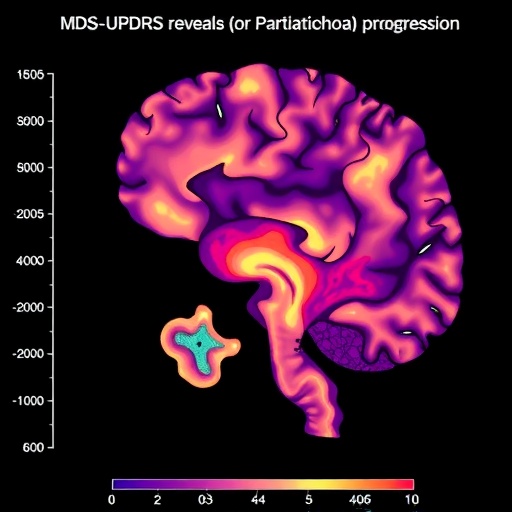
In a groundbreaking advance that promises to reshape our understanding of Parkinson’s disease progression, researchers have unveiled novel patterns of heterogeneity in early-stage Parkinson’s by applying advanced denoising techniques to the widely-used MDS-UPDRS part III scores. This remarkable study, led by Koss, Tinaz, and Tagare, was recently published in the prestigious journal npj Parkinson’s Disease, and its implications resonate deeply within the neurodegenerative research community. By refining the analytical precision of commonly gathered clinical data, the team has opened new avenues for both diagnosis and personalized therapeutic strategies.
Parkinson’s disease (PD) is a complex neurodegenerative disorder characterized predominantly by motor dysfunction symptoms such as tremor, rigidity, and bradykinesia. While the Movement Disorder Society Unified Parkinson’s Disease Rating Scale (MDS-UPDRS) part III is the accepted clinical standard for quantifying motor impairment, it is well understood that variability and noise within these scores can obscure subtle but critical differences among patients. Prior attempts to leverage these scores for identifying disease subtypes or predicting progression trajectories have faced considerable barriers because of this ‘noise’—random fluctuations and measurement variability that mask true underlying patterns.
The revolutionary approach taken by Koss and colleagues revolves around the application of sophisticated signal processing and denoising algorithms to MDS-UPDRS part III data. Traditionally, such clinical scores are treated as raw data points, but this research deftly applies mathematical models designed to filter out extraneous noise, effectively ‘cleaning’ the data. The denoising process enhances the signal-to-noise ratio, allowing more faithful extraction of disease-specific phenotypic signatures. What emerges are highly nuanced, previously hidden patterns of progression heterogeneity that challenge the conventional wisdom of PD as a rather uniform clinical entity, especially in its early stages.
Importantly, the study’s focus on early stage PD patients is particularly salient. The initial years following diagnosis represent a pivotal window during which disease progression is highly variable and therapeutic interventions hold the greatest promise to alter outcomes. By harnessing denoised MDS-UPDRS scores, the researchers demonstrated that clustering of patient motor phenotypes reveals distinct subgroups that differ not only in motor symptom trajectories but potentially also in their underlying neuropathological mechanisms. This stratification transcends the often simplistically dichotomized tremor-dominant versus postural instability gait disorder phenotypes, pointing toward a far more complex and biologically relevant landscape.
The technical foundation of this study is rooted in advanced statistical modeling and machine learning frameworks. The denoising algorithms utilized build upon wavelet transform methods and non-linear filtering techniques which have found success in various biomedical signal processing domains. By adapting these tools to the context of clinical rating scales, the investigators meticulously preserved critical disease-related variance while excising random error components. This balance between noise removal and signal integrity is a key methodological triumph that renders the findings robust and reproducible. Moreover, the stratification obtained via unsupervised learning models, such as hierarchical clustering and principal component analysis, further affirmed the presence of discrete progression subtypes embedded within the data.
From a clinical perspective, these revelations carry profound implications. Personalized medicine in neurological disorders has long been an aspirational goal, but the ‘one-size-fits-all’ approach still dominates current Parkinson’s management. The ability to parse early patients into distinct motor progression subgroups enhances prognostic accuracy and could inform tailored therapeutic regimens that optimize outcomes. Additionally, such refined phenotypic classification may serve as a critical biomarker in clinical trials, enabling patient stratification that accounts for heterogeneity and mitigates confounding factors, which have historically hampered the development and approval of new drugs.
The findings also underline the pivotal role of data quality and pre-processing in clinical research. In an era marked by big data and digital health initiatives, the study exemplifies how leveraging computational techniques can drastically improve the interpretability of clinical assessments. It highlights that the information embedded in standard scales is far richer than previously appreciated once the veil of measurement noise is lifted. This insight encourages a paradigm shift in the analysis of clinical score-based data sets across neurodegenerative diseases, suggesting that revisiting legacy data with contemporary signal processing tools may unlock new scientific discoveries.
Given the complex, multifactorial nature of Parkinson’s disease, the delineation of new progression patterns based on motor scores invites further integrative studies. Future research can intersect these denoised motor phenotypes with neuroimaging, genetic, and biomarker data to elucidate the biological underpinnings driving divergent disease course trajectories. Such multi-omics integration may eventually unravel pathogenic cascades unique to each subtype, fueling development of subtype-specific therapies and facilitating more precise mechanistic hypotheses.
Moreover, beyond the immediate clinical ramifications, this investigation contributes broadly to the neuroscience community’s understanding of phenotypic variability. Parkinson’s, like many neurodegenerative disorders, exhibits patient-to-patient heterogeneity that has long challenged attempts to formulate unified disease models. This work provides a computational and clinical framework demonstrating that much of this heterogeneity can be quantified and segmented systematically through intelligent data manipulation. These insights could serve as a template for assessing progression heterogeneity in other disorders such as Alzheimer’s disease or multiple sclerosis, where clinical rating scales similarly suffer from noise and variability.
Importantly, the study exemplifies a powerful synergy between clinical neurology, machine learning, and quantitative signal processing—disciplines that traditionally operated in silos. Such interdisciplinary initiatives propel precision medicine by converting classical clinical measurements into high-dimensional, denoised data sets amenable to advanced computational mining. As digital biomarker technologies expand, this integrative approach will be crucial for transforming quotidian clinical assessments into predictive tools with actionable insights.
In terms of methodology, the authors meticulously validated their denoising pipelines using simulated data and benchmarked against ground truth clinical trajectories. They demonstrated that the refined motor phenotypes yield statistically significant associations with disease duration, severity, and response to dopaminergic therapy. Their rigorous approach ensures that the emergent subtypes are not statistical artifacts but reflect real-world clinical diversity. It is worth noting that the improvements in data fidelity reached a threshold that allowed detection of progression trends over timeframes shorter than previously feasible, which is critical for early disease intervention strategies.
This study is poised to inspire follow-up research focused on longitudinal analyses. Tracking patients across multiple years with continuous application of denoising techniques could reveal dynamic transitions between progression subtypes, potentially uncovering disease stage-specific phenotypes. Such longitudinal phenotyping will be invaluable in assessing the influence of environmental factors, lifestyle interventions, and novel pharmacological treatments on the heterogeneous trajectories of Parkinson’s progression.
In summation, Koss, Tinaz, and Tagare’s study marks an inflection point in Parkinson’s disease research by demonstrating that denoised MDS-UPDRS part III scores uncover novel, clinically meaningful progression heterogeneity in early stage PD. Their innovative fusion of clinical expertise and signal processing advances personalizes the landscape of Parkinson’s diagnosis and prognosis. As the field moves toward more granular and data-driven disease classifications, such methodologies may become standard practice, enhancing patient care and accelerating therapeutic breakthroughs across neurodegenerative disease domains. This pioneering work encapsulates the transformative potential of applying modern computational tools to classical clinical scores—a paradigm with implications much broader than Parkinson’s alone.
Cite Scienmag News
Diana Fleming. (June 12, 2026). Denoised MDS-UPDRS Reveals New Parkinson’s Progression Patterns. Scienmag. https://scienmag.com/denoised-mds-updrs-reveals-new-parkinsons-progression-patterns/
Diana Fleming. "Denoised MDS-UPDRS Reveals New Parkinson’s Progression Patterns." Scienmag, 12 June 2026, https://scienmag.com/denoised-mds-updrs-reveals-new-parkinsons-progression-patterns/. Accessed 4 September 2026.
Diana Fleming. "Denoised MDS-UPDRS Reveals New Parkinson’s Progression Patterns." Scienmag. June 12, 2026. https://scienmag.com/denoised-mds-updrs-reveals-new-parkinsons-progression-patterns/


