


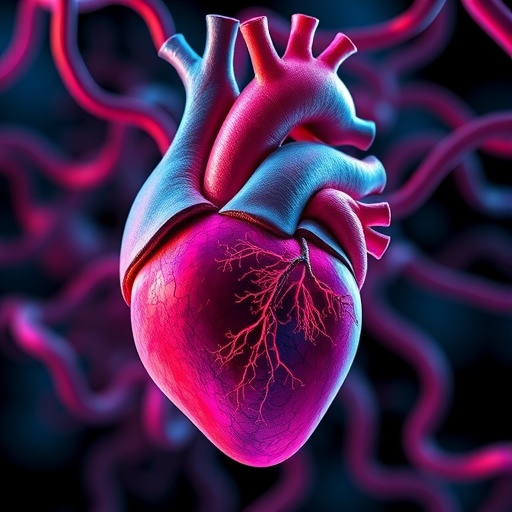
In a groundbreaking study published in the Journal of Molecular and Cellular Cardiology, researchers at the Medical University of South Carolina have uncovered critical defects in the protein repair system associated with idiopathic dilated cardiomyopathy (IDCM). This heart muscle disorder, often undetected until it progresses to advanced heart failure, was found to involve clusters of misfolded protein plaques in cardiac tissue, resembling similar pathological features observed in Alzheimer’s disease. Federica del Monte, M.D., Ph.D., a clinician-scientist and senior author of the study, led this multidisciplinary investigation that bridges neurology and cardiology, revealing profound molecular disruptions in the cellular machinery responsible for protein quality control.
IDCM remains an enigmatic condition characterized by the dilatation and impaired contraction of the left ventricle, weakening the heart’s ability to pump blood. Dr. del Monte’s discovery three decades ago that misfolded protein plaques are present in the heart was revolutionary, drawing parallels to amyloid plaques in the Alzheimer’s brain. These plaques result from proteins that fail to fold correctly, aggregating into toxic clusters that compromise cell viability. The cellular environment relies heavily on a sophisticated protein repair system, which identifies and rectifies damaged or misfolded proteins to maintain proteostasis. However, the current study reveals that in IDCM, this repair apparatus is significantly impaired, leading to accumulation of dysfunctional proteins and subsequent cardiac cell death.
The research delves deeply into the three primary branches of the protein repair system, which include molecular chaperones, the ubiquitin-proteasome system, and autophagy-lysosomal degradation pathways. Central to the team’s discovery are post-translational modifications (PTMs)—chemical changes to proteins after their synthesis—that regulate the activity and stability of proteins involved in these repair mechanisms. The del Monte lab identified aberrant PTMs that disrupt normal protein function, tipping the balance away from cellular survival toward programmed cell death, or apoptosis. With PTMs controlling the activation of signaling cascades essential for protein homeostasis, their dysregulation compromises the heart’s ability to metabolize misfolded proteins, fostering an environment ripe for disease progression.
Intriguingly, the study highlights a confluence between neurodegenerative and cardiac diseases, positioning IDCM not merely as a heart disorder but as a proteopathy with systemic implications. The team observed that genetic factors linked to Alzheimer’s disease exacerbate PTM defects in cardiac cells. This overlap underscores a shared pathogenic pathway: protein misfolding and impaired cellular clearance, which may serve as a universal mechanism driving both brain and heart degeneration. The researchers propose that IDCM can be conceptualized alongside Alzheimer’s as a protein misfolding disease, providing a transformative lens through which to study cardiac pathophysiology.
This convergence of cardiac and neurological pathology has inspired a novel paradigm shift. The del Monte lab advocates leveraging the heart as a diagnostic window into brain health. Given that IDCM changes manifest in the heart prior to clinical Alzheimer’s symptoms, early detection through cardiac imaging —specifically ultrasound visualization of ventricular enlargement and weakening—could serve as a preclinical biomarker for neurodegenerative risk. Conversely, Alzheimer’s clinics are being encouraged to incorporate cardiac screening protocols to identify latent IDCM, potentially enabling earlier therapeutic intervention.
The collaborative nature of this research, spanning institutions and continents, emphasizes the importance of sustained interdisciplinary efforts. Notably, contributions from former lab members such as Marco Luciani, M.D., Ph.D., now a faculty member at the University of Zurich, underscore the cumulative and evolving expertise required to elucidate these complex mechanisms. Postdoctoral fellows Luca Trocone, Ph.D., and Cristina Balla, M.D., Ph.D., also played pivotal roles in advancing the molecular understanding of PTMs in this disease context, highlighting the critical importance of mentorship and academic continuity in translational medicine.
Central to the pathogenesis of IDCM is the nuanced investigation of PTMs involving phosphorylation, ubiquitination, and acetylation, which fine-tune the function of protein repair enzymes. The study reveals that abnormal PTM patterns cause a shift in cellular response from protective repair toward triggering apoptotic pathways in cardiomyocytes. Aging further amplifies these detrimental modifications, as does the presence of Alzheimer’s-associated gene variants, painting a comprehensive picture of multifactorial risk that collectively compromises cardiac tissue resilience.
Looking forward, Dr. del Monte envisions that comprehensive mapping of the protein repair system, including PTM profiling across all branches, will be paramount in the development of targeted therapies. Such treatments could aim to restore proper PTM dynamics, enhance the clearance of misfolded proteins, or modulate downstream cell death signaling. Notably, some of these therapeutic strategies are already in clinical trials within oncology, where proteostasis pathways are manipulated to combat cancer, suggesting promising avenues for repurposing and translational application in cardiomyopathy.
From a bench-to-bedside perspective, co-first author Camilla Bacchin, M.D., emphasizes the urgency of validating these molecular insights in clinical contexts. Her ongoing efforts focus on identifying early biomarkers of disease progression through molecular signatures detectable in patient cardiac tissues or blood. This molecular stratification could revolutionize patient management by allowing cardiologists to stratify risk, personalize therapies, and monitor responses with unprecedented precision, ultimately improving outcomes for those suffering from idiopathic dilated cardiomyopathy.
The emerging interdisciplinary model promoted by the del Monte lab incorporates cardiology, neurology, and nuclear medicine, stressing the necessity for integrated diagnostic and therapeutic frameworks. As more evidence connects cardiac proteopathy with neurodegeneration, such collaborations become indispensable in fostering innovation. Future research platforms will likely combine advanced imaging, molecular biology, and computational modeling to unravel the intricate crosstalk between heart and brain pathology, seeking to delay or prevent the onset of these debilitating diseases.
The profound implications of this study extend beyond IDCM itself, suggesting a paradigm applicable to other age-related protein misfolding disorders. By illuminating the shared molecular mechanisms that underlie complex diseases across organ systems, this research champions a holistic approach to medicine where insights from one domain invigorate advances in others. The protein repair system and its regulation by PTMs emerge as a vital nexus in the quest for novel diagnostics and therapeutics that traverse traditional disease boundaries.
In sum, the Medical University of South Carolina’s del Monte lab has charted new frontiers in understanding how defects in protein homeostasis contribute to heart failure through mechanisms echoing neurodegenerative disease pathology. Their decade-long collaborative efforts not only redefine our conception of idiopathic dilated cardiomyopathy as a proteopathy but also pave the way for integrative clinical strategies that unite the heart and brain. Such interdisciplinary advancement promises to accelerate the emergence of early diagnosis tools and therapeutic innovations, offering hope to millions affected by complex chronic diseases.
News Publication Date: 10-Mar-2026
Web References: 10.1016/j.yjmcc.2026.03.001
Cite Scienmag News
Cassandra Pierce. (June 9, 2026). Decoding the Enigma of Misfolded Proteins in the Heart. Scienmag. https://scienmag.com/decoding-the-enigma-of-misfolded-proteins-in-the-heart/
Cassandra Pierce. "Decoding the Enigma of Misfolded Proteins in the Heart." Scienmag, 9 June 2026, https://scienmag.com/decoding-the-enigma-of-misfolded-proteins-in-the-heart/. Accessed 4 September 2026.
Cassandra Pierce. "Decoding the Enigma of Misfolded Proteins in the Heart." Scienmag. June 9, 2026. https://scienmag.com/decoding-the-enigma-of-misfolded-proteins-in-the-heart/


