

Tuesday, July 28, 2026
Science
No Result
View All Result
  • Login
  • HOME
  • SCIENCE NEWS
  • CONTACT US
  • HOME
  • SCIENCE NEWS
  • CONTACT US
No Result
View All Result
Scienmag
No Result
View All Result
Home Science News Medicine

Echocardiography Markers After Deferred Cord Clamping With Varying Oxygen Levels

July 28, 2026
in Medicine, Pediatry
Reading Time: 2 mins read
0
Echocardiography Markers After Deferred Cord Clamping With Varying Oxygen Levels

Echocardiography Markers After Deferred Cord Clamping With Varying Oxygen Levels

65
SHARES
587
VIEWS
Share on FacebookShare on Twitter
ADVERTISEMENT

Deferred cord clamping (DCC) has long been viewed as a gentler bridge for babies transitioning from the womb to independent breathing. Now, researchers report that the immediate cardiovascular effects of DCC depend not only on the timing of clamping, but also on what happens next—specifically, the oxygen concentration used during early neonatal resuscitation.

In an international study focused on extremely low gestation infants, investigators explored whether brief exposure to 100% oxygen could enhance ventilation while lowering pulmonary vascular resistance, thereby supporting smoother blood flow through the lungs. The central question was whether high oxygen at the start of resuscitation produces measurable improvements in the heart’s early adaptation, or whether it confers no advantage—or even risks.

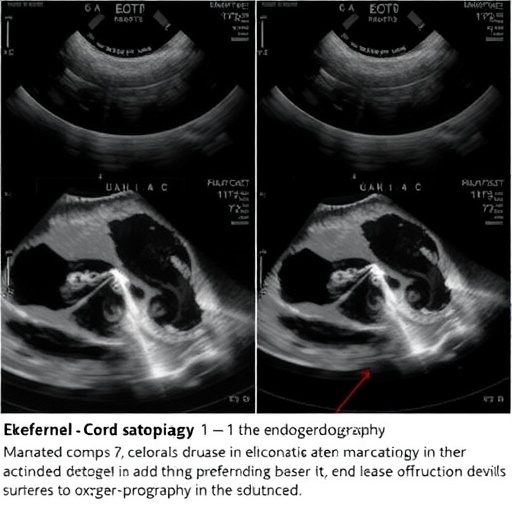
To probe this, the team used early echocardiography—ultrasound imaging of the heart—shortly after birth. Echocardiographic markers provide a window into how pressure and flow are distributing between the right and left sides of the heart, and how effectively the pulmonary circulation is responding as the newborn begins to breathe.

The trial compared outcomes associated with DCC paired with either high or low oxygen strategies. “Early markers” are particularly important in preterm infants because cardiovascular transition can be fragile; small changes in oxygenation and ventilation can alter pulmonary blood vessel tone within minutes.

The study’s findings support a nuanced view of resuscitation: DCC with adequate ventilation appears beneficial for cardiovascular transition and survival. When ventilation is delivered effectively, the lungs can progressively recruit blood flow, helping the circulatory system shift away from fetal patterns.

Against that backdrop, brief use of 100% oxygen emerged as potentially helpful. The researchers argue that limited, time-bound hyperoxia may improve ventilation efficiency, which in turn may reduce pulmonary vascular resistance—an echo-relevant mechanism for achieving a more stable postnatal circulation.

Although the work is still focused on early physiologic readouts, it highlights how oxygen can function as a “tool” rather than a blanket prescription. In extremely preterm infants, the goal is not maximal oxygen delivery, but oxygen delivered in a way that supports ventilation and pulmonary vasodilation without prolonging unnecessary exposure.

Overall, DOXIE–Echo adds mechanistic evidence to a key clinical debate: how to combine deferred cord clamping with oxygen targeting during resuscitation to optimize rapid heart–lung transition in the smallest newborns.

DOI: https://doi.org/10.1038/s41372-026-02828-1

Article References: Koo, J., Torres, N., Lakshminrushimha, S. et al. Early echocardiographic markers following deferred cord clamping with high or low oxygen in extremely low gestation infants (DOXIE–Echo). J Perinatol (2026). https://doi.org/10.1038/s41372-026-02828-1

Tags: blood flow dynamics after birthdeferred cord clamping effectsearly cardiovascular adaptation at birtheffects of oxygen concentration on heart functionimpact of high versus low oxygen during resuscitationneonatal echocardiography markersneonatal hemodynamic assessmentneonatal resuscitation strategiesoxygen levels in neonatal resuscitationpulmonary circulation in preterm neonatespulmonary vascular resistance in preterm infantsultrasound imaging in neonatal transition
Share26Tweet16
Previous Post

Toward a theory for stable Earth albedo and 21st-century hemispheric symmetry

Next Post

Maternal, Neonatal Cytokine Signals in Twins Suggest Immune Dysregulation in Autism

Related Posts

Clonal Division Memory in Humans Splits Between Healthy Blood Formation and AML
Medicine

Clonal Division Memory in Humans Splits Between Healthy Blood Formation and AML

July 28, 2026
Family Medicine Residency Directors Say Programs Do Not Assess Self-Directed Learning Directly
Medicine

Family Medicine Residency Directors Say Programs Do Not Assess Self-Directed Learning Directly

July 28, 2026
Blood Tests Detect Alzheimer’s in People With Down Syndrome, Study Finds
Medicine

Blood Tests Detect Alzheimer’s in People With Down Syndrome, Study Finds

July 28, 2026
Vector-Based Olfactory Navigation Strategy Revealed in Drosophila Flies
Medicine

Vector-Based Olfactory Navigation Strategy Revealed in Drosophila Flies

July 28, 2026
Long COVID and ME/CFS Alter Skeletal Muscle Properties Differently Than Bed Rest
Medicine

Long COVID and ME/CFS Alter Skeletal Muscle Properties Differently Than Bed Rest

July 28, 2026
Primary Care Doctors Compare Tradeoffs Between Salaried Employment and Private Practice
Medicine

Primary Care Doctors Compare Tradeoffs Between Salaried Employment and Private Practice

July 28, 2026
Next Post
Maternal, Neonatal Cytokine Signals in Twins Suggest Immune Dysregulation in Autism

Maternal, Neonatal Cytokine Signals in Twins Suggest Immune Dysregulation in Autism

  • Mothers who receive childcare support from maternal grandparents show more

    Mothers who receive childcare support from maternal grandparents show more parental warmth, finds NTU Singapore study

    27656 shares
    Share 11059 Tweet 6912
  • University of Seville Breaks 120-Year-Old Mystery, Revises a Key Einstein Concept

    1061 shares
    Share 424 Tweet 265
  • Bee body mass, pathogens and local climate influence heat tolerance

    682 shares
    Share 273 Tweet 171
  • Researchers record first-ever images and data of a shark experiencing a boat strike

    546 shares
    Share 218 Tweet 137
  • Groundbreaking Clinical Trial Reveals Lubiprostone Enhances Kidney Function

    531 shares
    Share 212 Tweet 133
Science

Embark on a thrilling journey of discovery with Scienmag.com—your ultimate source for cutting-edge breakthroughs. Immerse yourself in a world where curiosity knows no limits and tomorrow’s possibilities become today’s reality!

RECENT NEWS

  • Clonal Division Memory in Humans Splits Between Healthy Blood Formation and AML
  • Crystal Dislocations Govern Sc Incorporation in Hydrothermally Modified Beryl
  • New initiative aims to secure AI systems used in scientific research
  • Houston Methodist Researchers Create Biodegradable Implant for Targeted Cancer Immunotherapy

Categories

  • Agriculture
  • Anthropology
  • Archaeology
  • Athmospheric
  • Biology
  • Biotechnology
  • Blog
  • Bussines
  • Cancer
  • Chemistry
  • Climate
  • Earth Science
  • Editorial Policy
  • Marine
  • Mathematics
  • Medicine
  • Pediatry
  • Policy
  • Psychology & Psychiatry
  • Science Education
  • Social Science
  • Space
  • Technology and Engineering

Subscribe to Blog via Email

Enter your email address to subscribe to this blog and receive notifications of new posts by email.

Join 5,146 other subscribers

© 2025 Scienmag - Science Magazine

Welcome Back!

Login to your account below

Forgotten Password?

Retrieve your password

Please enter your username or email address to reset your password.

Log In
No Result
View All Result
  • HOME
  • SCIENCE NEWS
  • CONTACT US

© 2025 Scienmag - Science Magazine

Discover more from Science

Subscribe now to keep reading and get access to the full archive.

Continue reading
