


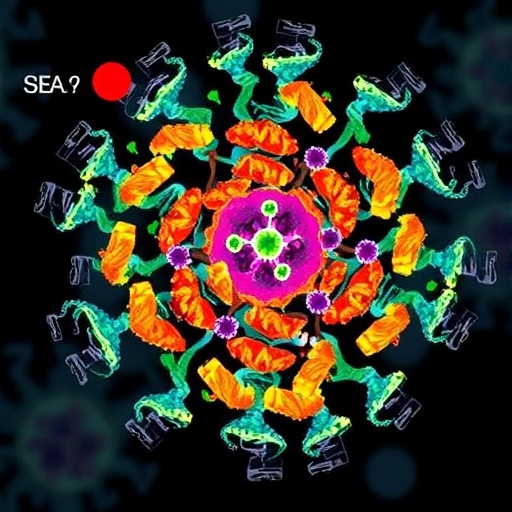
In a groundbreaking development poised to revolutionize the field of gene therapy, a team of researchers has unveiled a high-resolution analytical technique to precisely quantify the DNA content within adeno-associated virus (AAV) capsids. This advancement addresses a long-standing challenge in viral vector characterization, leveraging the power of electrical mobility measurements correlated to mass to achieve unparalleled resolution in distinguishing capsid populations. The method, termed electrical mobility – differential mobility analysis (ES-DMA), offers a transformative approach to the quality control and functional assessment of AAV-based therapeutic vectors.
Adeno-associated viruses have become the vectors of choice for delivering therapeutic genes due to their relatively low immunogenicity and ability to mediate long-term gene expression. However, the heterogeneity of capsid loading—whether they encapsulate full-length therapeutic DNA, truncated sequences, or remain empty—dramatically impacts therapeutic efficacy and safety. Prior quantification methods have been hampered by limited resolution or invasive sample preparation steps that can alter the virus. The innovation introduced here circumvents these challenges by exploiting subtle differences in electrical mobility that relate directly to capsid mass variations.
The fundamental principle underlying ES-DMA lies in the precise measurement of particle mobility through an electric field in the gas phase, which can then be correlated with particle mass. Viruses containing DNA payloads exhibit distinct electrical mobility signatures compared to empty capsids due to the additional genetic material entrapped within their protein shells. By fine-tuning the mobility analyzer’s resolution, the researchers were able to deconvolute complex capsid populations, distinguishing empty, partially filled, and fully packaged viral particles with unprecedented accuracy.
This methodological breakthrough offers profound implications for the production and standardization of gene therapy vectors. Manufacturing processes for AAV vectors demand rigorous quality controls to ensure consistent therapeutic potency, which hinges upon the DNA loading status. Conventional bulk measurement techniques often provide only an averaged signal that obscures this critical heterogeneity. ES-DMA allows real-time, label-free analysis that preserves the integrity of the virus, enhancing batch-to-batch consistency and reducing costly production failures.
The study’s findings emphasize that subtle variations in capsid composition, once detectable only through laborious and destructive biochemical assays, can now be captured through a non-invasive, high-throughput technique. Through this refined characterization, researchers and manufacturers gain the ability to optimize production parameters, potentially improving yields of fully loaded vectors while minimizing the presence of empty or defective particles that could trigger immune responses or degrade therapeutic outcomes.
One of the notable strengths of the ES-DMA approach is its adaptability to a range of AAV serotypes and potentially other viral vector systems. As gene therapy expands into treating a broader array of genetic disorders, a universal, sensitive method for capsid content quantification will be invaluable. The scalability of the electrical mobility platform also promises integration into industrial pipelines, offering manufacturers more stringent quality assurance amid increasing regulatory scrutiny.
Instrumentally, this technique employs a sophisticated cascade of particle charging, differential mobility measurement, and mass modeling. Viral particles first acquire a charge in an aerosolized state, then pass through a finely tuned mobility analyzer where their velocity under an electric field is measured. Because particle mobility inversely correlates with size and mass, and DNA introduces a measurable mass increase in the capsid, the device effectively “weighs” individual viral particles in real time, a feat previously unachievable for nanoscale biological entities.
Critically, the research provides a calibration framework that links observed electrical mobility distributions with absolute mass values. Validation experiments employing well-characterized standard samples demonstrated the method’s capacity to distinguish viral populations differing by as little as a single DNA genome’s worth of mass. This level of precision is not only fundamental for research but serves as a benchmark for quality control in clinical-grade vector production.
From a broader perspective, the ability to directly measure DNA content within AAV capsids opens new investigative avenues into vector biology. Researchers can now systematically study the effects of capsid assembly conditions, DNA packaging efficiency, and packaging signal mutations on vector heterogeneity. This could lead to the design of more efficient vectors with tailored payload capacities and enhanced safety profiles, ultimately improving gene therapy outcomes.
The technology may further catalyze innovation in the regulatory landscape governing gene therapy products. Currently, the heterogeneity of AAV preparations represents a substantial hurdle, complicating regulatory approval due to variable potency and immunogenicity risks. By providing a robust, quantitative analytical tool, ES-DMA supports the development of more reproducible and safer therapeutic products, streamlining regulatory pathways and fostering clinical translation.
Moreover, the non-destructive nature of ES-DMA facilitates downstream analyses, enabling sequential or complementary assessments such as functional infectivity assays or structural characterization on the same sample batch. This integrative approach aligns well with the trend toward multi-dimensional viral vector characterization, where combining biophysical, biochemical, and biological data sources leads to holistic product understanding.
Looking forward, continued refinement of ES-DMA instrumentation and protocols is expected to enhance sensitivity and throughput, making the technique even more accessible for routine use in both research and industrial environments. Integration with automation and data analytics platforms could provide real-time monitoring and control during vector manufacturing, increasing efficiency and reducing costs.
In summary, this pioneering application of high-resolution electrical mobility analysis to quantify AAV capsid DNA content represents a significant leap forward in gene therapy vector characterization. By correlating electrical mobility directly with viral particle mass, the technique provides a powerful, non-invasive means to discriminate between empty and DNA-loaded capsids with exceptional precision. This will improve quality control standards, inspire new vector engineering strategies, and ultimately support the delivery of safer and more effective gene therapies to patients worldwide.
The implications extend beyond AAV gene therapy, suggesting that ES-DMA could be adapted for other nanoparticle systems where payload encapsulation status critically influences functionality. As the biomedical landscape increasingly embraces nanotechnology-based therapeutics, the ability to robustly assess complex nanostructures at the single-particle level will be a valuable asset.
This work not only exemplifies the innovative convergence of physics and virology but also underscores the transformative potential of advanced analytical instrumentation in overcoming traditional barriers in biotherapeutic development. The scientific and clinical communities eagerly anticipate further advances building on this platform to accelerate the next generation of precision medicine.
Cite Scienmag News
Kristina Jarvis. (June 4, 2026). High-Resolution ES-DMA Maps AAV Capsid DNA Content. Scienmag. https://scienmag.com/high-resolution-es-dma-maps-aav-capsid-dna-content/
Kristina Jarvis. "High-Resolution ES-DMA Maps AAV Capsid DNA Content." Scienmag, 4 June 2026, https://scienmag.com/high-resolution-es-dma-maps-aav-capsid-dna-content/. Accessed 5 September 2026.
Kristina Jarvis. "High-Resolution ES-DMA Maps AAV Capsid DNA Content." Scienmag. June 4, 2026. https://scienmag.com/high-resolution-es-dma-maps-aav-capsid-dna-content/


