


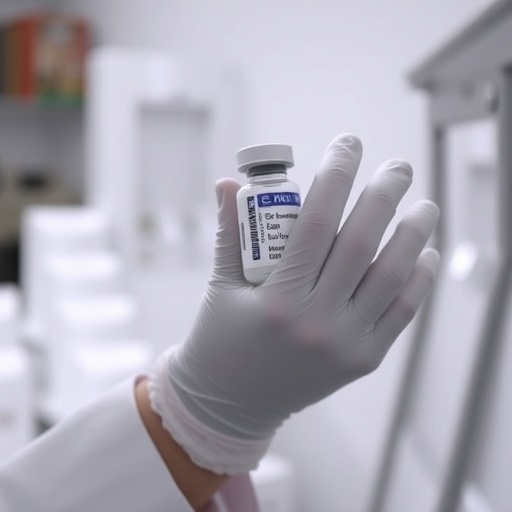
In the ongoing global effort to eradicate poliovirus, a formidable challenge remains: balancing vaccine safety with the ability to halt virus transmission effectively. In the United States and many other countries, the injectable inactivated polio vaccine (IPV) is the standard immunization. This vaccine is renowned for its safety and effectiveness in preventing polio disease in individuals. However, it falls short in one critical area—it does not robustly prevent the circulation of the poliovirus in the gastrointestinal (GI) tract, the initial site of viral exposure and replication. This limitation means that vaccinated individuals might still carry and transmit the virus without showing symptoms, potentially perpetuating hidden chains of infection.
Contrastingly, the oral polio vaccine (OPV), which uses a live-attenuated virus administered orally, excels at establishing mucosal immunity in the intestine, significantly reducing virus shedding and transmission. This mucosal immune response involves the production of immunoglobulin A (IgA) antibodies that coat the mucosal surfaces, effectively neutralizing the virus at the entry portal. Despite its transmission-blocking advantage, OPV carries a rare but serious risk: the attenuated virus can revert to a neurovirulent, infectious form, occasionally causing vaccine-derived poliovirus outbreaks. Due to this risk, numerous countries have phased out OPV in favor of IPV, prioritizing safety but inadvertently compromising on transmission control.
Research teams at the Massachusetts Institute of Technology (MIT) are now pioneering a novel approach to bridge this gap—inventing a version of the IPV that stimulates mucosal immunity while maintaining an impeccable safety profile. Their breakthrough centers on integrating a nanoparticle-based adjuvant system to modify the immune response elicited by the traditional IPV. This innovation aims to mimic the mucosal immune priming characteristic of OPV without exposing recipients to live viral particles, thus potentially halting viral shedding and interrupting transmission chains more effectively than existing IPV methods.
At the core of this scientific advancement is a lipid nanoparticle (LNP) formulation encapsulating a vitamin A derivative called Am80. Previous studies at Harvard Medical School revealed that Am80 functions as a mucosal homing adjuvant, signaling immune cells to migrate to the intestinal mucosa. Yet, Am80 requires repeated daily injections to sustain a robust mucosal immune response, which is impractical for widespread vaccination campaigns. By embedding Am80 in LNPs engineered for slow, controlled release, the MIT researchers achieved prolonged adjuvant activity from a single—or limited number of—injections, thereby maintaining the stimulus required for effective mucosal immunity.
The mechanism underpinning this enhanced immune targeting lies in the nanoparticles’ accumulation within lymph nodes following parenteral injection. Within these immune hubs, Am80 interacts with B and T lymphocytes exposed simultaneously to IPV antigens. This interaction induces the expression of homing receptors that redirect these cells to mucosal tissues, particularly within the GI tract. Consequently, B cells within the mucosa ramp up production of IgA antibodies, a pivotal component in neutralizing pathogens on mucosal surfaces. Importantly, this adjuvant strategy preserves systemic immunity by enabling IgG antibody generation in parallel to mucosal IgA responses.
Preclinical trials conducted in rodent models have demonstrated striking immunological enhancements: rats receiving the nanoparticle-Adjuvanted IPV displayed a 20-fold increase in mucosal IgA levels compared to those administered IPV alone. This dual enhancement—systemic protection coupled with mucosal immunity—suggests a paradigm shift in polio vaccination strategy. A vaccine formulation that can halt virus circulation and shedding without the risks of live-attenuated virus reversion offers a promising tool for the final push toward global polio eradication.
Despite these encouraging findings, the research team is cautious about the translational path ahead. Future studies aim to evaluate the efficacy and safety of administering the adjuvanted IPV as a combined formulation, rather than separate injections as tested in rats. Larger animal models will provide critical data on immune kinetics, safety profiles, dosing regimens, and potential scalability for human clinical trials. Furthermore, they intend to investigate whether similar adjuvant strategies can be adapted to vaccines targeting other mucosal pathogens, including respiratory and reproductive tract infections, broadening the impact of this technology beyond polio.
The widespread circulation of poliovirus in wastewater, even in nations with high IPV coverage, underscores the urgency to enhance vaccine-induced mucosal immunity. Such environmental reservoirs pose a latent threat to unvaccinated or under-immunized populations. Advances that convert an already safe and widely accepted vaccine into a transmission-blocking tool without live virus risks could transform public health strategies globally. This innovation stands at the nexus of immunology, nanotechnology, and vaccinology, illustrating the multidisciplinary efforts needed to conquer entrenched infectious diseases.
Driving this research are renowned scientists Ana Jaklenec and Robert Langer from MIT’s Koch Institute for Integrative Cancer Research, along with lead author Behnaz Eshaghi. Their collaborative work, published in the journal Science Advances, marks a significant milestone. Supported by funding from the Bill & Melinda Gates Foundation, a leader in global health initiatives, this advancement contributes substantially to the scientific toolkit necessary for polio’s final elimination.
The quest to develop a polio vaccine capable of eliciting both systemic and mucosal immunity without compromising on safety could herald a new chapter in infectious disease eradication efforts. This refined IPV, augmented by Am80-loaded lipid nanoparticles, exemplifies how targeted delivery of adjuvants can modulate immune cell trafficking and function, setting a new standard for modern vaccinology. As the research progresses from preclinical models to human trials, the global scientific community watches with anticipation, hopeful that this innovation will accelerate the disappearance of polio from every corner of the world.
Cite Scienmag News
Kristina Jarvis. (June 3, 2026). MIT Scientists Create Innovative Vaccine Adjuvant to Accelerate Polio Eradication. Scienmag. https://scienmag.com/mit-scientists-create-innovative-vaccine-adjuvant-to-accelerate-polio-eradication/
Kristina Jarvis. "MIT Scientists Create Innovative Vaccine Adjuvant to Accelerate Polio Eradication." Scienmag, 3 June 2026, https://scienmag.com/mit-scientists-create-innovative-vaccine-adjuvant-to-accelerate-polio-eradication/. Accessed 3 September 2026.
Kristina Jarvis. "MIT Scientists Create Innovative Vaccine Adjuvant to Accelerate Polio Eradication." Scienmag. June 3, 2026. https://scienmag.com/mit-scientists-create-innovative-vaccine-adjuvant-to-accelerate-polio-eradication/


