


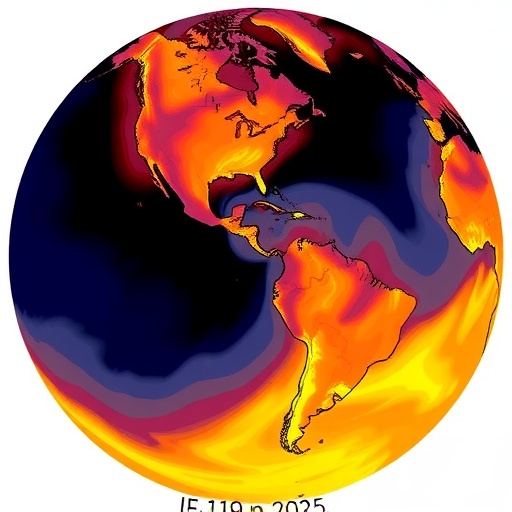
In an illuminating study published in Nature Reviews Earth & Environment in early 2026, researchers have delivered a comprehensive analysis of the compound weather and climate events that defined the year 2025. This seminal work sheds new light on the cascading and interconnected nature of extreme atmospheric phenomena, marking a pivotal advance in our understanding of climate complexity and resilience. The findings not only underscore the broad vulnerabilities exposed by these events but also push the scientific community to rethink climatological models in the context of rapidly evolving global conditions.
The year 2025 witnessed an unprecedented confluence of climate extremes that challenged existing paradigms of risk assessment and disaster preparedness. These events included simultaneous heatwaves overlaying regions already stressed by prolonged droughts, compound flooding driven by a sequence of intense tropical cyclones, and rapid shifts in atmospheric patterns that amplified regional weather extremes. The study methodically unpacks the interactions among these phenomena, revealing how their interplay exacerbated impacts far beyond what isolated events would suggest.
Fundamentally, compound events are defined by the co-occurrence or concatenation of multiple weather or climate hazards that collectively induce greater damage and disruption. Unlike singular extreme events, compound extremes operate on interconnected physical, chemical, and biological processes that intensify risks. The 2025 cases demonstrated how compound events transcend geographic and temporal boundaries—sometimes occurring simultaneously across continents or unfolding sequentially with cumulative effects on ecosystems, infrastructure, and human systems.
One striking example detailed in the study is the interplay between the prolonged heatwave cycles in the Northern Hemisphere and persistent drought conditions. The research highlights how soil moisture deficits compounded heat extremes by reducing evaporative cooling, which in turn intensified atmospheric heat stress. This feedback loop not only accelerated peak temperatures but also deepened vulnerabilities in agricultural productivity and water availability across multiple regions, particularly in central North America and Southern Europe.
Meteorological analysis linked these extreme patterns to alterations in jet stream configurations driven partly by Arctic amplification—a phenomenon where polar warming disturbs midlatitude atmospheric circulation. These disrupted jet streams trapped high-pressure ridges, facilitating sustained heat accumulation and diminishing precipitation. The resulting stagnation exacerbated dry conditions, setting the stage for widespread desiccation and heightened wildfire risk observed throughout much of 2025.
Simultaneously, compounding phenomena extended into hydrological extremes, where sequential cyclonic activity supercharged flood risks in vulnerable coastal and riverine zones. The study meticulously delineates how closely spaced tropical cyclones delivered successive heavy rainfall events upon watersheds already saturated by antecedent storms. This sequence overwhelmed natural drainage systems and emergency infrastructure, triggering catastrophic flooding in parts of Southeast Asia and the eastern United States.
Beyond the physio-meteorological mechanisms, the research explores socio-economic dimensions, illuminating how compound climate events disproportionately impact vulnerable populations. Complex disasters strain local governance and response capabilities as multiple hazards converge, generating cascading failures such as disrupted food supply chains, energy outages, and public health crises. The 2025 events exposed systemic weaknesses, reinforcing calls for integrated risk management frameworks that account for compound hazard dynamics.
On the modeling frontier, the team’s work emphasizes the limitations of conventional approaches that often treat extreme events in isolation. They advocate for advanced probabilistic models incorporating interdependencies, feedback loops, and cross-scale interactions. Leveraging large ensembles and high-resolution climate simulations, the researchers demonstrate that accounting for compound events markedly improves predictive performance and provides more realistic risk scenarios for policymakers and planners.
The article also critically considers the role of anthropogenic climate change as a driving force behind rising compound event frequencies and severities. It details how global warming elevates baseline temperatures, alters precipitation regimes, and destabilizes atmospheric circulation patterns. These changes increase the odds that multiple extremes will co-occur or sequentially strike vulnerable regions, underlining the urgency of climate mitigation and adaptation strategies that integrate complex hazard interplays.
Importantly, the study advocates for enhanced observational capacities, stressing the need for integrated monitoring networks capable of capturing multi-hazard signatures in near-real-time. This integration supports early warning systems and resilience-building initiatives by enabling timely forecasting of compound extremes. The authors highlight advancements in remote sensing, data assimilation, and machine learning as pivotal tools in this endeavor, ushering in a new era of climate risk intelligence.
The exploration of compound climate events in 2025 also imparts valuable lessons for disaster preparedness and urban resilience. Urban areas, often hotspots of vulnerability due to dense populations and critical infrastructure, face particular challenges as compound events strain water, energy, and health systems simultaneously. The study underscores design principles that embed redundancy, flexibility, and cross-sector coordination within urban planning to buffer against cascading failures.
Ecologically, the cascading impacts of compound climate events manifest in disrupted biogeochemical cycles, habitat fragmentation, and altered species distributions. The 2025 record unveils instances where sequential heatwaves and droughts compromised ecosystem carbon sequestration capacities, further fueling atmospheric CO2 levels. These feedbacks highlight the intricate interdependencies between climate extremes and biosphere responses that must be incorporated into Earth system models.
From a global governance perspective, the research connects the dots between local compound events and their transboundary repercussions, such as food security disruptions and forced migrations. It stresses the necessity for international cooperation and adaptive policy innovation that can respond dynamically to evolving climate risks driven by compounding hazards, moving beyond siloed national frameworks towards collaborative resilience strategies.
The authors conclude with a clarion call to the scientific and policy arenas: recognizing, understanding, and mitigating compound climate and weather events is pivotal to safeguarding societies in a warming world. The 2025 compendium of extremes serves as a stark exemplar of future challenges, urging investment in interdisciplinary research, integrated risk assessment, and innovative governance approaches to anticipate an era where compound hazards become the new normal.
In sum, this landmark study not only advances the technical grasp of compound weather and climate phenomena but also reshapes the narrative on climate risk management. By decoding the complex interplays that governed 2025’s extremes, it provides a critical foundation to inform resilient infrastructure, equitable adaptation policies, and proactive climate action. The implications resonate across scientific disciplines and societal sectors, signaling a transformative inflection point in how humanity confronts the cascading uncertainties of the climate crisis.
Cite Scienmag News
Violet Maxwell. (June 3, 2026). Compound Weather and Climate Events Expected in 2025. Scienmag. https://scienmag.com/compound-weather-and-climate-events-expected-in-2025/
Violet Maxwell. "Compound Weather and Climate Events Expected in 2025." Scienmag, 3 June 2026, https://scienmag.com/compound-weather-and-climate-events-expected-in-2025/. Accessed 4 September 2026.
Violet Maxwell. "Compound Weather and Climate Events Expected in 2025." Scienmag. June 3, 2026. https://scienmag.com/compound-weather-and-climate-events-expected-in-2025/


