


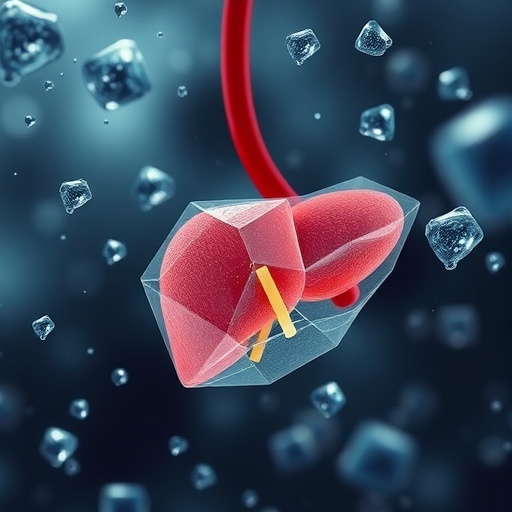
Microplastics are no longer confined to distant oceans or polluted shorelines. They have been detected in drinking water, food, air and human tissues, raising urgent questions about what these persistent particles may be doing inside the body. Now, researchers at the Texas A&M College of Veterinary Medicine and Biomedical Sciences report evidence that polyethylene—the world’s most widely produced plastic—may contribute to fatty liver disease and intensify liver damage when combined with an unhealthy diet. The findings offer a new warning about the possible interaction between everyday environmental exposure and modern dietary habits.
The study focuses on polyethylene particles small enough to enter biological systems. Polyethylene is used extensively in food packaging, plastic films, storage containers and beverage cup linings, yet its effects on liver health have received less scientific attention than those of several other microplastics. The Texas A&M team found that exposure to polyethylene was associated with molecular and cellular changes consistent with fatty liver disease. When the exposure occurred alongside a diet high in fat, fructose and cholesterol, the signs of liver injury became more pronounced, suggesting that microplastic exposure and metabolic stress may work together rather than independently.
Fatty liver disease develops when excessive amounts of fat accumulate inside liver cells. The condition, which affects roughly one in four people worldwide, can remain silent for years before progressing to inflammation, scarring and, in severe cases, liver failure or liver cancer. Diet, obesity, insulin resistance and alcohol consumption are well-established risk factors, but scientists increasingly suspect that environmental chemicals and particles may also influence the disease. The new study does not establish that polyethylene causes fatty liver disease in humans, but it adds to growing evidence that common plastics may interfere with the biological systems responsible for maintaining liver health.
“ No studies have really looked into polyethylene’s effect on liver health, and it’s the most widely produced plastic,” said Dr. Adi Joshi, an associate professor in Texas A&M’s Department of Veterinary Physiology and Pharmacology, who led the research. “What we now know is that these microplastics, especially polyethylene, affect our liver’s natural defense and repair mechanisms.” The observation is particularly notable because polyethylene has often been regarded as relatively biologically inert. Its chemical stability may reduce its immediate reactivity, but the study indicates that the particles can still provoke complex responses in tissue, potentially through interactions with cellular signaling, metabolism and repair pathways.
To investigate those responses, the researchers used spatial transcriptomics, a technology that maps gene activity across an intact tissue while preserving the precise location of individual cells. Traditional gene-expression analysis can reveal which genes are switched on or off in a sample, but it often removes information about where those changes occur. Spatial transcriptomics retains that geography, allowing scientists to distinguish molecular activity in damaged regions from activity in neighboring, apparently healthier areas. This approach gave the team a cell-by-cell view of how polyethylene exposure reshaped the liver’s molecular landscape.
The analysis highlighted PPAR-alpha, a protein that regulates lipid metabolism in the liver, as a central component of the response to polyethylene. PPAR-alpha normally helps control the breakdown and storage of fatty acids, making it essential for maintaining metabolic balance. Disruption of this pathway could contribute to the accumulation of fat within liver cells or alter how those cells respond to metabolic stress. The researchers also identified ANXA2, a gene involved in tissue repair and cellular organization, as another potential participant in the disease process. Their results point to possible cross-talk between metabolic regulation and repair mechanisms, a combination that could help explain why exposure becomes more damaging in the presence of a poor diet.
The interaction with diet may be especially important because the liver already faces substantial stress from excessive fat, sugar and cholesterol. A Western-style diet can increase fat production, oxidative stress and inflammation, while also placing greater demands on the liver’s detoxification and repair systems. Polyethylene particles may add another layer of disruption by altering gene activity in vulnerable liver regions. In this scenario, the plastic would not need to act as a single overwhelming toxin; even a moderate effect on metabolic or repair pathways could become significant when combined with existing dietary strain.
The researchers emphasize that further work is needed to determine how closely these findings correspond to real-world human exposure. People encounter microplastics through multiple routes, including food, drinking water and inhalation, and the size, shape, surface chemistry and additives associated with each particle may influence its biological effects. The study examined polyethylene in a controlled research setting, meaning that it cannot yet predict the risk posed by specific packaging products or estimate how much exposure is required to produce liver injury. Human studies will be necessary to establish whether polyethylene accumulates in the liver, changes liver-related biomarkers or contributes to disease progression over time.
Joshi’s team plans to examine whether polyethylene exposure can promote later stages of liver disease, including fibrosis, in which repeated injury causes scar tissue to replace healthy liver tissue. The researchers also intend to investigate additional molecular pathways and test whether modifying the PPAR-alpha response can reduce the harmful effects of the particles. If those experiments confirm the pathway’s importance, it could eventually provide a target for therapies or preventive strategies. For now, the study’s most striking message is that a plastic long considered comparatively harmless may influence a major chronic disease pathway, particularly when environmental exposure meets an unhealthy diet. As microplastics become increasingly difficult to avoid, understanding their biological effects may become an essential part of explaining—and preventing—the next generation of metabolic disease.
News Publication Date: 17-Jul-2026
Web References: Texas A&M College of Veterinary Medicine and Biomedical Sciences: https://vetmed.tamu.edu/ ; Dr. Adi Joshi: https://vetmed.tamu.edu/person/23214/ ; Department of Veterinary Physiology and Pharmacology: https://vtpp.tamu.edu/
References: Science Advances, DOI: 10.1126/sciadv.aec868
Cite Scienmag News
Daisy Hatcher. (August 4, 2026). Study finds common microplastic exposure may raise fatty liver disease risk. Scienmag. https://scienmag.com/study-finds-common-microplastic-exposure-may-raise-fatty-liver-disease-risk/
Daisy Hatcher. "Study finds common microplastic exposure may raise fatty liver disease risk." Scienmag, 4 August 2026, https://scienmag.com/study-finds-common-microplastic-exposure-may-raise-fatty-liver-disease-risk/. Accessed 4 September 2026.
Daisy Hatcher. "Study finds common microplastic exposure may raise fatty liver disease risk." Scienmag. August 4, 2026. https://scienmag.com/study-finds-common-microplastic-exposure-may-raise-fatty-liver-disease-risk/


