


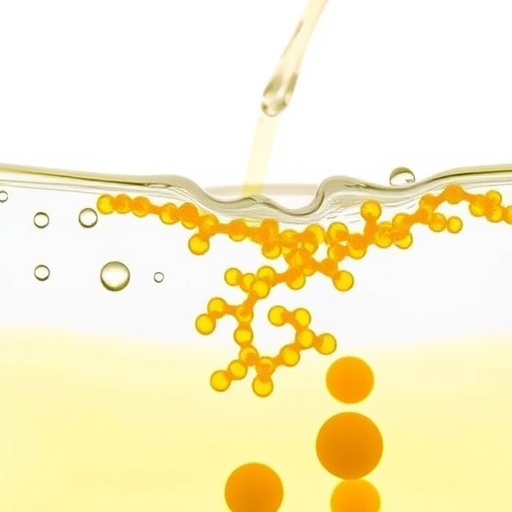
As the world grapples with ever-increasing industrialization, the rise of oil spills and the discharge of oily wastewater have emerged as critical challenges threatening aquatic ecosystems and public health. Existing methods to separate oil from water—including burning, chemical dispersants, and mechanical skimming—have proven insufficient due to their secondary pollution risks, limited efficiency, and exorbitant costs. Addressing these issues, researchers from Hubei University and Wuhan University of Technology, led by Professors Chengkang Rao, Yan Xin, and Zhiguang Guo, have introduced a transformative class of biomimetic multi-responsive superwettable materials that redefine the paradigm of oil–water separation.
Traditional superwetting materials have relied on fixed wettability traits—either being superhydrophobic and superoleophilic to absorb oil or superhydrophilic and underwater superoleophobic to repel oil while allowing water through. However, these static characteristics become liabilities when membranes encounter complex or contaminated emulsions, leading to irreversible performance degradation. The innovative smart materials developed here overcome these challenges by exhibiting dynamic, reversible wettability switching, activated by external stimuli. This capacity allows the materials to adapt their oil/water affinity in real time, merging the selectivity of conventional membranes with the flexibility found in biological systems.
Fundamentally, these advances rest upon a sophisticated theoretical foundation integrating core wetting models: Young’s equation, the Wenzel model, and the Cassie–Baxter model. By mimicking the hierarchical micro- and nanostructures observed in nature and integrating surface chemical regulation, the researchers elucidate how superwettability and intelligent switching coexist synergistically. At a molecular scale, responsive functional groups such as PNIPAM polymers undergo conformational changes above their lower critical solution temperature (LCST), carboxyl groups shift protonation states with pH variations, and azobenzene moieties isomerize under UV irradiation. These nanoscale chemical transformations translate into macroscopic wettability shifts via hierarchical roughness designs, reversing intrusion pressures to toggle between oil-removing and water-removing states.
The team proposes a comprehensive, layered framework categorizing the systems: the outer layer delineates preparation techniques including layer-by-layer self-assembly, electrospinning, and surface-initiated atom transfer radical polymerization (SI-ATRP); the middle layer presents eight stimulus modalities—temperature, pH, light, electricity, gas, ion concentration, solvent environment, and multi-responsive synergies; and the inner core, inspired by the Taiji symbol, represents the fundamental interaction between “smart response” and wettable materials. This integrative approach not only advances understanding but also streamlines design principles.
Performance metrics across stimulus types are groundbreaking. Thermoresponsive membranes grafted with PNIPAM exhibit over 97.8% separation efficiency with 16 distinct emulsion types, dynamically toggling separation modes at 25°C and 45°C. pH-responsive sponges derived from tung oil demonstrate exceptional flux rates reaching 6,700 liters per square meter per hour with 99.9% efficiency and remarkable durability, enduring more than 1,000 compression cycles. Photocatalytic membranes using Fe/TiO₂ composites extend activity into visible light spectra, delivering fluxes exceeding 18,000 liters per square meter per hour alongside simultaneous degradation of organic dyes. Electric-responsive ZnO nanorod arrays enable wettability transitions within seconds at low voltages (around 15 volts), representing a safer and more energy-efficient alternative to previous systems leveraging kilovolt-range electric fields.
A pivotal breakthrough highlighted is the stimulus-responsive catalytic cleaning effect, which systematically addresses membrane fouling—a longstanding obstacle in oil-water separation. The researchers unravel a four-tier synergistic mechanism combining the physical barrier of a surface hydration layer with catalytically generated reactive oxygen species (ROS). Metal active sites, including Mn³⁺, Fe²⁺/Fe³⁺, and Mo⁶⁺, when activated by hydrogen peroxide, peroxymonosulfate (PMS), or light irradiation, generate ROS capable of mineralizing hydrophobic contaminants. Simultaneously, microbubbles physically dislodge oil molecules. This ‘separation plus self-cleaning’ paradigm drastically reduces membrane recovery times from over four minutes under hydrodynamic cleaning to less than one minute, enhancing longevity and operational efficiency.
The review also introduces a meticulous comparative framework, grounded in multi-dimensional benchmarking tables that evaluate response speed, regulation precision, reversibility, and energy consumption across various stimuli. This standardized evaluation provides researchers with much-needed clarity in selecting the optimal responsive mechanism for specific scenarios, fostering accelerated innovation and tailored applications.
Demonstrations of practical applicability abound. Large-scale CO₂-responsive membranes with an active area of 3,600 cm² have undergone pilot testing, validating scalability. Diatomaceous earth coatings have proven robust under simulated marine environments, ensuring environmental resilience. Multifunctional membranes have achieved exemplary 99.9% oil-water separation rates while simultaneously removing up to 97.6% of dyes from textile wastewater, marking significant steps toward industrial deployment.
Looking ahead, three strategic trajectories emerge as priorities. First, the development of self-healing micro-/nanostructures employing fluorine-free surface modifications promises eco-friendly and durable materials. Second, continuous manufacturing techniques such as roll-to-roll coating and 3D printing are envisioned to enable cost-effective mass production leveraging biomass waste resources. Third, embedding artificial intelligence within material systems could usher in intelligent sensing and adaptive regulatory loops, enabling autonomous operation responsive to fluctuating environmental conditions.
This comprehensive work elevates smart-responsive superwettable materials from passive filtration tools to dynamic, intelligent platforms capable of sensing, decision-making, and responding to complex contamination challenges in real time. The convergence of high separation efficiency, adaptive intelligence, and sustainable operation charts a bold new direction for next-generation water treatment technologies. The collaborative efforts by these teams at Hubei University and Wuhan University of Technology herald an exciting frontier where environmental remediations are both smart and sustainable.
As environmental pressures continue to mount, such innovative material systems offer hope for a cleaner, safer future—one where innovation at the molecular and structural levels meets urgent global needs with unprecedented efficacy.
News Publication Date: 21-May-2026
Web References: DOI: 10.1007/s40820-026-02222-8
Cite Scienmag News
Violet Maxwell. (June 2, 2026). Bioinspired Multi-Responsive Superwettable Materials Revolutionize Oil–Water Separation. Scienmag. https://scienmag.com/bioinspired-multi-responsive-superwettable-materials-revolutionize-oil-water-separation/
Violet Maxwell. "Bioinspired Multi-Responsive Superwettable Materials Revolutionize Oil–Water Separation." Scienmag, 2 June 2026, https://scienmag.com/bioinspired-multi-responsive-superwettable-materials-revolutionize-oil-water-separation/. Accessed 3 September 2026.
Violet Maxwell. "Bioinspired Multi-Responsive Superwettable Materials Revolutionize Oil–Water Separation." Scienmag. June 2, 2026. https://scienmag.com/bioinspired-multi-responsive-superwettable-materials-revolutionize-oil-water-separation/


